
Views: 219 Author: Vera Publish Time: 2026-11-15 Origin: Site


Content Menu
● Why Source Private Label Skincare From Italy?
>> An Established Export-Oriented Beauty Industry
>> The Advantage of Northern Italy's Beauty Ecosystem
● Selection Criteria: How to Evaluate a Skincare Manufacturing Partner
>> Use Cosmetics-Specific Standards
● Manufacturer Comparison: Capacity, MOQ, and Quality Evidence
● The Shortlist: Six Manufacturing Partners to Evaluate
>> 1. GUANGZHOU LAIMEI CREATIVE RESEARCH INTELLIGENT BIOLOGICAL RESEARCH CO.,LTD.
>>> A China-Based Alternative for Flexible OEM/ODM Development
>>> An Established Option for International Development Programs
>>> A Skincare-Focused Partner for Full-Service Development
>>> A Candidate for Coordinated Face, Body, and Haircare Portfolios
>> 5. b.kolormakeup & skincare
>>> A Formulation-Led Choice for Sensory Differentiation
>>> A Documentation-Oriented CDMO for Technically Defined Projects
● Buyer's Guide: From Shortlist to Commercial Production
>> 1. Establish Product Classification Before Requesting Quotations
>> 2. Define Ingredient Specifications, Not Marketing Grades
>> 3. Qualify the Final Formula and Packaging Together
>> 4. Compare Total Launch Cost
>> 5. Build Delivery Around Release Milestones
● Insider Procurement Pitfall: The Same INCI List Does Not Guarantee the Same Product
● Conclusion: Choose the Manufacturing Model Before Choosing the Supplier
● FAQ
>> 1. How Can I Verify Whether a Manufacturer's ISO Certificate Is Expired or Misleading?
>> 2. Does an Italian Headquarters Guarantee "Made in Italy" Eligibility?
>> 3. Can I Obtain a CPSR Without Owning the Full Formula?
>> 4. What Should Happen if the Supplier Changes an Ingredient After Testing?
>> 5. Can One Formula Serve the EU, US, and Other Export Markets?
Italy offers a compelling manufacturing base for skincare brands that value formulation expertise, sophisticated textures, packaging coordination, and a credible European production story. However, choosing a private label skincare manufacturer requires more than comparing product catalogs or requesting the lowest quotation.
Professional buyers need to examine the production site behind the sales presentation: its manufacturing controls, formulation capabilities, testing documentation, capacity allocation, and ability to deliver consistent repeat orders.
This guide profiles five Italy-based manufacturing businesses and introduces LAIMEI first as a clearly identified China-based alternative for buyers comparing Italian production with a potentially more flexible international sourcing model. The shortlist is a procurement-oriented comparison, not an independently audited ranking.
Disclosure: LAIMEI supplied the brief for this article. Its company-provided specifications are distinguished from publicly available information. It is not an Italian manufacturer, and its inclusion should not be interpreted as evidence of Italian production or eligibility for a "Made in Italy" claim.

Italy's cosmetics sector combines contract manufacturing, ingredient expertise, packaging development, and international brand relationships.
According to Cosmetica Italia's Outlook 2025, published in March 2026, the Italian cosmetics industry generated €18 billion in turnover in 2025. Exports reached €8.6 billion, up 4.1%, and represented approximately 48% of industry revenue. These figures cover the broader cosmetics industry—not private label skincare alone—but demonstrate the scale and international orientation of Italy's manufacturing ecosystem. [cosmeticaitalia]
For procurement managers, the significance is practical: Italian suppliers often operate within established networks that connect formulation development, component sourcing, filling, testing, and export services.
Lombardy is an important part of Italy's cosmetics manufacturing and innovation network. The European Commission's Go4Cosmetics partnership identifies Lombardy alongside organizations including REI Reindustria Innovazione, Polo della Cosmesi, and regional universities. [ec.europa]
The supplier landscape also extends beyond Lombardy. Cosmoproject operates near Parma, while Biofarma has an established manufacturing presence in northeastern Italy. Buyers should therefore assess the capabilities of individual sites rather than assume every Italian skincare specialist belongs to the same local cluster. [cosmoproject]
An Italian headquarters also does not automatically mean every product is manufactured in Italy. International groups may assign development and production to different countries, making site confirmation an essential part of supplier qualification.
This shortlist considers publicly documented skincare capabilities, manufacturing services, company history, international customer orientation, and available quality information. No factory visits, confidential customer interviews, or independent laboratory comparisons were conducted.
Before awarding a contract, buyers should apply the following qualification framework.
| Evaluation area | Evidence to request | Why it matters |
|---|---|---|
| Manufacturing quality | Site-specific GMP documentation, audit reports, certificate scope | Connects quality claims to the actual production location |
| Formulation expertise | Relevant product examples, development workflow, technical staff access | Shows whether the supplier can solve your formulation challenges |
| Quality control | Raw-material specifications, bulk controls, finished-product release procedures | Reduces batch inconsistency and contamination risk |
| Testing support | Stability, packaging compatibility, microbiological and preservation data | Supports safety assessment and commercial shelf-life decisions |
| Commercial fit | MOQ by formula and packaging component, development fees, payment terms | Reveals the real launch commitment |
| Delivery reliability | Material availability, reserved production slots, release milestones | Separates realistic delivery planning from optimistic estimates |
| Intellectual property | Formula ownership, exclusivity, transfer rights, change-control clauses | Protects the brand's long-term sourcing options |
Cosmetica Italia's own contract-manufacturer directory distinguishes capabilities such as in-house chemical laboratories, microbiology laboratories, R&D, proprietary formulations, full-service supply, and the ability to work with external formulas. This is a useful reminder that "OEM/ODM manufacturer" describes a broad category rather than a uniform service package. [cosmeticaitalia]
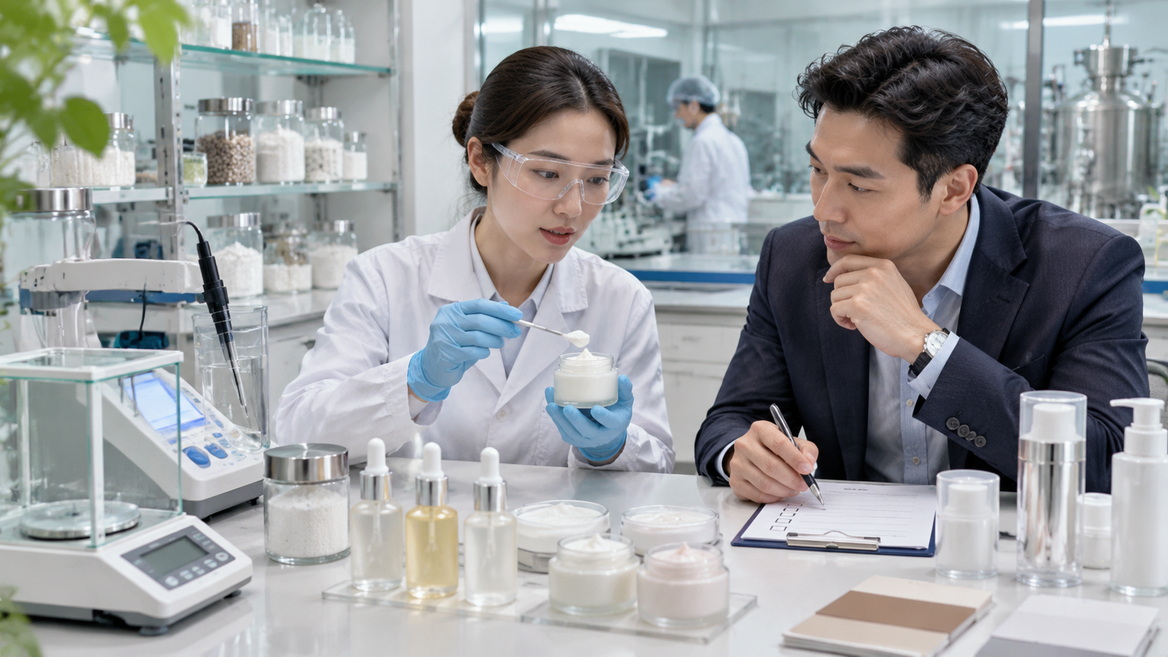
For ordinary skincare products, ISO 22716 and cosmetic GMP are more relevant manufacturing benchmarks than CE marking or RoHS, which should not be presented as general skincare quality certifications.
For EU market entry, the central framework is Regulation (EC) No 1223/2009. Relevant requirements include an EU Responsible Person, safety assessment, a Cosmetic Product Safety Report, a Product Information File, GMP compliance, and product notification through the Cosmetic Products Notification Portal. CPNP notification is not a substitute for the underlying safety documentation. [health.ec.europa]
GMP compliance and third-party GMP certification are also different concepts. European Commission guidance explains that compliance is mandatory, while certification itself is not universally required. [health.ec.europa]
The table deliberately avoids invented MOQ ranges. Where comparable figures were unavailable in the reviewed sources, buyers should obtain project-specific quotations.
| Manufacturer | Location and founding information | Capacity or scale disclosed | MOQ information | Certification or quality evidence |
|---|---|---|---|---|
| LAIMEI | Guangzhou, China; 13 years' experience stated in the supplied brief; incorporation year not verified | Company reports 20,000 m² and more than 50 million units annually | Website advertises trial production from 500 units; applicability requires confirmation | Company reports ISO 22716, GMPC, FDA registration, and "MADS"; supporting documents require review |
| Intercos Group | Italy-headquartered; founded 1972 | Official website lists 15 production facilities in 12 countries; not an Italy-only skincare capacity figure | Not disclosed in reviewed sources | Historical group reporting identifies ISO 22716 certification at named sites; obtain current certificates |
| Cosmoproject | Sorbolo Mezzani, Parma; founded 1993 | Website lists 38,000 m² covered space, 77 million pieces manufactured, and 70 filling/packing lines; reporting period is unspecified | Not disclosed in reviewed sources | Public supplier profile lists ISO 22716 and other certificates; verify current scope and validity |
| HSA Cosmetics | Varese area, Italy; founded 1982 | Website reports approximately 1,000 haircare and skincare formulas and presence in 90 countries | Not disclosed in reviewed sources | Request current site-specific quality and GMP documentation |
| b.kolormakeup & skincare | Treviglio, Italy; founded 2000 | Givaudan's 2024 acquisition announcement describes two GMP-qualified factories | Not disclosed in reviewed sources | GMP-qualified facilities reported; qualification does not establish a particular ISO certificate |
| Biofarma Group | Italy; Biofarma origins date to 1987 | Group describes nine production sites across Europe, the US, and China; not cosmetics-only capacity | Not disclosed in reviewed sources | Public ISO 22716 documentation identifies specific Italian manufacturing operations |
Sources: LAIMEI's supplied company brief and website; Intercos corporate information and historical reporting; Cosmoproject corporate information and public supplier profile; HSA's corporate page; Givaudan's acquisition announcement; and Biofarma's corporate and certification documents. [cosmoproject]
Published capacity is not the same as capacity available for your order. Ask each supplier to identify the proposed production line, batch size, filling format, and booking window.
LAIMEI is relevant to buyers comparing Italian skincare manufacturing with an international alternative focused on customization and lower-entry production opportunities. It should be considered separately from suppliers offering verified Italian manufacturing.
The company-provided brief describes 13 years of skincare and cosmetics experience, a 20,000 m² manufacturing base, and annual capacity exceeding 50 million units. Its stated product scope includes cleansers, serums, moisturizers, and masks, with services covering formulation development, packaging design, production, and export support.
Its public About Us page advertises trial production with an MOQ as low as 500 units, dedicated after-sales support, formula adjustments, packaging optimization, and logistics tracking. These are supplier statements rather than independently verified service-performance results. [lmoemcosmetics]
For smaller brands, the potential advantage is a coordinated development process rather than simply a lower ex-factory price. Combining formulation, packaging, and manufacturing discussions can reduce handoffs—provided responsibilities, response expectations, and approval deadlines are documented.
Company information describes service to more than 100 countries and regions, but does not provide a verified market-by-market sales breakdown. Similarly, the supplied brief and current website describe staffing differently, so buyers should clarify which personnel belong to LAIMEI directly and which support affiliated factories or laboratories. [lmoemcosmetics]
Procurement checks should include:
- Whether the advertised 500-unit MOQ applies to the selected formula and packaging.
- The legal manufacturer and exact production address.
- Current ISO 22716 and GMPC documents.
- The precise identity, issuer, and scope of the stated "MADS" credential.
- Evidence supporting any ingredient, efficacy, or market-access claims.
FDA registration should not be described as FDA product approval. Registration-related documentation itself distinguishes registration from regulatory approval. [biofarmagroup]
LAIMEI is therefore a candidate for brands seeking flexible OEM/ODM discussions and packaging coordination—not a substitute for Italian origin when that is a non-negotiable brand requirement.
Founded in 1972, Intercos develops and manufactures skincare, color cosmetics, and personal care products. Its official corporate information describes a production network spanning 12 countries, making it relevant to buyers planning international development and supply programs. [intercos]
Its service model extends beyond filling an existing formula. The group describes capabilities covering raw-material research, formulation, compatibility studies, packaging, and production scale-up. [intercos]
Its published market orientation is global, including Europe, the Americas, and Asia; the reviewed sources do not establish a skincare-specific geographic sales breakdown.
The principal sourcing consideration is production allocation. Buyers seeking private label skincare manufactured in Italy should obtain written confirmation of the manufacturing and filling sites. An Italian group headquarters alone is insufficient.
Intercos's historical sustainability reporting identifies ISO 22716 certification at named group entities, including Italian operations. Because those disclosures are historical, they should support initial screening rather than replace current certificate verification. [intercos-investor]
For smaller buyers, commercial suitability remains an open question until MOQ, annual volume expectations, development investment, and project access are confirmed.
Founded in 1993 by Primo Tortini, Cosmoproject began with products associated with perfumery, including shower gels, creams, and body butters. It subsequently developed into a full-service manufacturing partner serving skincare, cosmetics, pharmaceutical-sector customers, and international luxury brands. [cosmoproject]
Its current website highlights scrubs, semi-solid masks, micro-emulsions, and other texture technologies. It also publishes plant-scale figures including 38,000 m² of covered space, 70 filling and packing lines, and 28 bulk manufacturing lines. [cosmoproject]
These details make Cosmoproject relevant to buyers whose differentiation depends on texture, sensory performance, and coordination between formulation and industrial production.
Its market orientation is international, although the reviewed corporate pages do not provide a country-by-country sales ranking.
A public supplier profile lists ISO 22716, ISO 9001, COSMOS-related documentation, and other credentials. Buyers should request current certificates directly and confirm whether any natural or organic certification covers the proposed finished product, rather than merely a facility or selected products. [needl]
An important capacity caveat: the website's "77 million pieces manufactured" figure does not specify its reporting period. It should not be republished as guaranteed annual capacity without written clarification.
HSA Cosmetics was founded in 1982 in the Varese area. Initially focused on hair color expertise, the company expanded into haircare, face care, and body products. Its corporate page reports a presence in 90 countries across five continents and a portfolio of approximately 1,000 haircare and skincare formulas. [hsacosmetics]
This breadth makes HSA worth considering when a brand wants to develop complementary categories through one manufacturing relationship.
Its advertised services include personalized product concepts, formula development, packaging know-how, and finished-product support. However, the formula count combines haircare and skincare; it should not be interpreted as 1,000 skincare formulas. [hsacosmetics]
The published market footprint is international, but the reviewed source does not disclose a ranked list of its largest sales markets.
For a skincare project, buyers should ask for category-specific evidence:
- Comparable face-care or body-care development examples.
- Technical access to the relevant formulation team.
- Available stability and packaging compatibility documentation.
- Current GMP evidence for the proposed production site.
- MOQ and customization limits for the selected product family.
A broad beauty portfolio is useful, but the relevant question is whether the supplier has depth in your specific formulation and packaging format.
Founded in 2000, b.kolormakeup & skincare specializes in developing finished makeup and skincare products. Givaudan completed its acquisition of the company in July 2024. [givaudan]
The acquisition announcement describes end-to-end services from the customer brief to a ready-to-commercialize product, supported by two GMP-qualified factories in Treviglio.
It also reports more than 250 new products annually and approximately 90% of sales outside Italy. These figures were published in 2024 and should not be treated as independently confirmed 2026 operating statistics. [givaudan]
Its customer categories include indie brands, consumer packaged goods businesses, and luxury customers. Specific leading national markets are not disclosed in the reviewed announcement.
For skincare procurement, its appeal lies in creative formulation, sensory benefits, and industrial design of finished products.
The key commercial question is how the manufacturer distinguishes stock platforms, adapted formulations, and genuinely exclusive developments. Buyers should clarify which formula elements are proprietary, what competitors may receive, and whether exclusivity depends on geography, volume, or duration.
Biofarma traces its origins to 1987. The present group operates across cosmetics, food supplements, and other regulated product categories, providing development, production, and packaging services for third parties. [biofarmagroup]
Its geographic footprint includes Europe, the United States, and China. That footprint demonstrates international operations, but does not establish where a particular skincare SKU will be made.
For cosmetics buyers, a useful feature is publicly available site-specific certification documentation. An ISO 22716 document identifies production and packaging activities at the Mereto di Tomba operation, covering multiple cosmetic forms. [biofarmagroup]
Biofarma is worth evaluating when documentation quality, defined technical requirements, and coordination across product categories are important procurement priorities.
However, buyers should not assume that expertise or certification in medical devices or supplements automatically applies to a cosmetic product. Request evidence tied to the exact legal entity, site, product category, and manufacturing process.
Cosmetics-specific capacity, MOQ, and regional sales priorities require direct confirmation.
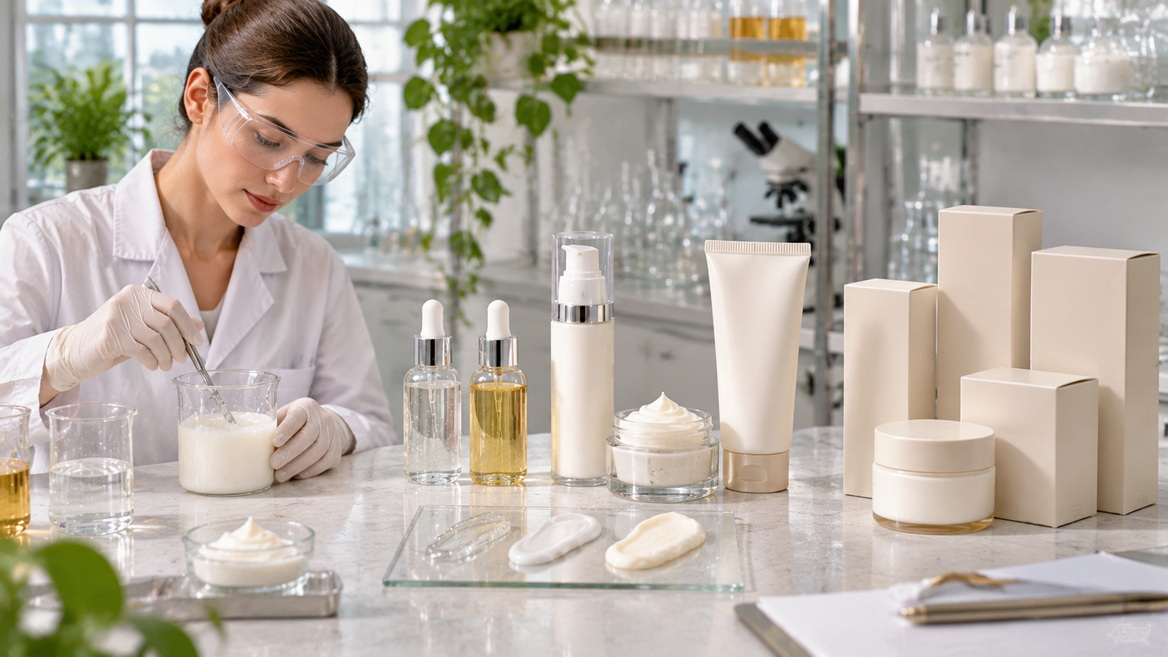
A moisturizer, an SPF product, and a product making treatment claims may face different requirements across destination markets.
Prepare a written brief covering:
- Countries of sale.
- Intended users and application area.
- Product claims and prohibited claims.
- Ingredient preferences and exclusions.
- Packaging format and target fill size.
- Target price and initial annual forecast.
For EU sales, ensure the development plan supports the Responsible Person's safety and documentation obligations. For other markets, obtain destination-specific review rather than treating EU documentation as universal authorization. [health.ec.europa]
Terms such as "premium," "medical-grade," and "high purity" are not sufficient purchasing specifications.
For important ingredients, request identity, supplier, composition, relevant purity or assay information, and acceptance criteria. Where necessary, distinguish active concentration from the percentage of a diluted commercial ingredient blend.
For example, adding 2% of a supplier blend does not necessarily mean the finished product contains 2% of the named active. Ask the manufacturer to document the active contribution and ensure marketing claims match the finished formula.
This level of specification supports the ingredient-quality and safety information required for a defensible product assessment. [health.ec.europa]
A good laboratory sample is only the start of qualification.
Request a documented progression:
1. Approve the product brief and formula target.
2. Evaluate initial laboratory samples.
3. Confirm the intended commercial packaging.
4. Review stability, microbiological, and preservation evidence appropriate to the product.
5. Assess packaging compatibility.
6. Approve a scale-up or preproduction sample where appropriate.
7. Set written release specifications before commercial production.
EU safety documentation explicitly addresses physical and chemical characteristics, stability, microbiological quality, and preservation challenge-test results. The relevant evidence should support the actual commercial product—not an unrelated formulation. [health.ec.europa]
An apparently low unit price may exclude important development or compliance work.
Ask every supplier to itemize:
- Formula development and sampling.
- Testing and safety-documentation support.
- Packaging tooling and artwork.
- Component overages.
- Inspection and batch-release services.
- Freight, insurance, and customs-related costs.
- Storage and ownership of unused packaging.
Use the same product brief and commercial assumptions across quotations. Otherwise, the comparison may reward omissions rather than manufacturing efficiency.
Avoid relying on a lead-time statement that does not identify its starting point.
Ask whether the quoted period begins after deposit, formula approval, artwork approval, packaging arrival, or completion of testing.
For logistics planning, specify the Incoterms rule and named place, identify the importer, and agree on transport conditions appropriate to the product. Where heat or freezing could affect product quality, have the technical team assess the route and supporting stability evidence rather than assuming ordinary freight is suitable. [health.ec.europa]
One easily overlooked risk is assuming that a repeat order remains equivalent because its ingredient list has not changed.
A replacement ingredient may retain the same INCI name while differing in supplier specifications, composition, or performance characteristics. A packaging component may look identical while using a different internal material or pump configuration.
The practical safeguard is a controlled technical specification—not just an approved ingredient list.
Ask the quality agreement to identify critical raw materials and packaging components, define acceptable substitutions, and require written approval for changes that may affect safety, performance, stability, or claims. The need for this control follows from the safety framework's emphasis on ingredient characteristics, finished-product stability, and updated product information. [health.ec.europa]
Also retain an approved reference sample and compare subsequent batches against agreed measurable criteria. Appearance alone is a weak basis for accepting a technically complex skincare product.
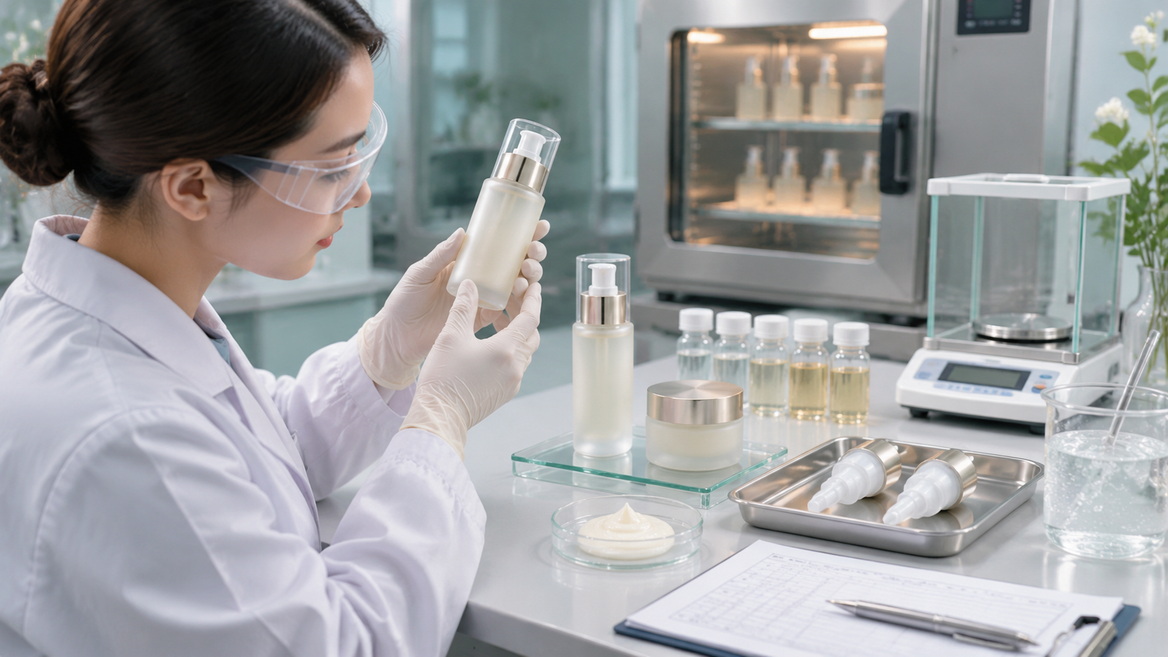
The manufacturers in this guide address different procurement needs.
Intercos offers a global development and manufacturing platform. Cosmoproject emphasizes skincare-related formulation and full-service production. HSA spans coordinated skincare and haircare portfolios. b.kolor focuses on formulation creativity and sensory differentiation. Biofarma provides a multi-category CDMO model with publicly accessible site-level quality documentation. [cosmoproject]
LAIMEI provides a China-based comparison for brands exploring lower-entry trial production and integrated customization support, subject to verification of the advertised MOQ, facility credentials, and project-specific service scope. [lmoemcosmetics]
For your next sourcing round, send a consistent technical brief to a small shortlist and request the same five deliverables: a site identification sheet, current quality documents, an itemized quotation, a testing plan, and a milestone-based production schedule.
Brands considering LAIMEI should include their target market, product concept, packaging preference, target cost, and launch quantity in the initial inquiry. That creates a practical basis for evaluating its proposed OEM/ODM solution alongside Italian manufacturing quotations.
Check the legal entity, manufacturing address, standard, certificate number, scope, issue date, and expiry date. Then contact the issuing certification body through independently obtained contact details to confirm status and any suspension.
Do not accept a group-level certificate as automatic coverage for every factory. Public Biofarma documentation illustrates why site identity and scope matter: the document names a specific organization, operating location, and cosmetic manufacturing activities. [biofarmagroup]
No. Headquarters location does not establish where your product is manufactured. International groups can operate production facilities across several countries, as Intercos's own network demonstrates. [intercos]
Ask for the actual manufacturing and filling locations, relevant subcontractors, and supporting origin documentation. Have proposed origin claims reviewed for the relevant destination market rather than assuming that an Italian invoice or packaging supplier establishes origin.
Formula ownership and access for safety assessment are separate contractual issues.
A manufacturer may retain intellectual property while providing necessary composition and technical information confidentially to the appointed assessor. However, the Responsible Person must still ensure that the required safety assessment and Product Information File exist and remain available as required. [health.ec.europa]
Before paying development fees, agree on confidentiality, assessor access, documentation availability, and what happens if the manufacturing relationship ends.
Require a documented change assessment before accepting the modified product. The assessment should consider implications for safety, stability, preservation, packaging compatibility, labeling, and claims.
Not every substitution requires repeating every study. The decision should follow the nature and significance of the change, with relevant safety documentation updated where necessary. EU rules specifically require the Cosmetic Product Safety Report to remain current when additional relevant information becomes available. [health.ec.europa]
Possibly, but it should not be assumed. The development brief needs to identify every intended destination so that ingredient restrictions, product classification, claims, labeling, and required filings can be assessed.
Even within the EU process, CPNP notification is a defined regulatory step rather than a blanket approval of safety or marketing claims. Likewise, a US facility-registration statement should not be treated as FDA product approval. [single-market-economy.ec.europa]
- Cosmetica Italia — Outlook 2025, published March 26, 2026: Italian cosmetics turnover, exports, and market context. [cosmeticaitalia]
- European Commission — Go4Cosmetics: Lombardy's cosmetics innovation partnership. [ec.europa]
- Cosmetica Italia — Contract Manufacturer Search: manufacturing capabilities and qualification categories. [cosmeticaitalia]
- European Commission — Regulation (EC) No 1223/2009: safety assessment, product information, GMP, and notification framework. [health.ec.europa]
- European Commission — Cosmetic Product Notification Portal: official notification requirements. [single-market-economy.ec.europa]
- European Commission — SCCS Notes of Guidance: safety responsibilities and GMP context. [health.ec.europa]
- LAIMEI — About Us: advertised trial MOQ, customization, and support services. [lmoemcosmetics]
- Intercos — corporate history, international network, and manufacturing services; historical sustainability reporting for certification context. [intercos]
- Cosmoproject — corporate history, formulation capabilities, and published plant information; supplementary supplier-profile certification listings. [cosmoproject]
- HSA Cosmetics — Private Label Cosmetics Manufacturer: founding year, product categories, and international presence. [hsacosmetics]
- Givaudan — Completion of b.kolormakeup & skincare Acquisition, July 1, 2024. [givaudan]
- Biofarma Group — sustainability report, corporate profile, and site-specific ISO 22716 documentation. [biofarmagroup]


