
Views: 229 Author: Vera Publish Time: 2026-11-22 Origin: Site


Content Menu
● Organic Skincare vs Natural Skincare: What Is the Difference?
>> What Organic Skincare Actually Means
>> What Natural Skincare Actually Means
● Organic vs Natural Skincare: A Practical Comparison
● Which Performs Better for Sensitive Skin?
>> Tolerance Depends on Ingredients, Not Their Origin
>> Hydration Requires More Than a Botanical Story
>> Fragrance Deserves Special Attention
● Three Development Decisions That Matter More Than the Label
>> 1. Define the Sensitive-Skin Audience Precisely
>> 2. Give Every Ingredient a Clear Job
>> 3. Protect the Formula Throughout Real-World Use
● How to Compare Organic and Natural Prototypes Fairly
>> Step 1: Create a Matched Product Brief
>> Step 2: Establish Safety and Quality Gates
>> Step 3: Measure Relevant Outcomes
>> Step 4: Report Results Without Overstating Them
● Choosing the Right Positioning for Your Collection
>> Choose Organic When Verified Sourcing Is Central
>> Choose Natural When a Defined Ingredient Philosophy Fits
>> Choose Performance-Led Positioning When Comfort Comes First
● Developing a Sensitive Skin Collection With LAIMEI
>> Is Organic Skincare Always Better for Sensitive Skin?
>> Can Natural Skincare Cause Allergic Reactions?
>> Can a Product Be Both Organic and Natural?
>> Should Sensitive Skin Collections Avoid Every Preservative?
>> What Does "Hypoallergenic" Prove?
>> How Should Consumers Try a New Product?
Organic skincare vs natural skincare is not a contest with an automatic winner. For sensitive skin collections, performance depends more on the finished formula, ingredient selection, fragrance exposure, and testing than on either label. Organic certification can support sourcing credibility. Natural positioning can communicate an ingredient philosophy. Neither, by itself, proves superior tolerance or hydration.
From a product-development perspective, I would start with a different question: what must this collection deliver for people whose skin easily feels tight, uncomfortable, or irritated?
For brands developing private label sensitive skin products, the strongest approach is formula-first: establish tolerance and measurable benefits, then choose the sourcing and certification strategy that fits.

Organic skincare connects agricultural ingredients with defined production and handling requirements under a particular certification system.
In the United States, the Department of Agriculture oversees the National Organic Program. Eligible cosmetics containing agricultural ingredients may qualify for organic labeling when they meet applicable requirements. These requirements are separate from the safety and labeling obligations governing cosmetics.
A crucial distinction: an organic ingredient does not automatically make the finished product certified organic.
Brands should verify:
- Which certification system applies.
- Whether certification covers individual ingredients or the finished product.
- Which label wording and certification marks are permitted.
- Whether the proposed formula and manufacturing process meet the chosen standard.
Organic certification is valuable evidence of compliance with a sourcing standard. It is not a clinical assessment of sensitive-skin performance.
Natural skincare generally emphasizes ingredients derived from plants, minerals, or other natural sources. However, the exact meaning depends on the market, brand definition, and any voluntary standard used.
The FDA has not established a regulatory definition of "natural" for cosmetic labeling. Therefore, two natural skincare collections can follow substantially different formulation policies.
One may prioritize minimally processed botanical oils. Another may use extensively processed, naturally derived ingredients.
For buyers, "natural" should begin a documentation discussion—not end one.
| Evaluation Area | Organic Skincare | Natural Skincare | Sensitive-Skin Buying Priority |
|---|---|---|---|
| Main positioning | Agricultural sourcing and certification | Ingredient origin and formulation philosophy | A transparent, clearly defined claim |
| Documentation | Certificates and traceability under the selected scheme | Supplier records and any applicable voluntary standard | Verify the finished product's actual status |
| Tolerance | Cannot be predicted from organic status | Cannot be predicted from natural origin | Evaluate the complete formula |
| Fragrance risk | May contain fragrant botanical ingredients | May contain fragrant botanical ingredients | Review fragrance and known allergens |
| Performance evidence | Requires finished-product substantiation | Requires finished-product substantiation | Request relevant test reports |
| Development flexibility | Depends on certification restrictions | Depends on the brand's ingredient policy | Preserve safety and functionality |
| Commercial fit | Suitable when verified organic sourcing matters to buyers | Suitable when nature-led positioning matters to buyers | Match positioning to credible product benefits |
The categories also overlap. A product can contain naturally derived ingredients and certified organic agricultural ingredients. Treating them as mutually exclusive can obscure more useful formulation decisions.
The FDA explicitly states that an ingredient's source does not determine its safety. Plants can contain substances that are allergenic or toxic, whether organically grown or not.
This matters because sensitive-skin purchasing often relies on reassuring language. "Botanical," "organic," and "natural" may sound gentle, but none establishes how a finished product will behave on a particular person.
A fragrance-free natural moisturizer may be a better choice for someone with fragrance sensitivity than an organic cream containing fragrant essential oils. The reverse could also be true when the organic formula better avoids that person's triggers.
The useful comparison is between specific formulas—not category names.
For a moisturizer, evaluate what the product does during use:
- Does it improve measured skin hydration?
- Does it reduce the feeling of tightness?
- Is the texture comfortable enough for repeated application?
- Does it perform consistently throughout its intended shelf life?
Dermatology guidance supports gentle cleansing and fragrance-free moisturization, with texture selected for the user's needs. A compelling plant extract story cannot replace these fundamentals.
Brands should also distinguish an ingredient's published properties from evidence for the finished formula. A supplier study does not automatically substantiate the same claim for every product containing that ingredient.
For sensitive skin collections, fragrance-free is often a more useful development priority than maximizing botanical variety.
The American Academy of Dermatology advises fragrance-free products in guidance for several sensitive or easily irritated skin conditions. It also warns that "unscented" products and botanical ingredients may still involve fragrance-related ingredients.
However, fragrance-free does not mean allergy-proof. Other ingredients can cause reactions, and individual sensitivities differ.
My recommendation is to review every ingredient's function. If a botanical is included mainly to create scent, reconsider whether it belongs in a sensitivity-focused collection.
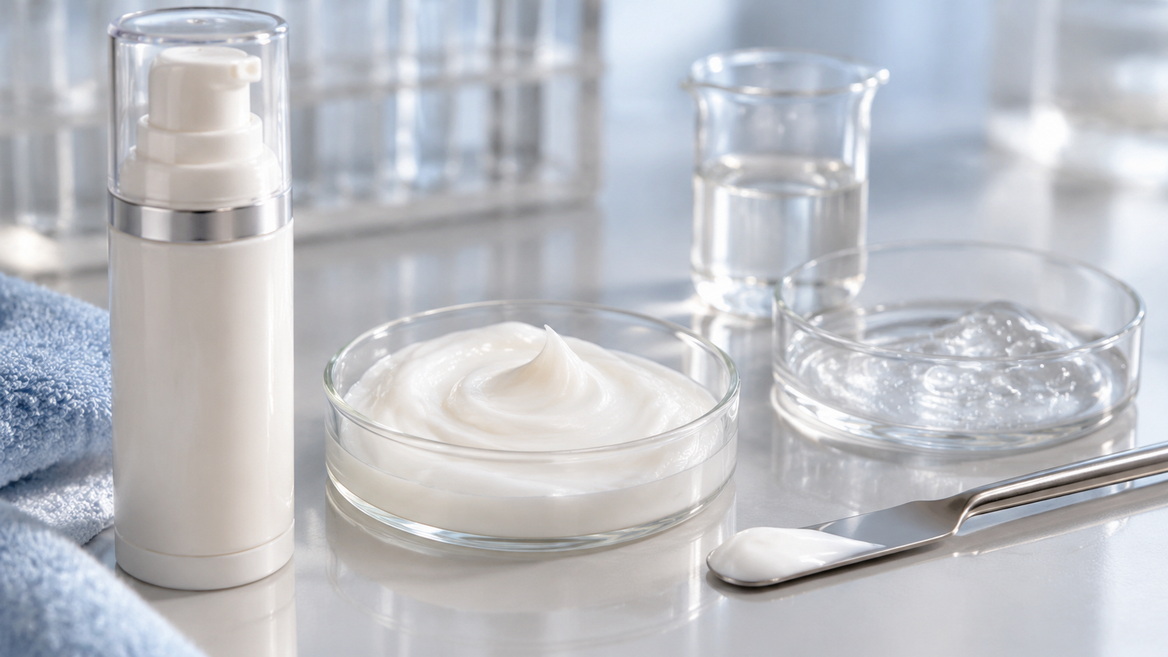
"Sensitive skin" is not a sufficiently detailed development brief.
A collection for consumers who experience dryness after cleansing may require a different approach from one intended for people with diagnosed contact allergies or rosacea.
Clarify:
- The target user's main discomfort.
- Known ingredients or product types they avoid.
- Whether products are rinse-off or leave-on.
- The intended climate and application frequency.
- Whether the range is cosmetic care or requires a separate therapeutic pathway.
Cosmetic products should not be presented as treating eczema, rosacea, or other diseases without meeting the relevant regulatory requirements.
A long ingredient list is not automatically worse. Equally, a short list is not automatically safer.
The better question is whether each ingredient contributes to a necessary function: cleansing, moisturizing, preservation, stability, texture, or a substantiated cosmetic benefit.
For a botanical extract, request information about its identity, extraction process, carrier, specifications, and relevant safety documentation.
Avoid adding numerous extracts simply to make the label appear more sophisticated. Each addition should earn its place in the formula.
Neither organic nor natural positioning removes the need for appropriate preservation and product safety assessment.
For water-containing products, ask the manufacturer to explain the preservation strategy and provide relevant microbiological evidence. Review stability and packaging compatibility alongside skin tolerance.
Airless packaging can be considered where appropriate, but packaging is not a substitute for a validated product-protection strategy.
These are separate questions: a formula can feel pleasant while still needing better stability or microbiological protection.
A useful development program should test the actual commercial question rather than attempt to prove a preferred marketing conclusion.
Compare products with the same purpose, target audience, application frequency, and intended benefits.
For example, compare two daily facial moisturizers—not an organic facial oil against a natural rinse-off cleanser.
Keep fragrance policy and packaging as consistent as practical. Otherwise, differences may reflect the product format rather than organic or natural positioning.
Before comparing consumer preference, confirm that each prototype satisfies the project's safety, stability, microbiological, and packaging requirements.
A prototype that fails these checks should not advance merely because it has a desirable certification story.
An appropriately designed evaluation could include:
| Outcome | Possible Assessment | What It Helps Establish |
|---|---|---|
| Hydration | Instrumental skin-hydration measurement | Whether moisturization improves under test conditions |
| Barrier-related performance | Transepidermal water loss measurement | Changes in water loss under a defined protocol |
| Tolerance | Qualified assessment and recorded reactions | How participants tolerate the tested product |
| User experience | Structured questionnaires | Perceived comfort, texture, and willingness to continue |
| Product quality | Stability and microbiological testing | Suitability for intended storage and use |
This is a proposed evaluation framework, not a claim that either category has already demonstrated superiority.
Record the participant characteristics, study duration, comparator, methods, and limitations.
Do not convert "participants reported softer-feeling skin" into "clinically proven to repair sensitive skin."
The most useful result may be that both formulas perform similarly. In that case, certification, pricing, supply reliability, and customer preferences can guide the commercial decision.
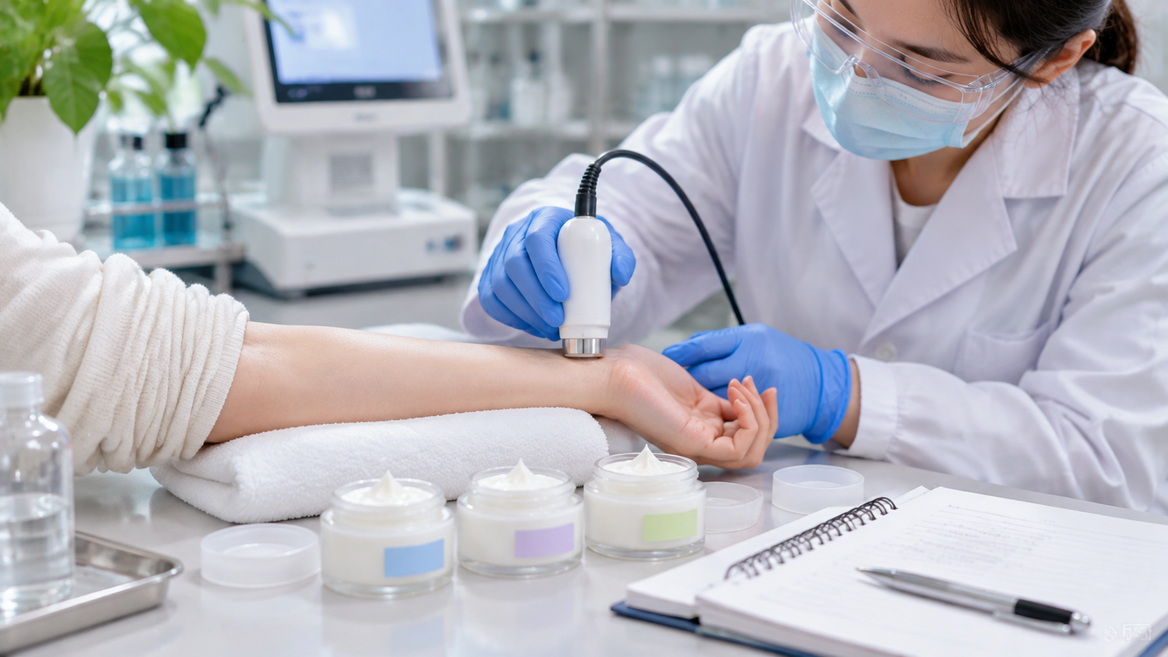
Organic positioning makes sense when your customers actively value certified agricultural sourcing and your supply chain can support the chosen standard.
Before committing, obtain quotations covering ingredients, certification-related work, documentation, and manufacturing requirements. Do not assume every organic project has the same cost structure.
Choose this route for a defensible sourcing commitment—not as a shortcut to a gentleness claim.
Natural positioning can suit brands that want a nature-led story without committing to finished-product organic certification.
Define that story precisely. Explain which ingredients you prioritize, which standards you follow, and how you substantiate any percentage-based claims.
Avoid vague statements such as "chemical-free" or "safe because it is natural." They do not explain product performance.
Some collections benefit from leading with gentle cleansing, moisturization, and documented tolerance while treating organic or natural sourcing as supporting information.
For sensitive-skin buyers, a clear explanation of what was tested may be more useful than a broad purity claim.
GUANGZHOU LAIMEI CREATIVE RESEARCH INTELLIGENT BIOLOGICAL RESEARCH CO., LTD. provides OEM/ODM development support spanning formulation, packaging design, and manufacturing.
According to company-provided information, LAIMEI brings 13 years of skincare and cosmetics development experience, a 20,000-square-meter GMP-standard production base, and annual capacity exceeding 50 million units. Its reported product scope includes cleansers, serums, moisturizers, and masks, with service to more than 100 countries and regions.
For an organic or natural sensitive-skin project, translate these capabilities into a documented development brief covering ingredient policies, target-market requirements, testing, packaging, and scale-up.
Request current certificates and verify their scope. Facility quality credentials do not automatically certify a finished product as organic. Likewise, FDA registration must not be presented as FDA product approval.
Share your target market, product formats, certification goals, packaging preferences, and launch volume with LAIMEI to request a tailored formulation and validation proposal.
No. Organic status concerns compliance with a particular sourcing standard. Sensitive-skin suitability depends on the ingredients, finished formula, intended use, and individual user.
Yes. Naturally sourced ingredients can contain allergens. People with known allergies should review ingredient lists and seek professional guidance when the trigger is unclear.
Yes. The terms can overlap. However, a natural claim does not prove organic certification, and organic ingredient certification does not necessarily cover the finished product.
No. Product protection is a safety consideration. Select an appropriate preservation system and validate the finished product rather than treating "preservative-free" as an automatic advantage.
It does not guarantee that a product cannot cause allergies. The FDA has no federal standard or definition governing the term. Brands should explain the evidence supporting their particular claim.
The American Academy of Dermatology recommends testing a small area twice daily for seven to ten days, following normal-use directions. Stop if a reaction occurs. This home-use check does not replace medical patch testing or guarantee future tolerance.
1. U.S. Food and Drug Administration. ["Organic" Cosmetics]. Explains the relationship between cosmetic regulation and agricultural organic certification, and why ingredient origin does not establish safety. [fda]
2. U.S. Food and Drug Administration. [Small Businesses & Homemade Cosmetics: Fact Sheet]. Addresses natural and organic labeling, manufacturer responsibilities, and cosmetic safety requirements. [fda]
3. U.S. Food and Drug Administration. [Allergens in Cosmetics]. Describes cosmetic allergens and the limitations of claims including "hypoallergenic" and "for sensitive skin." [fda]
4. U.S. Food and Drug Administration. [Fragrances in Cosmetics]. Discusses fragrance ingredients, labeling, and potential allergic reactions or sensitivities. [fda]
5. American Academy of Dermatology. [How to Test Skin Care Products]. Provides home-use testing guidance and cautions about fragrance-related ingredients in botanical and unscented products. [aad]
6. American Academy of Dermatology. [Eczema Types: Atopic Dermatitis Skin Care]. Supports the discussion of fragrance-free moisturization and care for easily irritated skin; it does not establish that either product category treats eczema. [aad]
7. U.S. Food and Drug Administration. [Cosmetics Labeling Claims]. Explains truthful labeling and the distinction between cosmetic and therapeutic claims. [fda]
8. U.S. Food and Drug Administration. [FDA Authority Over Cosmetics: How Cosmetics Are Not FDA-Approved, but Are FDA-Regulated]. Supports the distinction between regulatory obligations and product approval. [fda]


