
Views: 234 Author: Vera Publish Time: 2026-11-20 Origin: Site


Content Menu
● What Is a Topical Hyaluronic Acid Filler?
>> Dehydration Lines Versus Structural Wrinkles
● Topical Hyaluronic Acid Versus Injectable Fillers
● What Clinical Research Says About Hyaluronic Acid for Skin
>> A Six-Week Facial Serum Study
>> A More Recent Molecular-Weight Comparison
● Does Hyaluronic Acid Molecular Weight Matter?
>> Read Beyond the Ingredient Story
● How to Choose a Hyaluronic Acid Serum for Your Skin
>> Why Supporting Ingredients Matter
● How to Use Topical Hyaluronic Acid Filler
● Troubleshooting Tightness, Stickiness, and Pilling
>> "My Skin Still Feels Tight"
● A Four-Week Plan for Evaluating Results
● Developing a Private Label Hyaluronic Acid Serum
>> A Practical Development Checklist
● How LAIMEI Supports Custom Skincare Development
>> Can Topical Hyaluronic Acid Replace Dermal Fillers?
>> How Quickly Does a Hyaluronic Acid Serum Work?
>> Can Oily or Acne-Prone Skin Use Hyaluronic Acid?
>> Should Hyaluronic Acid Always Go on Damp Skin?
>> Is a Higher Hyaluronic Acid Percentage Better?
>> What Should Brands Request Before Ordering?
A topical hyaluronic acid filler can help skin look smoother, fresher, and more hydrated without injections. However, "filler" describes a cosmetic plumping effect—not the structural volume delivered by an injectable treatment. Understanding that distinction helps consumers choose better skincare and helps brands develop products with credible benefits.
At GUANGZHOU LAIMEI CREATIVE RESEARCH INTELLIGENT BIOLOGICAL RESEARCH CO., LTD., our approach starts with a practical question: what should the finished formula actually deliver?
For consumers, that means comfortable hydration and realistic expectations. For skincare brands, it means balancing ingredient selection, sensory performance, testing, packaging, and responsible claims.

A topical hyaluronic acid filler is generally a serum, cream, or gel marketed to hydrate skin and temporarily soften the appearance of fine lines.
Hyaluronic acid, often abbreviated as HA, occurs naturally in the body. In skincare, it acts as a humectant: an ingredient that attracts and holds water.
When the outer skin becomes better hydrated, its surface can look more supple. Fine lines associated with dryness may become less noticeable.
This does not mean the product replaces lost facial fat, rebuilds cheek volume, or physically fills deep folds.
Not every facial line has the same cause.
Dehydration can make fine surface lines appear more obvious. Facial movement, sun exposure, and age-related tissue changes also influence wrinkles.
A hyaluronic acid serum for fine lines is most relevant when dryness contributes to the concern. Persistent folds or significant volume loss require a different conversation with a qualified dermatologist.
The shared ingredient name can obscure an important difference: delivery changes function.
| Consideration | Topical HA serum or cream | Injectable HA filler |
|---|---|---|
| Application | Spread over the skin | Administered by a qualified medical professional |
| Main purpose | Hydration and surface smoothing | Volume correction and contouring |
| Expected effect | More hydrated, temporarily plumper-looking skin | Physical augmentation in selected treatment areas |
| Maintenance | Continued skincare use | Depends on the product and treatment plan |
| Main limitations | Cannot restore structural facial volume | Requires medical assessment and carries procedural risks |
Topical skincare is not an equivalent substitute for an injectable procedure. Equally, someone seeking relief from tightness or superficial dehydration may not need a procedure at all.
Also distinguish a cosmetic serum from a "needle-free filler pen." Pressure-based devices force material into tissue and can cause serious injury. They are not ordinary topical skincare.
The evidence supports hydration benefits, but individual studies need careful interpretation.
A 2021 study evaluated an HA facial serum in 40 women aged 30–65 who used the product twice daily alongside sunscreen.
Instrument-measured hydration increased 134% immediately after application and remained 55% above baseline at week six. Investigators also reported improvements in smoothness, plumping, and fine-line appearance.
These findings are encouraging, but they belong to the tested formulation and study conditions.
They do not mean every HA serum increases hydration by the same amount. Nor does a hydration measurement describe a comparable increase in facial volume.
A 2024 randomized, double-blind trial studied moisturizers on the legs of 36 adults aged 60–80 with dry skin.
After four weeks, the low-molecular-weight HA formulation produced higher hydration measurements than the high-molecular-weight formulation and the vehicle.
However, differences in water-loss measurements and clinical symptom scores were not statistically significant between groups.
The lesson is useful: an improvement in one measurement does not establish superiority across every outcome. Results from elderly leg skin also cannot automatically predict facial wrinkle reduction.
Molecular weight describes the size of HA molecules. It can influence film formation, penetration, texture, and formulation behavior.
Larger molecules generally act closer to the surface. Smaller forms may penetrate further, depending on their size, the formulation, and the condition of the skin.
However, "smaller" does not automatically mean "better," and "multi-molecular" does not prove superior performance.
Ingredient lists may include:
- Hyaluronic acid.
- Sodium hyaluronate.
- Hydrolyzed hyaluronic acid.
- Sodium hyaluronate crosspolymer.
These names identify different forms, but they do not reveal every relevant property of the finished product.
From a product-development perspective, the better question is not "How many HA types are included?" It is "Does this formula provide measurable hydration, good tolerability, and a texture people enjoy using?"
The best hyaluronic acid serum for dry skin may feel too rich for someone with oily skin. Choose the complete formula rather than the hero ingredient alone.
| Skin concern | Useful formulation direction | What to assess |
|---|---|---|
| Dry, tight skin | HA with glycerin and a richer moisturizing base | Lasting comfort and reduced tightness |
| Oily, dehydrated skin | Lightweight serum or gel-cream | Residue, layering, and overall tolerability |
| Sensitive skin | Simple, fragrance-free formula | Stinging, redness, and individual triggers |
| Visible dehydration lines | Consistent hydration plus daily sun protection | Gradual changes under comparable conditions |
| Makeup pilling | Easily layered, compatible textures | Application amount and product combinations |
Humectants attract water. Emollients help soften the skin. Occlusive ingredients help limit moisture loss.
A well-designed moisturizer can combine these functions, which explains why an HA serum alone may not provide enough comfort for very dry skin.
Ceramides, glycerin, dimethicone, and other established moisturizing ingredients can be useful partners. A shorter ingredient list is not automatically better, but unnecessary complexity does not guarantee better results either.
A simple routine usually makes performance easier to evaluate.
1. Cleanse gently with lukewarm water and a suitable cleanser.
2. Apply a small amount of serum according to its directions.
3. Follow with moisturizer if the serum does not provide sufficient moisture retention.
4. Finish the morning routine with broad-spectrum SPF 30 or higher.
5. Introduce additional products gradually.
For many people, applying moisturizing products to slightly damp skin helps retain water.
However, this is not an absolute rule for every condition. People with rosacea or easily irritated skin may find application to dry skin more comfortable. Follow professional advice and the product instructions.
Many HA products are designed for daily use, sometimes twice daily. Follow the label rather than assuming more frequent application produces faster results.
Consistency matters more than applying a thick layer. If the product leaves a sticky film, reduce the amount before adding another serum.
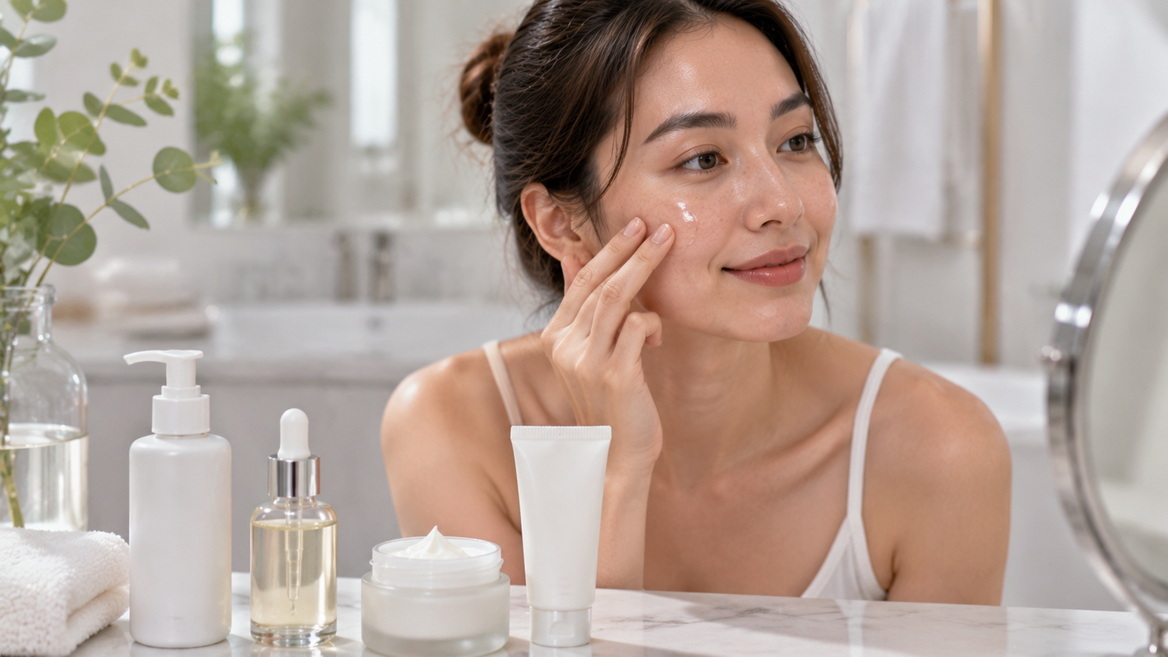
User experience is part of performance. A formula that tests well but feels unpleasant may be difficult to use consistently.
The routine may not provide enough moisturizing support, particularly in dry weather or air-conditioned environments.
Try pairing the serum with a suitable cream. Also consider whether cleansing habits or other active products are contributing to dryness.
Persistent burning, scaling, or redness deserves professional assessment rather than repeated product layering.
Apply less and assess the result. Tackiness reflects the overall formula, not necessarily excessive HA alone.
For brands, sensory testing should examine the intended application amount and the finished routine—not just a generous sample on the back of a hand.
Pilling can involve product quantity, rubbing, or incompatible layers.
Simplify the routine, use smaller amounts, and allow each layer to settle. Evaluate combinations individually rather than assuming the serum or sunscreen is inherently poor quality.
Consumers and development teams both benefit from a consistent review process.
- Before starting: record tightness, flaking, comfort, and visible fine lines.
- During week one: monitor tolerance and compatibility with moisturizer and sunscreen.
- During weeks two to four: compare comfort and appearance under similar conditions.
- At review: decide whether the product delivers enough benefit to justify continued use.
Take photographs in the same lighting, at a similar time, and without changing filters or camera settings.
Photographs can document appearance, but they do not replace instrumental measurements. For commercial claims, hydration testing, expert assessment, and consumer questionnaires answer different questions and should remain clearly distinguished.
For a brand, a successful topical HA product needs more than an attractive ingredient claim.
We recommend defining the user, application context, target texture, and evidence requirements before finalizing the formula.
| Development area | Questions worth asking |
|---|---|
| Product brief | Who will use it, and what concern should it address? |
| Formula design | Which HA forms and supporting moisturizers suit the brief? |
| Sensory performance | Does it layer comfortably under common daily products? |
| Stability | Does it retain acceptable appearance, viscosity, and odor? |
| Microbiological quality | Is preservation appropriate for the formula and packaging? |
| Packaging compatibility | Does the container protect and dispense the product reliably? |
| Claim support | Does the evidence match the exact wording proposed? |
"Hydrates skin" and "restores facial volume" are not interchangeable promises.
Likewise, ingredient-supplier data cannot automatically substantiate a finished-product percentage claim. Test the product consumers will actually receive.

Our company-provided profile describes 13 years of skincare and cosmetics research and manufacturing, with one-stop OEM/ODM support covering formulation, packaging design, and production.
It reports a 20,000 m² GMP-standard production base, annual capacity exceeding 50 million units, and products supplied to more than 100 countries and regions.
Our stated development network includes a Brazilian professor-led team, experienced dermatologists, senior technical engineers, and more than 1,000 professionals across collaborating factory laboratories.
For buyers, these capabilities should translate into practical project discussions: formulation feasibility, pilot production, testing scope, packaging compatibility, and scale-up requirements.
The company also reports ISO 22716 and GMPC credentials. Buyers should review current certificates, their scope, and the facilities covered. U.S. cosmetic facility registration must not be confused with product approval.
Planning a private label hyaluronic acid serum or moisturizing cream?
Send LAIMEI your target market, intended customer, preferred texture, packaging concept, and estimated launch quantity. Request a project-specific formulation proposal, sample plan, testing scope, and quotation before committing to production.
No. It can improve hydration and soften dehydration-related fine lines, but it cannot reproduce the structural volume or contour correction of injectable fillers.
Some formulas improve hydration shortly after application. Visible changes vary with the product and skin condition. Assess continued use over several weeks without expecting injectable-like results.
Often, yes. Choose a suitable lightweight formula and assess the entire ingredient list. An HA claim alone does not establish that a product will suit every acne-prone user.
Not always. Slightly damp skin can help moisturizing routines retain water, but sensitive or rosacea-prone skin may tolerate application to dry skin better. Follow the product directions.
Not necessarily. Concentration is only one variable. Molecular characteristics, supporting ingredients, texture, stability, and finished-product results also matter.
Request samples, ingredient documentation, relevant quality certificates, stability and microbiological testing information, packaging compatibility details, and support for proposed claims. Confirm minimum quantities and timelines separately.
1. IMAGE Skincare. "Forget the Needle: Topical Hyaluronic Acid Filler Is Your Skin Plumping Powerhouse." May 26, 2026. Original article reviewed for topic coverage and content gaps, not treated as independent clinical proof. [Read the original article]. [imageskincare]
2. "Efficacy Evaluation of a Topical Hyaluronic Acid Serum in Facial Photoaging." *Dermatology and Therapy*, 2021;11:1385–1394. DOI: 10.1007/s13555-021-00566-0. Source for the 40-participant study and reported hydration outcomes. [Read the study abstract]. [pubmed.ncbi.nlm.nih]
3. "Effectiveness of topical hyaluronic acid of different molecular weights in xerosis cutis treatment in elderly: a double-blind, randomized controlled trial." 2024. Source for the 36-participant molecular-weight comparison and its outcome limitations. [Read the study abstract]. [pubmed.ncbi.nlm.nih]
4. "Hyaluronic Acid in Topical Applications: The Various Forms and Their Properties." 2025. Review of HA characteristics, topical penetration, and cosmetic applications. [View the indexed review]. [pubmed.ncbi.nlm.nih]
5. American Academy of Dermatology. "Dermatologists' top tips for relieving dry skin." Practical guidance on moisturizing ingredients, damp-skin application, and sun protection. [Read the guidance]. [aad]
6. American Academy of Dermatology. "7 rosacea skin care tips dermatologists recommend." Source for the dry-skin application qualification for rosacea-prone users. [Read the guidance]. [aad]
7. American Academy of Dermatology. "Needle-free fillers: The risks you need to know about." Distinguishes pressure-based filler devices from topical skincare. [Read the safety guidance]. [aad]
8. U.S. Food and Drug Administration. "Registration & Listing of Cosmetic Product Facilities and Products." Explains registration requirements and why registration does not indicate approval. [Read the regulatory guidance]. [fda]


