
Views: 224 Author: Vera Publish Time: 2026-09-28 Origin: Site


Content Menu
● Introduction: Why Source for Canada?
>> 1. GUANGZHOU LAIMEI: An Overseas OEM/ODM Option for Canadian-Market Brands
>> 2. Pinnacle Cosmetics: Existing Formulas and Low Entry Quantities
>> 3. Vitelle Labs: Professional and Small-Batch Skincare
>> 4. NOC Cosmetics: No-Minimum Claims With Scale-Up Options
>> 5. Swift Innovations: R&D-Heavy Development in Alberta
>> 6. Cosmetica Laboratories: Custom Development for Larger Briefs
>> 7. Apollo Health and Beauty Care: Retail-Scale Personal Care
● Buyer's Guide: Verify Before Committing
>> Build a Product-Specific RFQ
>> Check the Formula, Not Just the Ingredient Story
>> Audit Compliance and Claims
>> Plan Samples, Inspection, and Logistics
>> Conclusion
● FAQ
>> 1. How can I tell whether a supplier's ISO 22716 certificate has expired?
>> 2. Is a Canadian Cosmetic Notification Form enough to sell an SPF moisturizer?
>> 3. Who should own a custom formula developed by an OEM/ODM factory?
>> 4. How can I compare a 20-litre MOQ with a 500-unit MOQ?
>> 5. What should I do if the approved sample passes, but the first production batch fails?
>> References
Finding a private label skincare supplier for the Canadian market is not simply a question of locating a factory in Canada. A procurement manager also needs to establish where the product will actually be made, whether the proposed formula can be sold under its intended claims, and whether the manufacturer can repeat the approved sample reliably at commercial scale.
Canada offers a range of potential partners: established Ontario manufacturers serving larger brands, professional-skincare specialists in British Columbia, and smaller-batch formulation businesses. Its regulatory framework also makes supplier documentation especially important. Cosmetics sold in Canada are subject to ingredient, labelling, and notification requirements; a supplier's familiarity with those requirements can reduce avoidable work at launch. Cosmetics Alliance Canada represents manufacturers alongside brand owners, distributors, and retailers, while Canadian government trade-data tools allow buyers to examine imports and exports by product classification. Neither an industry membership nor an export statistic, however, substitutes for an audit of a particular factory. [cosmeticsalliance]
There is a useful market signal, but it needs careful interpretation. Mordor Intelligence estimates Canada's cosmetic products market at USD 1.93 billion in 2025 and USD 2.02 billion in 2026. Its published definition focuses on face, eye, lip, and nail cosmetics; it is not a measure of Canada's entire private label skincare manufacturing sector. In its March 2026 report, IBISWorld separately identifies 98 cosmetic and beauty-product manufacturing businesses in Quebec, illustrating that Canadian production extends beyond any one company or city. [mordorintelligence]
This guide profiles six Canada-based options and, first, one clearly identified Guangzhou-based alternative for buyers selling into Canada. That distinction matters: an overseas manufacturer may suit a brand's cost, packaging, or production strategy, but its products should not be represented as Canadian-made.
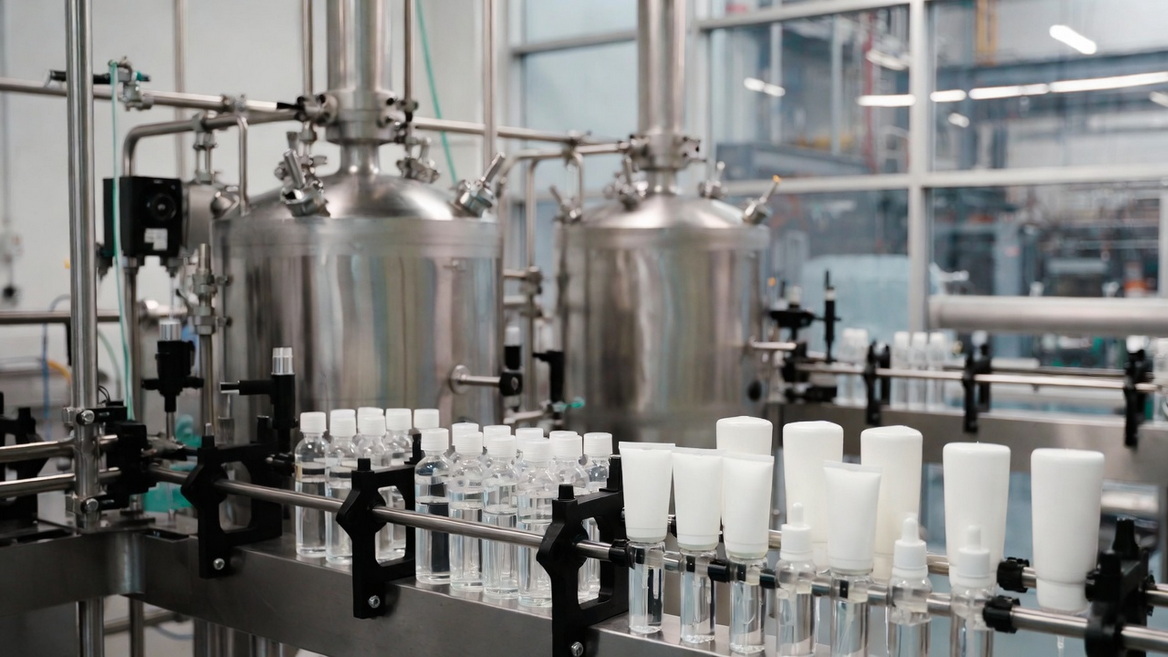
This is a procurement shortlist, not a verified ranking. The suppliers were selected for publicly described private label, contract manufacturing, or custom-development capabilities relevant to skincare. Placement does not imply that we inspected their facilities, validated every certificate, obtained comparable quotations, or measured on-time delivery. The Guangzhou company appears first as a transparent comparison option—not as a Canadian manufacturer.
For a long-term partner, evaluate these dimensions before awarding a purchase order:
- Manufacturing identity: Confirm the legal entity, production address, and which steps—compounding, filling, labelling, and testing—occur at that site.
- Quality system: Request current, site-specific evidence for any claimed ISO 22716 or GMP system. ISO 22716 provides guidance for cosmetic production, control, storage, and shipment; it is more relevant here than CE or RoHS marks, which should not be used as shorthand for skincare compliance. [iso]
- Formulation and testing: Determine whether the supplier offers stock formulas, modifications, or genuinely custom OEM/ODM development. Ask how it tests microbiological quality, preservation, stability, and formula–package compatibility.
- Commercial fit: Compare MOQ by formula and by packaging component, usable batch size, sample costs, artwork requirements, reorder lead times, and scale-up plans.
- Regulatory support: Identify who supplies complete INCI information, checks ingredients against Health Canada's Cosmetic Ingredient Hotlist, reviews Canadian labels, and prepares the information needed for notification. [canada]
- Delivery reliability: Ask for a documented production schedule, material-substitution controls, release criteria, and a process for investigating complaints or delayed shipments.
Published capacities and MOQs below are supplier statements, not independently verified measurements. "Not publicly stated" means the buyer should request a written, SKU-specific answer rather than infer that the supplier has a high minimum.
| Supplier and production location | Likely procurement fit | Published capacity indicator | Published MOQ | Public quality or certification claim |
|---|---|---|---|---|
| GUANGZHOU LAIMEI CREATIVE RESEARCH INTELLIGENT BIOLOGICAL RESEARCH CO.,LTD. — Guangzhou, China | Canadian-market brands open to overseas OEM/ODM sourcing | Client-provided: 20,000 m² production base; over 50 million units annual capacity | Company website: as low as 500 units for eligible trial production | Client-provided: ISO 22716 and GMPC claims; obtain current certificates and confirm scope |
| Pinnacle Cosmetics — Canada | Fast launch using existing skincare and colour-cosmetic formulas | Not publicly stated | No MOQ on eligible private label items, according to company | Says products are made in Canadian GMP-compliant facilities, with stated exceptions |
| Vitelle Labs — Vancouver, British Columbia | Professional skincare for spas, clinics, and estheticians | Small-batch production; annual unit output not publicly stated | Custom formulation starts at 20 litres; packaged-product minimum must be quoted | Describes green manufacturing practices; request site-specific quality documents |
| NOC Cosmetics — Toronto, Ontario | Low-minimum private label with a path to larger runs | Claims up to 10,000 lipsticks or 7,000 foundations daily; these are not skincare capacities | Says it operates a no-minimum model; confirm eligibility by skincare SKU | Claims ISO 9001, ISO 14001, and ISO 22716 certification; verify current scope |
| Swift Innovations — Alberta | Research-led formulations and flexible batch sizes | Claims 5–500-litre batches and up to 500 litres of processing per hour; not annual output | Says no MOQ; obtain a product-specific quote | Publishes ISO and other certification claims; verify exact standards and issuing bodies |
| Cosmetica Laboratories — Toronto, Ontario | Custom development for established or scaling beauty brands | Publicly comparable annual skincare output not located | Not publicly stated | Request site-specific certification and audit evidence |
| Apollo Health and Beauty Care — Toronto, Ontario | Retail-oriented private label and control-label personal care | Publicly comparable annual skincare output not located | Not publicly stated | Request category-specific quality and site documents |
LAIMEI's trial-order and service statements appear on its own site; its area, annual output, and named certifications above were supplied for this article and require documentary verification. The other company claims come from their published materials. Because litres per batch, units per day, and annual units describe different things, they should not be read as a capacity ranking. [lmoemcosmetics]

Location: Guangzhou, China—not Canada. Established: Described by the client as having 13 years of skincare and cosmetics manufacturing experience; a precise incorporation year was not established from the reviewed company page. Markets: The company says it serves clients worldwide; the client reports sales to more than 100 countries and regions. Services: Formula development, private label and OEM/ODM manufacturing, packaging support, and production across categories including cleansers, serums, creams, and masks. [lmoemcosmetics]
LAIMEI belongs on a Canadian buyer's shortlist only when the brief permits imported, overseas-made products. Its proposition is a flexible route from trial quantities to a broader product line: the company's website advertises MOQ as low as 500 units, formula and packaging customization, and a dedicated after-sales team offering 7×12-hour consultation support. Those published service commitments are relevant to a small or mid-sized brand that needs repeated communication during sample revisions, but buyers should test responsiveness during the RFQ rather than assume it will continue unchanged after payment. [lmoemcosmetics]
The client reports a 20,000 m² GMP-standard production base, annual capacity above 50 million units, and ISO 22716 and GMPC certifications. These are potentially meaningful scale and quality indicators, but they should be presented to buyers as company-supplied claims pending review. Request the current certificates, covered legal entity and production address, applicable product scope, recent audit findings where available, and a realistic line-allocation plan for the specific SKU. The company page also describes a later two-base manufacturing structure and a larger current team, so a buyer should clarify which site would make its order rather than combining figures from different stages of the business. [lmoemcosmetics]
For value assessment, compare LAIMEI's *landed* cost—not just its ex-factory quote—against Canadian suppliers. Include freight, customs brokerage, duties where applicable, Canadian-market artwork, testing, lead-time inventory, and the cost of resolving rejected stock. Its flexibility and deep OEM support may justify a discussion; neither overseas production nor a low advertised MOQ automatically makes it the lowest-risk choice.
Location: Canada. Established: Pinnacle states it has served brands since 1988. Markets: It reports serving brands globally. Services: Private label skincare and colour cosmetics, branded in-house formulas, and select custom product development. [pinnaclecosmetics]
Pinnacle is most relevant when a buyer wants to test a skincare line without commissioning an entirely new formula. The company advertises no minimums per eligible item, samples, brand-manager support, and GMP-compliant Canadian manufacturing. It says most orders are fulfilled within two to three weeks, although a real schedule should be confirmed after formula selection, artwork approval, and packaging availability. Its site also notes exceptions to its "made in Canada" statement for certain pencils—an example of why country-of-origin claims must be checked at the product level rather than assumed from a supplier's headquarters. [pinnaclecosmetics]
The limitation is differentiation. A stock private label formula can offer speed and lower development commitment, but its ingredient story or sensory profile may not be exclusive. Before proceeding, ask which changes count as custom development, whether those changes affect MOQ, and who owns the resulting formula.
Location: Vancouver, British Columbia. Established: The company describes almost 30 years of experience; its reviewed site does not state a precise founding year. Markets: Its stated focus is professional skincare for brands, plastic surgeons, dermatologists, estheticians, spas, and clinics; confirm export-market arrangements for the destination country. Services: Private label, contract manufacturing, custom formulation, packaging selection, and branded product support. [vitellelab]
Vitelle's published custom-formulation starting point is 20 litres, an important distinction from a 20-unit MOQ. The number of finished jars or bottles depends on fill volume, production loss, and the chosen pack. The company emphasizes frequent, smaller batches and describes natural, advanced, and cosmeceutical-positioned collections. It also says its standard private label process includes samples, packaging, label development, and delivery of labelled goods in approximately two to three weeks; buyers should not apply that timeline automatically to a new custom formula. [vitellelab]
Vitelle may be a strong fit for a clinic-led line where training, professional positioning, and a consistent sensory experience matter. Request finished-product testing records, batch-release specifications, and evidence supporting any proposed performance claim. "Professional" or "cosmeceutical" positioning does not, by itself, determine whether a product's claims are permissible as a cosmetic in Canada.
Location: Toronto, Ontario. Established: NOC states it was established in 1983. Markets: It describes serving Canadian businesses and clients beyond Canada; obtain market-specific regulatory references for any export plan. Services: Private label skincare and cosmetics, custom R&D, filling-only work, and larger production runs. [jordane]
NOC's appeal is the combination of a stated no-minimum business model and a claimed ability to handle runs above 100,000 units. Its site identifies ISO 9001, ISO 14001, and ISO 22716 certifications for its Toronto facility. Those standards address different matters, so a purchaser should request each applicable certificate and verify its status, site, and scope rather than treating the three names as a single quality guarantee. [jordane]
NOC publishes daily output figures for lipstick and foundation, not for serums or moisturizers. A procurement team should avoid copying those figures into a skincare capacity forecast. Instead, request a written production plan showing vessel size, fill-line suitability, packaging throughput, and the time required to move from a small branded order to a repeatable commercial batch.
Location: Alberta, Canada. Established: A precise founding year was not confirmed in the reviewed source; the company describes more than seven years of industry expertise. Markets: Its published service information identifies Canada and the United States. Services: Private label skincare, custom formulation, testing, contract research, and manufacturing of creams, serums, lotions, and other personal-care formats. [swiftinnovations]
Swift is worth evaluating when the brief needs substantive formulation work rather than only a new label. It describes an on-site lab, testing capabilities, 5–500-litre batches, and equipment capable of processing up to 500 litres per hour. These figures indicate flexibility at different production stages, but processing rate is not finished-goods capacity: filling speed, component supply, cleaning, quality release, and staffing can all limit shipment volume. [swiftinnovations]
Its public materials make several certification and accreditation claims. Ask for the precise certificate names and scopes, particularly if an organic or environmental claim is central to the brand. An ingredient sourced under a sustainability program does not automatically make every finished SKU certified. For a novel formula, also ask Swift to identify which tests it performs in-house, which it outsources, and what evidence the brand will receive.
Location: Toronto, Ontario. Established: Its company profile lists 1992; confirm the contracting entity and current facility details during due diligence. Markets: Cosmetica describes work for recognized beauty brands internationally. Services: Customized development and manufacturing across skincare, colour cosmetics, body care, and related categories. [cosmeticalabs]
Cosmetica is a candidate for a buyer whose priority is product-development depth and a broader beauty portfolio. Its published positioning centres on customization; industry coverage describes Toronto manufacturing plants and formulation activity associated with both Toronto and Los Angeles. That is useful context, but a purchase order still needs to name the actual manufacturing site and the exact activities assigned to it. [cosmeticalabs]
MOQ, relevant skincare-line capacity, and current certification scope were not sufficiently clear in the reviewed public information to support a numerical comparison. Ask for those details early. A premium custom-development program may be an excellent fit for an established brand yet commercially unsuitable for a small launch if development fees, packaging tooling, or component minimums exceed the initial budget.
Location: Toronto, Ontario. Established: A 2025 industry interview reports that Apollo was founded in 1993. Markets: Apollo says it serves North America as well as customers in Central and South America, Mexico, Europe, and Asia. Services: Private label and control-label health and beauty care, with a strong personal-care and retail orientation. [apollocorp]
Apollo belongs in a conversation about larger retail programs, especially when skincare sits beside body wash, cleansing, or other frequently replenished personal-care products. It describes itself as Canada's largest private label and control-label personal-care manufacturer, but that is the company's positioning, not a finding that it is the largest skincare manufacturer or the right fit for every brand. [apollocorp]
For a facial-skincare RFQ, first confirm that Apollo develops or manufactures the precise format and claims you need. Ask whether formulation, filling, or packaging is performed by Apollo or another site; what the MOQ is for each stage; and whether its quality records can be supplied at batch level. Scale can support repeat orders, but a large manufacturer's production economics may not suit a launch with many low-volume SKUs.

Send each supplier the same brief so that quotations are comparable. Specify target market, intended claims, format, fill size, target cost, forecast quantities, launch date, desired packaging, and whether you want stock private label, a modified base, or a new OEM/ODM formula. Ask for separate prices and minimums for bulk product, filling, bottles or jars, pumps, cartons, decoration, testing, and freight.
This prevents a common buying error: comparing one supplier's stock-formula quote with another's custom-formulation quote. A "500-unit MOQ" may apply only with standard packaging, while a custom-colour pump or printed carton can impose a different component minimum. Require the supplier to state what happens to unused components, who owns them, and whether they can be carried into a reorder.
For a cleanser or serum, ask for the full INCI list, raw-material specifications, relevant supplier documentation, finished-product specifications, and a change-control procedure. Health Canada's Hotlist identifies restricted or prohibited cosmetic ingredients; the purchaser should review the actual proposed formula and use conditions, not merely a marketing list of featured botanicals. [canada]
Test the sample in its intended retail container. A formula that looks stable in a laboratory beaker can behave differently in a pump, airless bottle, dropper, or jar. Specify the stability and compatibility protocol, microbiological limits, preservation testing appropriate to the formula, and acceptance criteria before the first production run. For plant extracts and other variable materials, define identity and acceptable specifications in writing rather than relying on a broad "natural" claim.
Here is the less-visible sourcing trap: a low-cost sample may use a readily available pilot ingredient or component, while the commercial batch uses a different approved supplier, a different extract specification, or a replacement pump. Lock the approved formula revision and packaging bill of materials before signing off the sample. Require written approval for substitutions, compare a retained production sample with the approved reference, and tie each shipment to its batch records. This addresses the gap between a convincing sample and a repeatable product.
Canadian cosmetic notification is not pre-market product approval. Health Canada says manufacturers and importers must submit a Cosmetic Notification Form within 10 days after first selling a cosmetic in Canada. Its guide calls for product and manufacturer information, INCI ingredients and concentrations or permitted ranges, and a Canadian manufacturer or importer address. As of April 12, 2026, specified fragrance allergens above the applicable leave-on or rinse-off thresholds must also be addressed in the notification. Decide in the supply agreement who prepares the data, who files, and who updates the filing after changes. [canada]
Review artwork separately from formulation. Health Canada's labelling guide addresses English-and-French presentation for specified label information and the use of INCI ingredient names. Do not print a large carton order until the final formula, warnings, responsible-party information, and destination-market artwork have been checked together. A formula change late in development can affect both the ingredient list and notification information. [canada]
Do not treat an "FDA-registered" claim as proof of cosmetic approval. The U.S. FDA states that cosmetic facility registration and product listing are not approval programs, and that it does not issue certificates to verify those registrations or listings. For a Canada-focused project, assess the Canadian requirements directly; for a U.S. launch, review the applicable U.S. responsibilities separately. [fda]
Use a staged approval path:
1. Screen the factory: Verify legal identity, site address, capability for the exact format, and current quality documents.
2. Approve a development sample: Record its formula revision, package components, colour, fragrance, texture, pH range, and fill target.
3. Approve the production standard: Confirm the test plan, permitted tolerances, artwork, specifications, and written change-control rules.
4. Inspect the first commercial batch: Match batch number, component lots, test results, quantity, and retained sample against the approved standard.
5. Release and ship: Agree on responsibility for freight, customs documents, transit protection, damaged stock, and any temperature-sensitive handling.
For an overseas order, calculate landed cost and transit inventory before comparing it with a Canadian-made quote. For either route, ask how the supplier protects the product from temperature excursions and leakage, how it traces a complaint to a batch, and how quickly it can replenish stock. A claimed short lead time is useful only when the specified ingredients and packaging are available for the repeat order.
The right private label skincare partner depends on the product and operating model, not its position in a list. Pinnacle and NOC publish low-minimum approaches; Vitelle targets professional skincare; Swift emphasizes formulation and research; Cosmetica and Apollo merit evaluation for broader custom or retail programs. LAIMEI offers a separate Guangzhou-based OEM/ODM route for brands willing to manage overseas production and Canadian import compliance. Their published claims are starting points for an RFQ—not substitutes for certificates, samples, batch evidence, and a site-specific quote. [lmoemcosmetics]
Next step: Send a single detailed brief to two or three suppliers whose production models fit your forecast. Request the same documents, sample stages, MOQ breakdown, testing plan, and delivered-price basis from each. If an overseas OEM/ODM route suits your brand, include LAIMEI in that comparison while clearly identifying the proposed product as China-made.
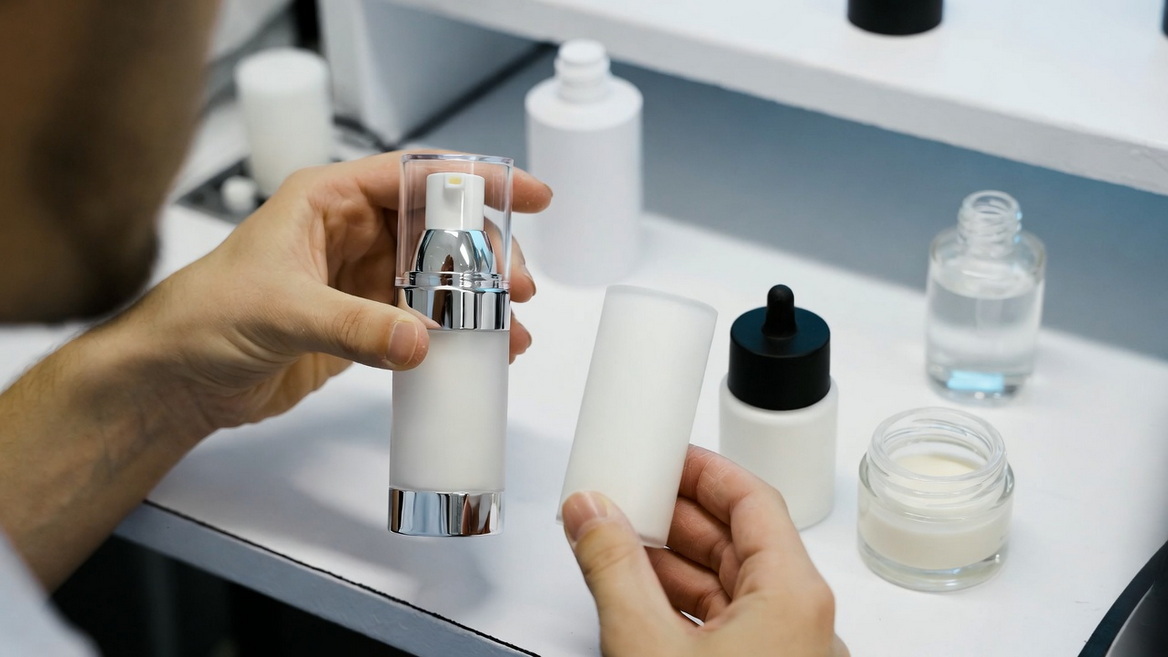
Ask for the complete certificate, including legal name, site address, scope, certification body, issue and expiry dates, and any surveillance status. Check the issuer and, where the credential is an accredited management-system certification, search IAF CertSearch or contact the certification body directly. A certificate covering a different factory—or one suspended despite a future printed expiry date—is not adequate evidence for your order. Public database absence alone may require follow-up with the issuer rather than an immediate assumption of fraud. [iaf]
Do not assume so. Health Canada classifies sunscreens as non-prescription drugs or natural health products depending on their active ingredients, and says authorized sunscreen products need a DIN or NPN. Confirm product classification and claims before commissioning an SPF formula or printing packaging; the ordinary cosmetic-notification route is not a substitute for the applicable sunscreen authorization. [canada]
Set this out in the development agreement before paying for R&D. Specify ownership or licensing of the formula, whether the manufacturer may sell a similar base to others, access to the complete INCI and regulatory data, and what happens if production moves to another site. "Exclusive packaging" is not the same as an exclusive formula. Ask a qualified adviser to review the contract if exclusivity or a future factory transfer is commercially important.
Convert both offers using the same fill size and stated production loss, then add packaging-component minimums. For example, 20 litres nominally contains 400 fills of 50 mL before process loss; it does not guarantee 400 saleable units. Vitelle publishes a 20-litre custom-formulation starting point, while LAIMEI advertises eligible trial orders as low as 500 units. Only a written, SKU-specific quote can establish the true minimum and delivered cost of either offer. [lmoemcosmetics]
Hold shipment and request the batch record, raw-material and component lot information, deviations, investigation, and test results against the agreed release specifications. Compare retained samples from the approved prototype and production batch; establish whether the failure arose from scale-up, substitution, processing, filling, packaging, or storage. The supply contract should say who pays for retesting, rework, replacement, disposal, and schedule delays. Do not accept a verbal assurance that the batch is "close enough" when a material specification or safety-related test has failed.
- [Health Canada: Guide for Cosmetic Notifications] — filing requirements, ingredient information, and notifier guidance. [canada]
- [Health Canada: Cosmetic Ingredient Hotlist] — restricted and prohibited ingredients. [canada]
- [Health Canada: Industry Guide for the Labelling of Cosmetics] — Canadian cosmetic labelling guidance. [canada]
- [Health Canada: Sunscreens] — DIN and NPN pathways. [canada]
- [Innovation, Science and Economic Development Canada: Trade Data Online] and [Statistics Canada: International Trade Statistics] — official tools for checking product-classified trade data; no unverified export total has been inferred from them here. [ised-isde.canada]
- [Cosmetics Alliance Canada] — Canadian industry association. [cosmeticsalliance]
- [ISO: ISO 22716:2007] and [IAF CertSearch] — cosmetic GMP guidance and accredited-certificate verification resources. [iso]
- [Mordor Intelligence: Canada Cosmetic Products Market, 2026–2031] and [IBISWorld: Cosmetic & Beauty Product Manufacturing in Quebec, March 2026] — market context with different, explicitly limited scopes. [mordorintelligence]


