
Views: 296 Author: Vera Publish Time: 2026-10-03 Origin: Site


Content Menu
>> How Enzyme Exfoliants Work on Skin
● What Is Chemical Exfoliation?
● Enzyme Exfoliation vs. Chemical Exfoliation: Key Differences
● Which Option Is Better for Different Skin Needs?
>> Enzyme Exfoliation for Sensitive-Looking or Dull Skin
>> AHA Exfoliation for Texture and Visible Radiance
>> BHA Exfoliation for Oily and Congestion-Prone Skin
>> PHA Exfoliation for Barrier-Conscious Formulas
● Why Product Format Changes the Result
>> Peel Pads and Treatment Toners
● Expert Formulation Insight: "Strong" Is Not the Same as "Effective"
● A Practical Selection Framework for Brands
>> When an Enzyme-Acid Hybrid Makes Sense
● How Consumers Can Use Exfoliating Products More Safely
>> Start With a Controlled Routine
● Final Verdict: Enzymes vs. Chemical Exfoliation
● FAQ
>> 1. Are enzyme exfoliators chemical exfoliators?
>> 2. Is enzyme exfoliation gentler than AHA exfoliation?
>> 3. Can a skincare brand combine papain with glycolic acid?
>> 4. Which exfoliant is better for oily skin?
>> 5. Can consumers use enzyme and chemical exfoliants together?
>> 6. What is the best product format for an enzyme exfoliant?
>> 7. Do AHA exfoliants require sunscreen?
Enzyme exfoliation and chemical exfoliation both help remove accumulated dead surface cells, but they do so through different biological pathways, product formats, and intensity levels. For skincare brands, the best choice is not simply "gentle versus strong"—it is a formulation, consumer-positioning, safety, and performance decision.
At GUANGZHOU LAIMEI CREATIVE RESEARCH INTELLIGENT BIOLOGICAL RESEARCH CO., LTD., we have spent 13 years developing skincare and cosmetic products for brands serving global markets. From enzyme powder cleansers and brightening masks to AHA/BHA serums and professional-inspired exfoliating treatments, we see one principle repeatedly: effective exfoliation must be matched to the user's skin condition, routine, product format, and target market.
This guide compares enzyme exfoliation vs. chemical exfoliation from a practical product-development perspective. It is designed for skincare founders, private-label buyers, product managers, estheticians, and consumers who want to understand which approach creates the right balance between visible results and daily skin comfort.

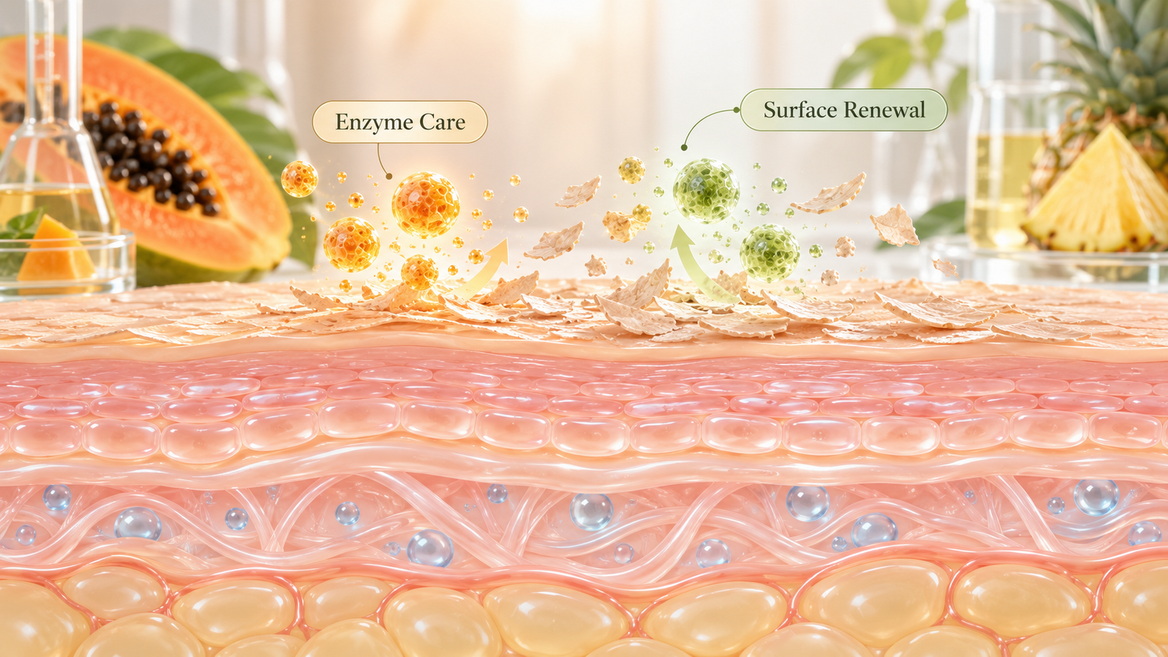
Enzyme exfoliation uses proteolytic enzymes—enzymes that help break down proteins—to loosen and remove dead cells from the outermost layer of the skin.
The most familiar cosmetic enzymes include:
- Papain, commonly associated with papaya
- Bromelain, commonly associated with pineapple
- Pumpkin enzymes
- Keratinase
- Microbial proteases
These enzymes primarily work on keratinized material on the skin's surface. Instead of relying on abrasive particles, enzyme products support a gradual release of dull, compacted surface cells.
In simple terms, an enzyme exfoliator helps digest the protein-based material that contributes to a rough-looking skin surface. This can leave the complexion looking smoother, fresher, and more luminous without the scratchy sensation associated with many physical scrubs.
The skin naturally sheds old cells through a process called desquamation. When this process becomes uneven, the skin may look dull, feel rough, or develop a makeup-catching texture.
Enzyme exfoliants are designed to support surface-level renewal by acting on protein structures within dead corneocytes. They generally work best when the formula maintains appropriate conditions for enzyme activity, including:
- A suitable pH range
- Proper temperature tolerance
- Effective stabilization technology
- Controlled water activity
- Compatible preservatives and surfactants
- Packaging that protects formula performance
This is why not all "fruit enzyme" products perform equally. A product can contain a botanical extract associated with papaya or pineapple without delivering meaningful enzymatic activity. For a skincare brand, active enzyme selection, stabilization, and testing matter more than a front-label fruit claim.
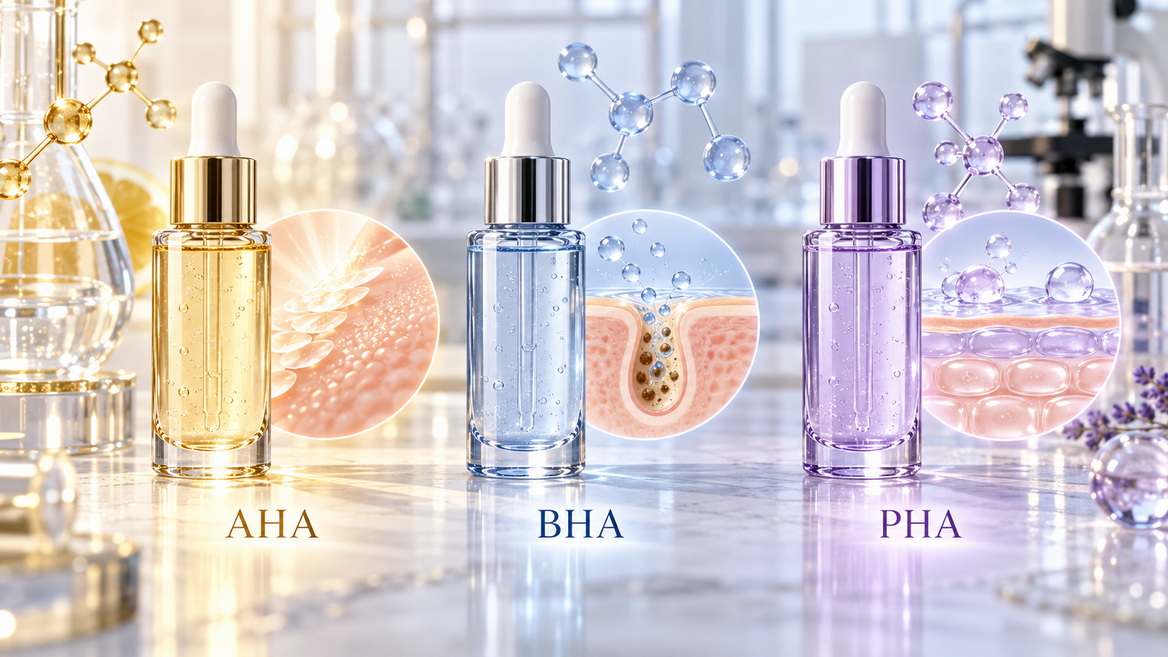
Chemical exfoliation uses acids or other active ingredients to loosen the bonds between dead cells, support skin shedding, or improve the appearance of texture, congestion, and uneven tone.
The most widely used categories include:
| Category | Common Ingredients | Typical Product Goals |
|---|---|---|
| AHA | Glycolic acid, lactic acid, mandelic acid, citric acid | Surface smoothness, visible radiance, uneven-looking tone, dry or rough texture |
| BHA | Salicylic acid | Congested pores, excess oil, blemish-prone skin |
| PHA | Gluconolactone, lactobionic acid | Gentle resurfacing, moisture support, sensitive-skin positioning |
| Multi-acid systems | Blends of AHA, BHA, PHA, or supportive acids | More tailored exfoliation and multi-benefit product concepts |
Unlike enzyme exfoliation, acid exfoliation depends heavily on variables such as acid type, concentration, pH, free-acid availability, delivery system, contact time, and frequency of use.
For example, glycolic acid is known for its small molecular size and strong surface-renewal potential. Lactic acid is often selected when brands want exfoliation combined with a more moisture-oriented sensory profile. Salicylic acid is oil-soluble, making it especially relevant for products positioned for clogged pores and oily or blemish-prone skin.
Chemical exfoliation can produce more targeted and measurable results, but it also requires careful formulation discipline. A stronger acid system is not automatically a better product. The user experience depends on the entire formula—not only the percentage printed on the packaging.
The central difference is the exfoliating mechanism.
Enzymes primarily act on proteins at the skin's surface. Acids influence the cohesion of dead skin cells and can work through different pathways depending on the acid family and formula design.
| Comparison Point | Enzyme Exfoliation | Chemical Exfoliation |
|---|---|---|
| Main mechanism | Uses enzymes to break down protein-based dead surface material | Uses acids or active systems to loosen dead-cell cohesion and support shedding |
| Typical ingredients | Papain, bromelain, pumpkin enzyme, keratinase | Glycolic acid, lactic acid, mandelic acid, salicylic acid, gluconolactone |
| Perceived intensity | Usually gentle to moderate | Can range from very mild to intensive |
| Best-known benefit | Immediate softness and fresh-looking radiance | More targeted support for texture, congestion, dullness, and uneven-looking tone |
| Ideal product formats | Wash-off masks, powder cleansers, rinse-off treatments, gentle peels | Toners, serums, pads, masks, cleansers, leave-on treatments |
| Formulation priority | Enzyme stability and activity preservation | Acid concentration, pH, free-acid level, skin compatibility |
| Suitable for | Consumers seeking mild surface renewal | Consumers seeking a tailored solution for specific concerns |
| Potential limitation | Results may be more subtle and short-term | Overuse can contribute to dryness, stinging, or visible irritation |
Neither system should be presented as universally superior. The right exfoliation category depends on the consumer, the intended use frequency, the product's claim strategy, and the level of visible renewal the brand wants to deliver.
Enzyme exfoliation is often a strong starting point for brands developing products for consumers who want a smoother skin feel but are hesitant about stronger acids.
It may be particularly suitable for product concepts focused on:
- Sensitive-feeling skin
- Dry or dehydrated-looking skin
- Dullness caused by surface buildup
- Rough makeup application
- Beginner exfoliation routines
- Weekly self-care masks
- Gentle cleansing rituals
- Mature-skin product collections
A papaya-enzyme gel mask, for example, can be positioned as a short-contact treatment that helps refresh the look of tired skin before a major event or as part of a weekly home-care routine.
However, "natural" does not automatically mean non-irritating. Enzymes can still be incompatible with certain highly reactive skin conditions or over-compromised skin barriers. Product testing, clear directions, and responsible usage recommendations remain essential.
AHA-based products are often selected for brands targeting dull-looking skin, rough texture, uneven-looking tone, and surface dryness.
Common AHA product concepts include:
- Glycolic acid resurfacing toners
- Lactic acid glow serums
- Mandelic acid treatments for a more gradual exfoliation profile
- Multi-acid overnight masks
- AHA body lotions for rough-looking body skin
- Brightening facial pads
AHAs can help create a visibly smoother and more polished skin appearance. They are popular in premium skincare because they can fit into multiple categories, including facial serums, lotions, masks, peel pads, and body-care products.
That said, AHA formulas must be developed with special attention to sun-exposure messaging. U.S. regulatory guidance notes that topical AHA use may increase sensitivity to sunlight during use and for a period after discontinuation. Products containing glycolic acid or lactic acid are commonly evaluated with concentration, final pH, directions, and sun-protection information in mind. [fda]
BHA—especially salicylic acid—is generally associated with oily, congested, and blemish-prone skin concerns.
Because salicylic acid is oil-soluble, it can be particularly relevant for product concepts focused on:
- Visible blackheads
- Excess oil
- Congested-looking pores
- Uneven skin texture
- Breakout-prone skin routines
- Body acne care
- Back, chest, and shoulder cleansing products
For a brand building a complete acne-care or men's grooming line, a well-designed BHA cleanser, toner, serum, or spot-care product may be more commercially relevant than an enzyme-only solution.
The formula must still be designed for tolerability. Consumers often combine multiple active products, including retinoid products, benzoyl peroxide treatments, vitamin C products, and exfoliating acids. Without clear routine guidance, an otherwise well-designed product can be overused.
PHA ingredients are increasingly valuable for brands that want to communicate gentle resurfacing, moisture-conscious care, and modern sensitive-skin positioning.
PHA-based products may work well in:
- Daily-use exfoliating toners
- Moisturizing glow serums
- Gentle treatment essences
- Sensitive-skin renewal lotions
- Hybrid hydrating exfoliation products
A PHA formula can be especially useful when a brand wants to bridge the gap between "no exfoliation" and "high-intensity acid treatment." It can deliver a more approachable product story for consumers who want visible refinement without a harsh-feeling routine.
The same active ingredient can create very different user experiences depending on whether it appears in a cleanser, mask, serum, toner, or peel pad.
A rinse-off mask usually provides a controlled contact period. This format can be ideal for enzyme exfoliation because the user applies the product, leaves it on for a defined amount of time, and rinses it away.
Potential benefits include:
- A spa-like at-home experience
- Clearer usage control
- Lower perceived commitment for beginners
- Compatibility with weekly treatment routines
- Opportunities for premium texture and fragrance design
Water-activated powder cleansers are a compelling format for certain enzyme systems because they can support dry-format stability before activation.
These products are especially attractive for:
- Travel-friendly skincare
- Minimalist routines
- Premium cleansing collections
- Fragrance-free concepts
- Fresh-mix product storytelling
- Brands seeking differentiated packaging
Leave-on acid serums offer longer contact time and can support more targeted performance claims. They are often used in evening routines and may be formulated with barrier-supporting ingredients such as panthenol, beta-glucan, ceramides, ectoin, sodium hyaluronate, or soothing botanical extracts.
For private-label buyers, this category requires extra attention to:
- pH consistency
- Formula stability
- Packaging compatibility
- Oxidation control
- Consumer instructions
- Sensory balance
- Market-specific labeling requirements
Pre-soaked pads and liquid toners are convenient, easy to dose, and highly marketable. However, they can encourage overuse if instructions are unclear.
A strong product-development strategy is to align the active level with the intended use pattern. A daily toner should not be formulated or communicated in the same way as a once-weekly resurfacing treatment.
From a manufacturing perspective, many buyers initially focus on one question: "What percentage of acid can we use?"
That is not the most useful question.
A better development discussion includes:
1. Who is the target user?
Is the product for experienced acid users, sensitive-skin consumers, teenagers with oily skin, or mature consumers seeking visible radiance?
2. What is the product's intended frequency?
Daily, every other day, twice weekly, or as a professional-inspired occasional treatment?
3. What claims are realistic and supportable?
For example: smoother-feeling skin, refined-looking texture, brighter-looking complexion, reduced appearance of congestion, or improved makeup application.
4. What supporting ingredients improve the user experience?
Humectants, emollients, soothing agents, film-formers, and barrier-supporting ingredients can improve comfort and repeat use.
5. How will users combine the product with the rest of their routine?
A product may need instructions on avoiding unnecessary overlap with other strong actives.
In our experience working with global skincare concepts, the most commercially successful exfoliation products are often not the harshest ones. They are the formulas consumers can use correctly, tolerate consistently, repurchase confidently, and recommend to others.
Use this decision guide when choosing between enzyme exfoliation and chemical exfoliation for a new product line.
| Brand Objective | Recommended Direction | Product Example |
|---|---|---|
| Gentle glow and soft skin feel | Enzyme exfoliation | Papaya enzyme gel mask |
| Premium spa-inspired treatment | Enzyme exfoliation or enzyme-acid hybrid | Pumpkin enzyme resurfacing mask |
| Rough texture and dull-looking complexion | AHA exfoliation | Lactic acid overnight serum |
| Oily, congested, blemish-prone skin | BHA exfoliation | Salicylic acid clarifying toner |
| Sensitive-skin renewal positioning | PHA or low-intensity enzyme system | PHA hydrating essence |
| High-performance weekly treatment | Multi-acid or enzyme-acid blend | Weekly resurfacing peel pads |
| Daily cleansing differentiation | Enzyme powder cleanser or low-level acid cleanser | Rice enzyme cleansing powder |
A hybrid formula can combine the sensorial appeal of enzymes with the targeted positioning of acids. For example, a rinse-off mask may include pumpkin enzyme alongside a carefully balanced AHA system.
This approach can create a more layered product story:
- Enzymes help refresh the skin surface.
- Acids support visible texture refinement.
- Hydrators help reduce a tight, stripped feeling.
- Soothing ingredients support a more comfortable after-feel.
The formulation challenge is substantial. Enzymes have stability needs, while acids require precise pH management. A successful hybrid product must be designed through compatibility testing rather than simply combining popular ingredients on a concept sheet.
Whether a product uses enzymes, AHAs, BHAs, or PHAs, consistent use should never mean aggressive use.
For a new exfoliating product, a practical approach is:
1. Begin with the lowest reasonable frequency stated on the product label.
2. Apply only to intact skin.
3. Avoid using multiple high-intensity exfoliating products in the same routine.
4. Pause use if persistent burning, swelling, rash, or significant irritation occurs.
5. Use broad-spectrum sun protection during the day, especially when using acid exfoliants.
6. Avoid applying strong exfoliating products immediately after shaving, waxing, or other potentially irritating treatments.
7. Follow product-specific instructions rather than copying a routine from social media.
AHA-containing products can increase UV sensitivity, and safety guidance emphasizes sun protection and clear directions for use. BHA products also warrant sun-protection precautions, particularly when used in exfoliating routines. [fda]
Consumers with active inflammatory skin conditions, severe acne, eczema flare-ups, rosacea symptoms, unexplained rashes, or a history of serious reactions should seek guidance from an appropriately qualified healthcare professional before introducing stronger exfoliating products.
Choose enzyme exfoliation when the goal is gentle surface renewal, immediate softness, and a comfortable ritual experience. It is highly suitable for masks, powder cleansers, sensitive-feeling skin concepts, and beginner-friendly skincare lines.
Choose chemical exfoliation when the goal is more targeted performance for texture, dullness, excess oil, or congestion. AHA, BHA, and PHA systems offer strong flexibility, but they require careful formulation, responsible directions, and barrier-conscious product design.
For many modern skincare brands, the best opportunity is not choosing one category exclusively. It is building a well-structured exfoliation portfolio:
- A gentle enzyme cleanser for daily refreshment
- A PHA essence for barrier-conscious renewal
- An AHA serum for visible radiance
- A BHA treatment for oily and congested skin
- A weekly enzyme-acid mask for a premium at-home ritual
At GUANGZHOU LAIMEI CREATIVE RESEARCH INTELLIGENT BIOLOGICAL RESEARCH CO., LTD., we support global beauty brands with end-to-end OEM/ODM development—from formula concept and active-ingredient selection to packaging design, GMP manufacturing, quality control, and scalable production. With a 20,000 m² GMP-standard production base, annual capacity exceeding 50 million units, and products supplied to more than 100 countries and regions, we help brands turn exfoliation concepts into differentiated, market-ready skincare collections.
Contact our product-development team to create an enzyme exfoliant, AHA/BHA/PHA treatment, or customized hybrid formula built around your target customer, market positioning, and packaging vision.
In a broad scientific sense, enzymes are active biochemical agents, so they can be grouped under non-physical exfoliation. In skincare marketing, however, "chemical exfoliation" usually refers to acid-based exfoliants such as AHAs, BHAs, and PHAs, while enzyme exfoliation is discussed as a separate category because it uses proteolytic enzymes rather than acids.
Enzyme exfoliation is often perceived as gentler because it tends to focus on surface protein breakdown and is commonly used in rinse-off products. However, gentleness depends on the complete formula, the enzyme activity level, contact time, fragrance composition, supporting ingredients, and the user's skin condition.
Yes, a brand can explore a papain-and-glycolic-acid hybrid formula, especially in wash-off masks or periodic treatment products. However, enzyme activity and acid pH requirements can create formulation challenges. Stability testing and compatibility evaluation are essential before commercial production.
A BHA product containing salicylic acid is often more relevant for oily and congested skin because salicylic acid is oil-soluble. Enzyme products may still be useful as gentle supplementary treatments, but they are usually not the primary choice for a pore-congestion-focused product line.
They can, but not necessarily in the same routine or at the same frequency. Combining multiple exfoliating products can increase the likelihood of dryness and irritation. A safer product strategy is to create clear routines, such as an enzyme mask once weekly and a low-strength acid serum on separate evenings.
Rinse-off masks and powder cleansers are especially suitable because they allow controlled contact time and can support enzyme-focused product storytelling. The best format also depends on the target price point, consumer habits, intended claims, and packaging requirements.
Daytime sun protection is strongly advisable. FDA materials state that topical AHA use can increase sensitivity to sunlight during use and for a period after stopping use. Products should provide appropriate directions that encourage sun-protection practices. [fda]
1. [U.S. Food and Drug Administration: Alpha Hydroxy Acids]
2. [U.S. Food and Drug Administration: Labeling for Cosmetics Containing Alpha Hydroxy Acids]
3. [U.S. Food and Drug Administration: Beta Hydroxy Acids]
4. [PubMed: An Overview of the Use of Proteolytic Enzymes as Exfoliating Agents]
5. [PubMed Central: Evaluating the Efficacy and Safety of Alpha-Hydroxy Acids in Cosmetic Applications]
6. [American Academy of Dermatology: Chemical Peels Overview]
7. [Cosmetic Ingredient Review: Safety Assessment of Alpha Hydroxy Acids as Used in Cosmetics]


