
Views: 275 Author: Vera Publish Time: 2026-10-01 Origin: Site


Content Menu
● What Is Premature Skin Aging?
● 1. Your Skin Looks Dull Even After Rest
>> What Can Cause Persistent Dullness?
>> A Better Approach for Dull-Looking Skin
● 2. Dark Spots and Uneven Skin Tone Become More Noticeable
>> Ingredients Commonly Used in Brightening Routines
● 3. Fine Lines Stay Visible After You Apply Moisturizer
● 4. Your Skin Feels Tight, Sensitive, or Easily Irritated
>> Signs Your Barrier May Need Support
>> A Barrier-First Reset Routine
● 5. Your Lips Look Drier, Less Smooth, or Less Defined
● 6. The Neck, Chest, and Hands Show Texture Changes
>> Extend Your Routine Beyond the Face
● 7. Your Routine Is Inconsistent or Too Complicated
>> Build a Routine People Will Actually Use
● Create Skin Care That Supports Long-Term Confidence
>> What are the first signs of premature skin aging?
>> Can sunscreen help prevent premature skin aging?
>> How long does it take to improve dull-looking skin?
>> Should I exfoliate every day for smoother skin?
>> Are fine lines caused only by aging?
>> What ingredients are commonly used in anti-aging skin-care products?
>> When should someone seek professional advice for a dark spot?
Premature skin aging is not simply "looking older." It often shows up as persistent dullness, uneven tone, fine lines, rough texture, dryness, and a gradual loss of firmness earlier than expected. While genetics matter, daily exposure to ultraviolet radiation, pollution, smoking, stress, poor sleep, and an unsuitable skin-care routine can all influence how skin looks and feels over time.
For brands developing anti-aging, brightening, moisturizing, and barrier-support products, the opportunity is clear: consumers increasingly want routines that are easy to follow, evidence-informed, comfortable to use, and designed for long-term consistency. The goal is not to erase every line. It is to help the skin look healthier, more even, better hydrated, and more resilient.

Premature skin aging refers to visible skin changes that appear earlier, or progress more noticeably, than a person expects based on their age and genetics. These changes may include:
- Fine lines around the eyes, mouth, and forehead
- Uneven skin tone and visible dark spots
- Dull, rough, or tired-looking skin
- Dehydration lines and persistent tightness
- A weaker-looking skin barrier
- Loss of bounce, elasticity, and facial definition
- Dry, crepey texture on the neck, chest, and hands
It is important to separate cosmetic signs of aging from skin changes that need medical attention. A new, changing, itchy, bleeding, or unusual spot should be assessed by a qualified dermatologist rather than treated as a normal sign of aging.
Sun protection remains one of the most important daily habits for reducing visible photoaging. Dermatology guidance consistently links sun exposure with premature signs such as dark spots, sagging, and wrinkles, while recommending broad-spectrum sunscreen and other protective measures such as shade and protective clothing. [aad]
A loss of radiance is often one of the earliest signs that the skin's renewal and hydration balance may be disrupted. Skin can appear gray, rough, flat, or less reflective when dead surface cells build up and moisture levels fall.
Dullness does not always mean your skin needs a stronger exfoliant. In many cases, it means the routine is doing too much. Over-cleansing, frequent acid use, harsh scrubs, or repeated exposure to dry air may leave the complexion looking less luminous rather than more polished.
- Infrequent or overly aggressive exfoliation
- Insufficient moisturization
- Cleansers that leave the skin feeling tight
- Daily ultraviolet exposure
- Air pollution and particulate matter
- Poor sleep and chronic stress
- A compromised moisture barrier
- Makeup removal that is incomplete or overly harsh
Start with a routine that prioritizes gentle cleansing, controlled exfoliation, hydration, and daily sun protection.
A practical routine may include:
1. A low-irritation cleanser that removes sunscreen, makeup, and excess oil without leaving tightness.
2. A hydrating serum with ingredients such as glycerin, hyaluronic acid, panthenol, or beta-glucan.
3. A moisturizer selected for the user's skin type and climate.
4. A mild exfoliating product used at an appropriate frequency, not necessarily every day.
5. Broad-spectrum sunscreen every morning.
For product developers, this is an important formulation lesson: consumers often associate a tingling sensation with effectiveness, but long-term satisfaction is more likely when a formula supports comfort, hydration, and visible smoothness without unnecessary irritation.
Dark spots, also called hyperpigmentation, can become more visible after sun exposure, inflammation, acne, friction, or hormonal changes. They may appear on the cheeks, forehead, upper lip, hands, shoulders, neck, and chest.
Uneven tone is one of the most common consumer concerns in brightening and anti-aging categories because it can make skin look older even when fine lines are minimal. The challenge is that pigmentation care requires patience. A strong product used inconsistently is usually less useful than a well-tolerated routine used every day.
Ultraviolet radiation can contribute to visible signs of photoaging, including age spots, wrinkles, and sagging. Broad-spectrum protection helps address both UVA and UVB exposure. The American Academy of Dermatology recommends a water-resistant sunscreen with broad-spectrum protection and SPF 30 or higher for daily use. [aad]
Water resistance does not mean a sunscreen remains effective indefinitely. Products labeled water resistant must state whether they maintain protection for 40 or 80 minutes during swimming or sweating, and users should follow the label's reapplication instructions. [fda]
A well-designed brightening formula may use one or more of the following ingredients, depending on the intended market, regulatory requirements, skin type, and product format:
| Skin-Care Focus | Common Ingredient Options | Product-Development Consideration |
|---|---|---|
| Daily antioxidant support | Vitamin C derivatives, ferulic acid, vitamin E | Stability, packaging, and color change control are essential |
| Uneven tone support | Niacinamide, licorice root extract, tranexamic acid, alpha-arbutin | Position benefits carefully and avoid unrealistic timelines |
| Surface smoothing | Lactic acid, mandelic acid, polyhydroxy acids | Balance visible renewal with barrier comfort |
| Hydration and calming | Panthenol, ectoin, allantoin, beta-glucan | Useful in multi-active brightening formulas |
| Daily defense | Broad-spectrum sunscreen filters | Texture, wear comfort, and reapplication experience drive use consistency |
Key insight: A brightening regimen without regular sun protection is incomplete. Consumers can invest in multiple serums, masks, and treatments, but ongoing exposure may continue to worsen the appearance of discoloration.
Fine lines are a normal part of skin aging. However, when lines become more noticeable during dehydration, after cleansing, or in air-conditioned environments, the skin may be lacking water-binding ingredients, barrier lipids, or protective occlusives.
Not every line indicates structural aging. Some are temporary dehydration lines, which may soften when the skin is properly hydrated and protected. Others are expression lines that become gradually more visible over time due to facial movement, sun exposure, collagen changes, and reduced elasticity.
| Appearance | Possible Explanation | Routine Priority |
|---|---|---|
| Lines appear stronger after cleansing | Dehydration or cleanser-related dryness | Gentler cleansing and immediate moisturization |
| Lines soften after a hydrating serum or cream | Temporary moisture loss | Humectants, emollients, and barrier support |
| Lines remain visible regardless of hydration | Normal structural skin aging | Long-term prevention and realistic expectations |
| Fine lines appear with roughness and flaking | Barrier stress or over-exfoliation | Simplify the routine and reduce irritation |
| Lines around the eyes worsen in sunlight | Squinting and ultraviolet exposure | Sunglasses, sun protection, and eye-area comfort products |
A strong anti-aging routine is not necessarily the routine with the most active ingredients. It is the routine that a person can comfortably use for months and years.
Tightness is often mistaken for cleanliness. In reality, skin that feels "squeaky clean" after washing may have lost too much of its protective surface oil and water.
When the moisture barrier is under stress, the skin may become more reactive. Products that were previously tolerated may sting. Redness may appear more easily. Dry patches can develop around the mouth, nose, cheeks, or eyelids.
- Skin feels uncomfortable after cleansing
- Moisturizer absorbs quickly but dryness returns soon after
- Mild products sting unexpectedly
- Flaking appears around the nose or mouth
- Skin reacts after frequent exfoliation
- Makeup clings to dry patches
- Breakouts and dryness occur at the same time
For many consumers, simplifying the routine for one to two weeks can be more productive than adding another active serum.
Use this approach:
1. Pause scrubs, strong peels, and frequent exfoliating acids.
2. Cleanse once or twice daily with a mild formula suited to the skin type.
3. Apply a hydrating serum to slightly damp skin.
4. Follow with a moisturizer containing humectants, emollients, and barrier-supporting ingredients.
5. Use sunscreen every morning.
6. Reintroduce active ingredients slowly, one product at a time.
For brands, barrier-friendly positioning should be supported by thoughtful formulation choices. Texture, fragrance level, pH, preservative system, active concentration, packaging compatibility, and use instructions all influence the real consumer experience.
The lips have a delicate surface and can show dryness, roughness, vertical lines, and a loss of comfortable softness. Environmental exposure, lip licking, dehydration, certain lip products, and ultraviolet exposure can all contribute.
A simple lip-care routine can improve the appearance of dryness without promising dramatic structural changes.
- Use a comfortable balm that supports moisture retention.
- Choose a daytime lip product with sun protection when spending time outdoors.
- Avoid repeatedly scrubbing already cracked or irritated lips.
- Limit fragranced or strongly flavored products if sensitivity occurs.
- Apply an occlusive lip treatment at night when lips are dry or flaky.
- Avoid picking or peeling dry skin, which can worsen irritation.
For a lip-treatment collection, consumers often value visible smoothness, non-sticky comfort, protective wear, and compatibility under lipstick as much as they value trend-led claims.
Many routines focus entirely on the face, but the neck, chest, and hands receive frequent sun exposure and may be less consistently moisturized. These areas can develop dryness, uneven tone, fine lines, and a crepey appearance.
The chest can be especially vulnerable because the skin is often exposed through clothing while receiving little of the daily protection applied to the face.
A realistic body-care strategy includes:
- Apply sunscreen to the face, ears, neck, chest, and backs of the hands.
- Use protective clothing, hats, and shade during prolonged outdoor exposure.
- Apply body moisturizer after bathing while the skin is still slightly damp.
- Use gentle exfoliation only when the skin is not irritated.
- Introduce targeted tone-evening or firming body products gradually.
- Choose packaging that makes regular use easy, such as pumps, tubes, or airless bottles.
This category is particularly relevant for private-label brands. A coordinated facial, lip, body, and sun-care assortment can help build a more complete consumer routine while creating clear cross-selling opportunities.
One of the most overlooked signs of premature aging risk is not a visible concern at all. It is a routine that people cannot maintain.
A ten-step regimen may look impressive on social media, but if consumers only use it occasionally, results are unlikely to be consistent. Skincare products work best when the routine fits real life: busy mornings, travel, changing weather, makeup use, sensitive periods, and different levels of sun exposure.
A core routine can be as simple as:
Morning
- Gentle cleanser or water rinse, depending on skin type
- Hydrating or antioxidant serum
- Moisturizer if needed
- Broad-spectrum SPF 30 or higher sunscreen
Evening
- Cleanser
- Targeted treatment, introduced gradually
- Moisturizer or overnight barrier cream
- Lip treatment if needed
The most valuable anti-aging routine is usually not the most aggressive. It is the one that protects skin consistently, supports hydration, and uses well-chosen targeted products with patience.
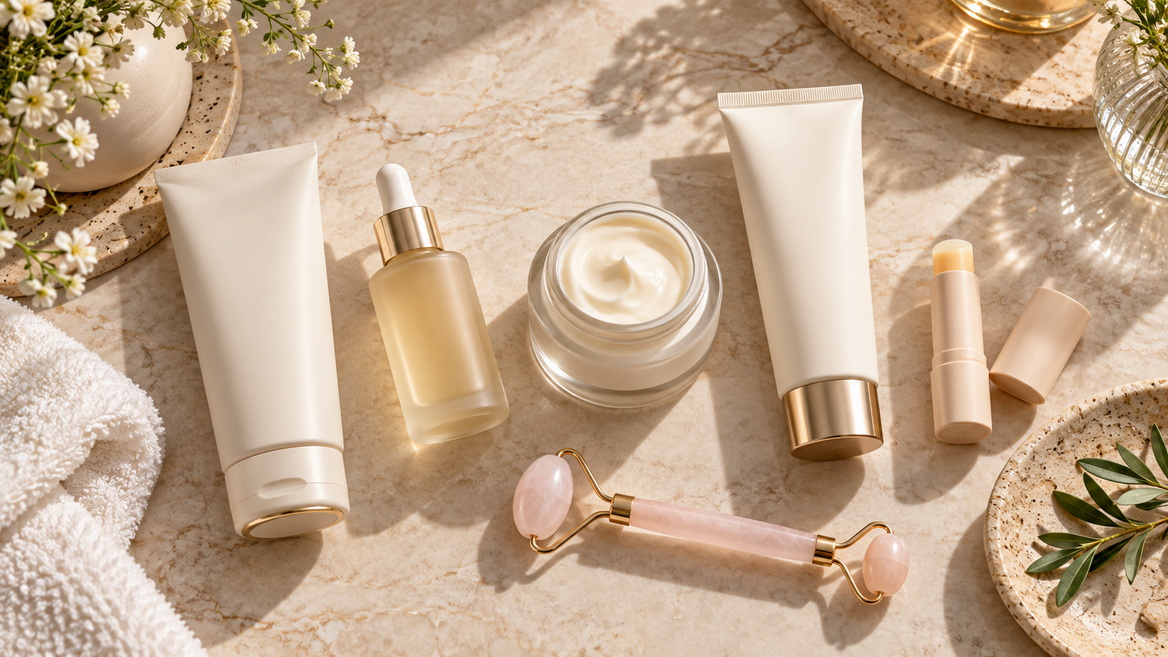
Cosmetic products can help improve the appearance of dryness, dullness, uneven tone, and fine lines. However, they should not replace medical assessment when a skin change appears unusual.
Arrange a professional evaluation if you notice:
- A new or changing mole or spot
- A lesion that itches, bleeds, crusts, or does not heal
- Rapid changes in color, shape, size, or texture
- Persistent rash, swelling, burning, or unexplained sensitivity
- Pigmentation that changes suddenly or significantly
Dermatology organizations recommend regular self-exams and advise seeking care for spots that are new, changing, itching, or bleeding. [aad]
Consumers do not need exaggerated promises. They need products that feel good to use, fit into daily life, and support visible improvements in hydration, texture, radiance, and even-looking tone.
At GUANGZHOU LAIMEI CREATIVE RESEARCH INTELLIGENT BIOLOGICAL RESEARCH CO., LTD., we have focused on skin-care and cosmetic research, development, and manufacturing for 13 years. Our team combines dermatology expertise, advanced formulation development, professional laboratory support, packaging customization, and scalable production to help global beauty brands create differentiated OEM and ODM collections.
From cleansers and serums to moisturizers, masks, lip care, body care, and targeted anti-aging concepts, we support the full journey from formula development and packaging design to manufacturing and delivery. Our 20,000 m² GMP-standard production base supports both small-scale launch testing and high-volume production, with annual capacity exceeding 50 million units.
Build a more complete anti-aging product line with a manufacturing partner that understands formulation, texture, packaging, quality control, and market-ready positioning.

Early signs can include dullness, dehydration lines, uneven tone, visible dark spots, dryness, rough texture, and fine lines that become more noticeable after sun exposure or cleansing. These changes do not always mean serious damage, but they can signal that a routine needs more protection and moisture support.
Yes. Regular sun protection is one of the most important daily habits for reducing visible signs of photoaging. Choose broad-spectrum sunscreen with SPF 30 or higher, and reapply according to the label, especially after swimming, sweating, or prolonged sun exposure. [aad]
Results depend on the cause, skin condition, and routine consistency. Hydration-related dullness may look better relatively quickly, while uneven tone and rough texture often require several weeks or longer of consistent care. Avoid switching products too frequently, as this makes it harder to understand what is helping.
Not necessarily. Daily exfoliation may be too intense for many people, especially those with dry, sensitive, or reactive skin. The right frequency depends on the exfoliating ingredient, product strength, skin type, climate, and the rest of the routine.
No. Fine lines can become more visible because of temporary dehydration, sun exposure, repetitive expressions, dry air, harsh cleansing, and normal changes in skin structure over time. A moisturizer may soften dehydration lines, while regular sun protection helps reduce ongoing exposure-related stress.
Common categories include humectants such as glycerin and hyaluronic acid; barrier-support ingredients such as ceramides and panthenol; antioxidants such as vitamin C derivatives; tone-supporting ingredients such as niacinamide; and vitamin A derivatives such as retinol. Formula selection should consider tolerance, stability, local regulations, and intended claims.
Seek medical advice if a spot is new, visibly changing, irregular in shape or color, itchy, bleeding, crusting, painful, or different from other marks on the skin. A professional assessment is especially important when the cause is uncertain. [aad]
1. [Eminence Organic Skin Care: 4 Signs You Could Be Aging Too Fast]
2. [American Academy of Dermatology: Sun Protection]
3. [American Academy of Dermatology: Sunscreen FAQs]
4. [U.S. Food and Drug Administration: Sunscreen—How to Help Protect Your Skin from the Sun]
5. [U.S. Food and Drug Administration: Sunscreen Labeling and Effectiveness Testing]
6. [American Academy of Dermatology: Find Skin Cancer—How to Perform a Skin Self-Exam]


