
Views: 264 Author: Vera Publish Time: 2026-09-30 Origin: Site


Content Menu
● Why Chemical Peel Aftercare Depends on Peel Depth
● The First 48 Hours: Keep the Routine Simple
>> Which Cleanser and Moisturizer Should You Choose?
● What Not to Do While Your Skin Peels
>> Do Not Pick, Pull, or Scrub Flaking Skin
>> Do Not Rush Back to Strong Actives
>> Do Not Assume Makeup Is Safe on a Fixed Day
● Sun Protection After a Chemical Peel
>> A Note for Skin Prone to Dark Spots
● A Practical Recovery Timeline
>> When Should You Contact Your Practitioner?
● A Product Checklist for Brands Developing Post-Peel Skincare
>> Can I wash my face the day after a chemical peel?
>> Should I moisturize if my skin is peeling?
>> When can I use retinol or exfoliating acids again?
>> How long does peeling last?
>> Can I wear sunscreen immediately after a peel?
>> Is redness normal after a chemical peel?
>> Can I use an at-home high-strength chemical peel instead?
● Protect the Result, Then Rebuild the Routine
Chemical peel aftercare is not about making skin shed faster. It is about protecting treated skin while it heals. A gentle cleansing routine, the moisturizer or ointment recommended by your practitioner, and careful sun protection matter more than adding another "repair" active. The right steps also depend on whether you had a light, medium, or deep peel. If your practitioner gave you instructions, follow those first.

A chemical peel uses a solution to remove skin layers at a controlled depth. A light peel affects the outermost layer. A medium peel reaches further into the skin, while a deep peel requires substantially more involved recovery care. That difference changes what "normal" looks like afterward.
| Peel depth | Typical healing period | What recovery may involve | Care priority |
|---|---|---|---|
| Light | About 1–7 days | Redness, dryness, then possible fine scaling | Gentle cleansing and moisturizer as directed |
| Medium | About 7–14 days | Swelling, crusting, and more noticeable peeling | Prescribed soaks or ointment, follow-up, and sun avoidance until healed |
| Deep | About 14–21 days for new skin to form | Dressings, marked swelling, and extended redness | Strict clinician-directed wound care and follow-up |
These are typical ranges, not deadlines. Redness can outlast the initial healing period, particularly after a deeper peel. Do not treat a calendar date as permission to restart every product you owned before treatment.
For example, someone recovering from a light peel may be told they can wear makeup the next day. Someone with a medium peel may need to wait several days and attend a follow-up. The same aftercare checklist cannot safely replace both sets of instructions.
Your skin may feel tight, warm, dry, or mildly irritated after treatment. Ask your practitioner exactly when to wash your face and what to apply: instructions can vary with the peel solution, depth, and condition of your skin.
1. Cleanse only as directed. If washing is permitted, use a mild cleanser and lukewarm water. Use your fingertips rather than a washcloth or cleansing brush.
2. Pat, do not rub. A clean, soft towel can absorb excess water without dragging over tender skin.
3. Apply the recommended moisturizer or ointment. Use the product and frequency your practitioner specifies, especially if you have areas that are crusting or healing.
4. Keep heat and friction low. Skip activities that leave your face hot, heavily sweaty, or repeatedly rubbed until your practitioner says they are appropriate.
5. Plan around daylight. Minimize direct sun exposure. If you have a medium or deep peel, follow your clinician's more restrictive sun-avoidance instructions.
More layers do not necessarily mean better care. Immediately after a peel, a short routine is easier to follow and makes it easier to notice when a product stings or your skin changes unexpectedly.
Look beyond labels such as "gentle" or "soothing." The product must suit your stage of recovery. A fragrance-free, non-scrubbing cleanser may be a practical option once cleansing is allowed, but even a mild product should be set aside if your practitioner has instructed you to use water or a prescribed wash instead.
Likewise, a light cream that feels pleasant after a superficial peel is not automatically a substitute for the ointment prescribed after a medium or deep peel. If a product burns, stop using it and ask your practitioner what to use instead. Do not keep applying it because the ingredient list appears reassuring.
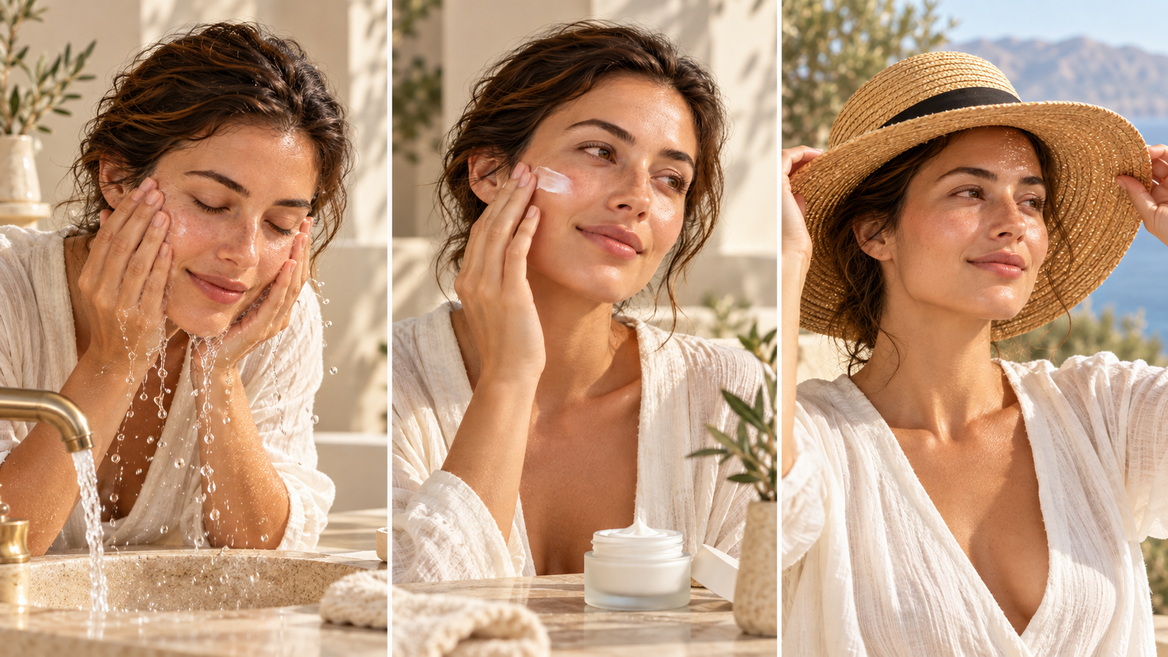
Peeling can be uneven. A loose-looking edge may still be attached to skin that is not ready to shed. Pulling at it can expose a tender area and raise the risk of irritation, infection, scarring, or uneven color.
Avoid facial scrubs, exfoliating brushes, rough towels, and adhesive products over the treated area. Let flakes release on their own. If a hanging piece catches on clothing or makes cleansing difficult, ask your practitioner how to handle it rather than cutting or pulling it yourself.
Moisturizing as directed can make the skin feel more comfortable. It does not need to make every flake disappear overnight.
A peel is already an exfoliating procedure. Layering another exfoliant onto skin that is red, stinging, crusted, or visibly peeling is not a shortcut to a better result.
Temporarily set aside leave-on exfoliating acids, scrubs, retinoids, and any treatment your practitioner identifies as irritating. There is no universal restart day for every product or peel. Ask when you can resume each part of your routine, particularly prescription acne treatments or other products you use for a medical condition.
When you do restart, introduce products gradually rather than bringing back several actives on one evening. That makes it easier to identify a product your recovering skin does not tolerate.
Makeup timing varies by peel depth and by the condition of the treated skin. A light peel may allow makeup immediately or the next day if the practitioner agrees. Following a medium peel, some people can use covering makeup after approximately five to seven days. Deep peels usually require a longer wait and direct medical guidance.
Do not apply makeup over skin that is open, weeping, or not yet healed simply to hide redness. Clean application tools matter, but they cannot make damaged skin ready for cosmetics.
Newly treated skin is especially vulnerable to problems associated with sun exposure, including unwanted changes in color. Avoiding direct sun while skin heals is the priority; sunscreen is not a reason to spend a long day outdoors.
Once your practitioner says sunscreen can be applied to the treated area, choose broad-spectrum protection with SPF 30 or higher. Apply enough to cover exposed skin and reapply about every two hours while outdoors, as well as after swimming or sweating, according to the product directions. A hat, shade, and planning outdoor time can reduce exposure further.
Medium peels generally require complete sun avoidance until the skin heals. Deep peels can require a much longer period of strict avoidance. Ask your clinician how to protect the area during that period, especially if it is bandaged or too tender for an ordinary sunscreen.
If you have experienced post-inflammatory hyperpigmentation, tell your practitioner before a future peel. People with darker skin tones can have chemical peels, but selecting the treatment and managing recovery require appropriate expertise because pigment changes may be more consequential or persistent.
After healing, consistent sun protection is particularly important if dark spots are a concern. A tinted sunscreen containing iron oxides may provide additional protection against visible light that contributes to dark spots. It is an option to discuss for your healed skin, not a replacement for immediate post-peel instructions.
Use this timeline to prepare questions and organize your routine—not to overrule the person who performed your peel.
| Stage | Reasonable focus | What to check before moving on |
|---|---|---|
| Treatment day | Follow the provided cleansing and product instructions | Do you know whom to contact if symptoms worsen? |
| First 48 hours | Keep care minimal and avoid rubbing or picking | Are discomfort and swelling behaving as your practitioner described? |
| Visible peeling period | Moisturize as directed and let skin shed naturally | Are any areas open, unusually painful, or increasingly irritated? |
| After the surface has healed | Maintain daily sun protection and discuss restarting products | Has your practitioner cleared makeup, actives, and your usual activities? |
A useful habit is to take a clear photograph in consistent lighting if your practitioner asks you to monitor recovery. That can help you describe a change accurately during a follow-up. It cannot diagnose whether the change is normal.
Some redness, tightness, and peeling are expected. The degree and duration depend on peel depth. Still, do not wait for your next scheduled appointment if symptoms concern you.
Contact your practitioner if burning, itching, or swelling is troublesome, if discomfort is increasing rather than easing, or if you notice an unexpected change in the treated area. Seek prompt medical advice for signs that may suggest infection, such as spreading redness, pus, or fever. Ask about new blisters or sores, particularly if you have a history of cold sores.
A medium peel can involve swelling and blisters as part of its expected course, so a symptom should be judged against your specific treatment plan. Your clinician is better placed than an online timeline to make that distinction.
Post-peel skincare creates a difficult product brief: consumers want comfort, but the product may be used on skin that is temporarily more reactive. A claim such as "post-peel friendly" should therefore describe a defined use case, not imply that one formula suits every peel depth or replaces wound-care instructions.
For a brand developing a cleanser or moisturizer to complement professional care, useful questions include:
- Who is the intended user? Specify whether the product is designed for intact skin following a light peel or for later use after healing. Do not assume it is suitable for an open treatment area.
- What is the use instruction? State when the product should be used, when to stop, and when the customer should seek professional advice.
- How does the finished formula perform? Evaluate skin feel, package compatibility, stability, and whether the product remains acceptable throughout its shelf life.
- What can the evidence support? Claims about comfort or hydration need an appropriate basis. Avoid promising faster wound healing or prevention of complications without suitable evidence and regulatory review.
- Does the packaging support the routine? A clear, simple label can help users avoid confusing a maintenance moisturizer with a prescribed post-procedure ointment.
At GUANGZHOU LAIMEI CREATIVE RESEARCH INTELLIGENT BIOLOGICAL RESEARCH CO., LTD., we approach this as a formulation and communication challenge, not just an ingredient trend. Our company describes 13 years of skincare and cosmetics development, a 20,000 m² manufacturing facility, and annual capacity exceeding 50 million units. Our stated services span formulation, packaging design, and production for brands serving international markets.
Those company figures and credentials should be checked against current documentation before publication. Facility registration, where applicable, must not be presented as product approval. For any post-peel range, the stronger starting point is a clear intended user, a realistic claim, and instructions that leave clinical decisions with the treating professional.

Often, gentle cleansing becomes part of the routine, but the timing depends on your peel. Follow the instructions you received. Medium and deep peels may involve prescribed soaks, dressings, or other care rather than your usual facial wash.
Yes, if your practitioner has advised it. Use the moisturizer or ointment as directed. Keeping skin comfortable and supple matters, but do not substitute a favorite cosmetic cream for prescribed care after a deeper peel.
Wait until your practitioner clears them. Visible peeling, stinging, crusting, or tenderness are reasons not to treat your skin as though it has returned to normal. Restarting one product at a time is more sensible than resuming an entire active-heavy routine at once.
It varies. A light peel may heal within one to seven days, while a medium peel commonly takes seven to 14 days. Deep peels need substantially more recovery. Not everyone visibly flakes to the same degree, and the absence of dramatic peeling does not mean you should repeat the treatment.
Ask your practitioner when and how to apply it to the treated area. While skin is healing, avoid direct sun and follow any specific restrictions. Once sunscreen is appropriate, use broad-spectrum SPF 30 or higher and reapply as directed when outdoors.
Some redness is expected, and it may last longer after a deeper peel. Contact your practitioner if it becomes more intense, is accompanied by concerning pain or swelling, or does not follow the course they described for your treatment.
Do not treat a high-strength acid peel as ordinary home skincare. Products containing strong peel solutions can cause serious burns and scarring when used without appropriate professional supervision. Speak with a dermatologist or another licensed, trained practitioner about your options.
The safest routine is the one matched to your peel depth and your practitioner's instructions: cleanse gently when permitted, use the recommended moisturizer or ointment, leave flaking skin alone, and protect healing skin from the sun. If recovery does not seem to be following the plan you were given, contact the treating clinic rather than adding more products.
For skincare brands planning a complementary post-peel cleanser or moisturizer, contact GUANGZHOU LAIMEI CREATIVE RESEARCH INTELLIGENT BIOLOGICAL RESEARCH CO., LTD. with your target market, intended user, product format, and proposed claims. We can use that brief to discuss formulation, packaging, and testing requirements without positioning a cosmetic product as a substitute for professional aftercare.
1. IMAGE Skincare. ["Chemical Peel Aftercare: What You Should & Shouldn't Do."] Original article reviewed for its aftercare themes and content gaps. [imageskincare]
2. American Academy of Dermatology Association. ["Chemical Peels: FAQs."] Healing ranges, aftercare, makeup timing, risks, and considerations for darker skin tones. [aad]
3. Cleveland Clinic. ["Chemical Peels: Types of Peels, Conditions Treated, What to Expect."] Peel depths, recovery expectations, and possible complications. [my.clevelandclinic]
4. Mayo Clinic. ["Chemical Peel."] Procedure overview, recovery, pigmentation changes, infection risks, and clinician-directed care. [mayoclinic]
5. American Academy of Dermatology Association. ["How to Apply Sunscreen."] Broad-spectrum SPF guidance, outdoor reapplication, and tinted sunscreen information. [aad]
6. U.S. Food and Drug Administration. ["FDA Warns Against Purchasing or Using Chemical Peel Skin Products Without Professional Supervision."] Safety warning concerning high-strength peel products. [fda]
7. U.S. Food and Drug Administration. ["Registration & Listing of Cosmetic Product Facilities and Products."] Clarification that facility registration and product listing do not signify product approval. [fda]
8. GUANGZHOU LAIMEI CREATIVE RESEARCH INTELLIGENT BIOLOGICAL RESEARCH CO., LTD. Company profile and capacity statements supplied in the article brief. No independent verification documents or customer reviews were provided.


