
Views: 246 Author: Vera Publish Time: 2026-09-21 Origin: Site


Content Menu
● Why America Is Important for Private Label Skincare
● How We Selected These Suppliers
>> 1. Manufacturing and Quality-System Evidence
>> 2. R&D and Formula Ownership
>> 3. MOQ and Scaling Capacity
>> 4. Regulatory and Market Readiness
● Top Private Label Skincare Manufacturers and Suppliers Serving America
>> 1. GUANGZHOU LAIMEI CREATIVE RESEARCH INTELLIGENT BIOLOGICAL RESEARCH CO., LTD.
>>> Key strengths
>>> Quality and compliance considerations
>>> Best fit
>>> Key strengths
>>> Best fit
>> 3. Nutrix
>>> Key strengths
>>> Best fit
>>> Key strengths
>>> Best fit
>>> Key strengths
>>> Best fit
>>> Key strengths
>>> Best fit
>> 7. FormuNova
>>> Key strengths
>>> Best fit
● Buyer's Guide: How to Verify a Private Label Skincare Manufacturer
>> Step 1: Verify the Legal Entity and Manufacturing Site
>> Step 2: Check Certification Validity, Not Just Certificate Images
>> Step 3: Request a Product Documentation Package
>> Step 4: Run a Controlled Sampling Process
● The Industry's Less-Discussed Pitfall: Packaging Can Break a Good Formula
● Common Procurement Mistakes and How to Avoid Them
>> Choosing Based Only on Unit Price
>> Treating "FDA Registered" as "FDA Approved"
>> Accepting Vague "Organic" or "Natural" Claims
● FAQ
>> 1. How can I verify that a supplier's ISO 22716 certificate is still valid?
>> 2. Is FDA registration enough to prove that a private label skincare manufacturer is compliant?
>> 3. What is a realistic MOQ for private label skincare?
>> 4. How long does it take to develop a custom skincare formula?
>> 5. Should I choose private label, OEM, or ODM skincare manufacturing?
The United States remains one of the world's most influential skincare markets, supported by strong consumer demand for ingredient transparency, clinically positioned products, clean-beauty concepts, dermatologist-inspired skincare, and increasingly rigorous regulatory expectations. For brand owners, distributors, med spas, e-commerce sellers, and retail buyers, selecting a private label skincare manufacturer is no longer simply a matter of comparing unit prices.
The right partner must be able to support formulation development, ingredient sourcing, packaging compatibility, batch consistency, safety documentation, label review, production scheduling, and market-specific compliance. In the U.S., the Modernization of Cosmetics Regulation Act (MoCRA) has made supply-chain due diligence even more important: cosmetic facilities generally must register with the FDA and renew registration every two years, while responsible persons must list marketed cosmetic products and update those listings annually. FDA registration or product listing is not an FDA product approval, so buyers should avoid suppliers that present it as one. [fda]
This article reviews leading private label skincare manufacturers and suppliers that serve buyers in America, including U.S.-based factories and one China-based export-oriented OEM/ODM manufacturer that supports brands entering the American market. The goal is not to label one company "best" for every buyer. Instead, it is to help procurement teams identify which manufacturing model best matches their order volume, budget, formulation needs, launch timeline, and compliance requirements.
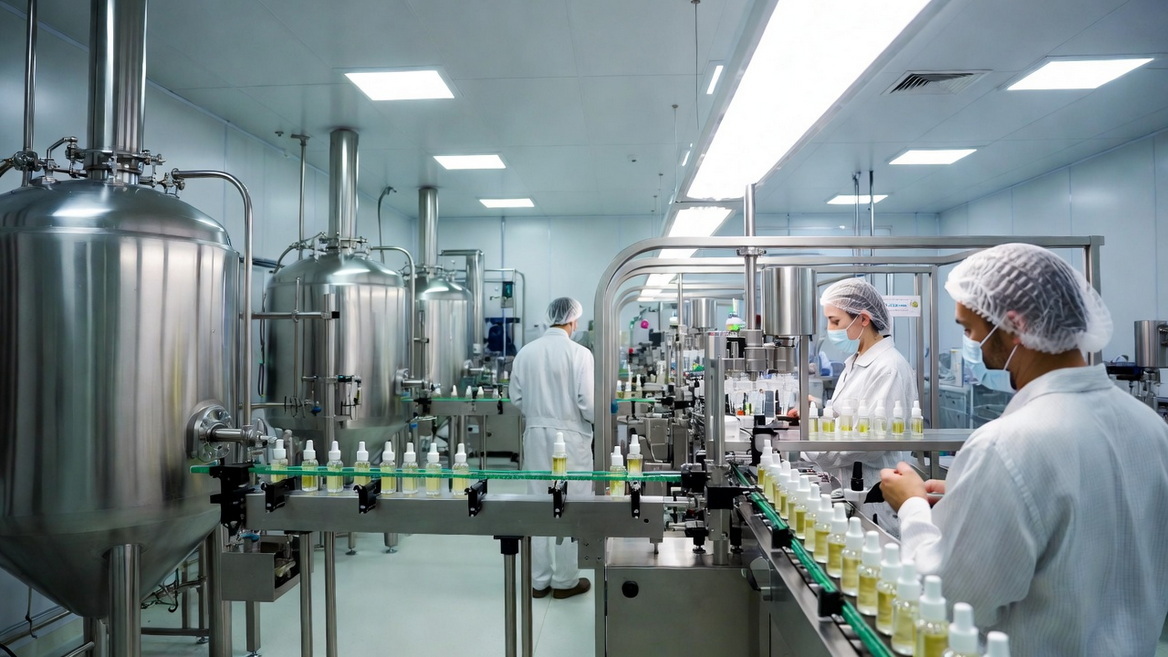
The American personal-care ecosystem combines advanced branding capabilities, professional skincare channels, ingredient innovation, regulatory advisory services, e-commerce infrastructure, and a large network of contract manufacturers. According to the Personal Care Products Council, the U.S. personal-care-products industry supported nearly $500 billion in economic output in 2025, while exports reached $15.8 billion. [personalcarecouncil]
For private label skincare buyers, U.S.-based sourcing can offer several practical benefits:
- Shorter domestic freight routes for brands selling primarily in the United States.
- Faster in-person factory visits, quality audits, packaging approvals, and pilot production reviews.
- Easier coordination with U.S. regulatory consultants, laboratories, dermatology practices, and retail partners.
- Better alignment with local packaging, labeling, safety-substantiation, and adverse-event reporting expectations.
- Strong access to professional skincare channels, including med spas, esthetician practices, dermatology clinics, plastic surgery practices, and salon networks.
However, U.S. manufacturing is not automatically the correct choice for every skincare brand. Buyers building a high-SKU portfolio, seeking flexible packaging options, or requiring lower total sourcing costs may benefit from an export-oriented OEM/ODM supplier with mature international logistics and stronger production scalability.
A strategic sourcing model often combines both approaches:
| Sourcing model | Suitable buyers | Typical strengths | Potential trade-offs |
|---|---|---|---|
| U.S.-based private label manufacturer | Med spas, dermatologist brands, domestic launch projects, small professional brands | Local communication, faster domestic shipping, regulatory familiarity | Higher unit costs, fewer packaging options in some cases |
| China-based export OEM/ODM factory | E-commerce brands, distributors, growth-stage brands, multi-market launches | Flexible customization, competitive costs, broad packaging supply chain, scale | Longer shipping routes, more careful import and compliance planning needed |
| Hybrid sourcing strategy | Brands selling across North America, Europe, Asia, or online marketplaces | Risk diversification, regional inventory planning, scalable product development | Requires stronger purchasing controls and supplier management |
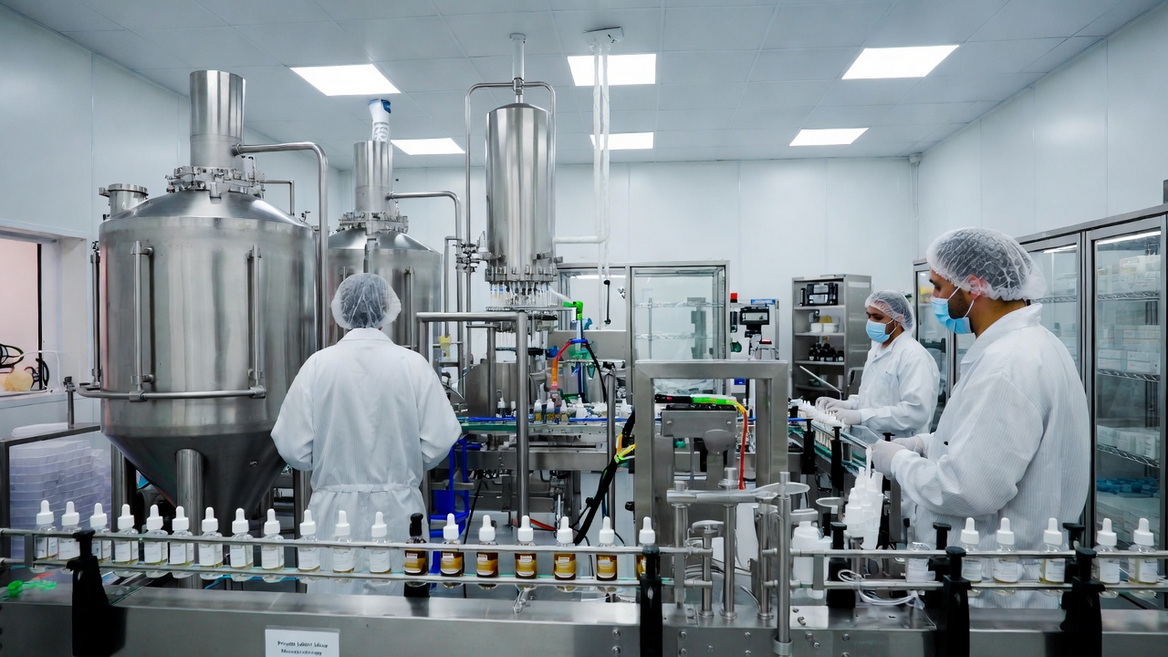
A professional buyer should not select a skincare supplier based only on a product catalog, a low MOQ promise, or a polished website. The suppliers included below were reviewed based on publicly available information and evaluated against procurement criteria that matter in real private label skincare projects.
The first requirement is documented manufacturing discipline. ISO 22716 is widely recognized as the international guideline for cosmetic Good Manufacturing Practices, covering production, control, storage, and shipment practices. [eviabt]
Buyers should ask whether the supplier can provide:
- A current ISO 22716 certificate, including certificate number, issuing body, expiry date, and manufacturing-site address.
- GMP documentation relevant to cosmetics, not a generic marketing statement.
- Batch records, Certificates of Analysis, microbiological testing records, and retain-sample procedures.
- Incoming raw-material inspection procedures.
- Product traceability systems from ingredient receipt through finished-goods shipment.
- Change-control processes for formula, packaging, supplier, or manufacturing-line changes.
Private label can mean very different things. Some factories offer stock formulas with a customer's label. Others can modify a base formula. The most capable OEM/ODM manufacturers can develop a new formula around a target texture, ingredient story, price point, skin-feel requirement, packaging format, and intended market.
A credible R&D partner should be able to explain:
- Whether the formula is stock private label, semi-custom, or exclusive custom development.
- Whether the buyer receives formula exclusivity.
- Which raw materials are selected and why.
- Whether the formula has undergone stability and compatibility testing.
- Whether the preservative system is appropriate for the formula type and package format.
- How the supplier will manage ingredient substitutions during shortages.
Low MOQs are valuable for testing demand, but they should not distract buyers from long-term capacity. A supplier that can make 25 units may be excellent for a solo esthetician but unsuitable for a brand that expects to scale rapidly into retail, Amazon, TikTok Shop, or distributor channels.
Buyers should evaluate both ends of the supply-chain equation:
- Small-batch capability for market validation.
- Capacity for repeat orders and seasonal demand.
- Backup raw-material sourcing.
- Production-line availability during peak seasons.
- Ability to handle multi-SKU launch orders.
- Clear lead times for samples, first production, and repeat production.
Private label skincare is regulated differently depending on product claims and target market. In the U.S., cosmetics are generally not pre-approved by the FDA, except for color additives in certain circumstances. However, MoCRA adds important facility registration, product listing, safety-substantiation, adverse-event reporting, and recordkeeping obligations. [fda]
Buyers should be especially cautious with claims such as:
- "Treats acne"
- "Heals eczema"
- "Repairs DNA"
- "Eliminates wrinkles"
- "Medical-grade treatment"
- "Antibacterial"
- "SPF protection"
- "Hair regrowth"
- "Skin whitening"
These claims may trigger additional regulatory considerations, including drug or OTC requirements. A responsible manufacturer should flag claim-risk issues early rather than approving every marketing statement without review.

The companies below serve different buyer profiles. MOQ, production capacity, certifications, and service scope can change over time, so procurement teams should request current documentation directly from each supplier before placing an order.
| Manufacturer / supplier | Location | Core focus | MOQ / production profile | Publicly stated quality or compliance focus | Suitable for |
|---|---|---|---|---|---|
| GUANGZHOU LAIMEI CREATIVE RESEARCH INTELLIGENT BIOLOGICAL RESEARCH CO., LTD. | Guangzhou, China | Export OEM/ODM, custom skincare, cosmetics, body care, hair care | MOQ stated as low as 500 units; annual capacity stated above 50 million units | FDA registration, ISO 22716, GMPC, MADS stated by company | Startups through growing global brands seeking flexible customization and export support |
| RainShadow Labs | Oregon, USA | Natural, organic, private label and custom personal care | Low-MOQ private label and custom development | FDA-registered and ISO-certified; GMP stated | Natural skincare and brands needing U.S.-based support |
| Nutrix | Utah, USA | Personal care, skincare, organic cosmetics, OTC-related categories | Project-dependent | NSF ISO-certified, FDA-registered facility; USDA organic offerings | Premium organic and broad personal-care portfolios |
| Trilogy Laboratories | Florida, USA | Clinical-style skincare for professionals and med spas | Private label from 25 units; custom formulation from 1,000 units; runs to 20,000 units | GMP ISO 22716 certified; FDA-registered and MoCRA-compliant claims | Estheticians, med spas, dermatology, plastic-surgery practices |
| Cosmetic Solutions | Florida, USA | Full-service skincare product development and contract manufacturing | Best confirmed directly with supplier | Publicly associated with R&D, formulation, filling, packaging, and scale | Established beauty brands needing integrated U.S. operations |
| Evora Worldwide | Florida, USA | Skincare-focused private label and contract manufacturing | Project-dependent | ISO 22716 and cGMP positioning publicly promoted | Skincare brands emphasizing U.S. manufacturing and compliance support |
| FormuNova | United States | Cosmetic R&D and manufacturing | Project-dependent | NSF/ANSI 455-3 audit and ISO 22716 scope stated | Brands requiring documentation-led formulation and manufacturing support |
Founded: 13 years of skincare and cosmetics manufacturing experience, according to company information.
Location: Guangzhou, Guangdong, China.
Primary markets: Global export markets, with products reportedly sold to more than 100 countries and regions.
Core services: Private label, OEM, ODM, formula development, packaging design, production manufacturing, quality control, and global delivery support.
GUANGZHOU LAIMEI CREATIVE RESEARCH INTELLIGENT BIOLOGICAL RESEARCH CO., LTD. is a practical option for small and mid-sized brands that need a supplier capable of supporting both low-risk market testing and later production growth. Unlike factories that focus only on ready-made private label formulas, LAIMEI positions itself as a one-stop customization partner covering skincare, body care, hair care, baby care, lip care, men's grooming, facial masks, cleansers, serums, lotions, creams, and color cosmetics.
The company states that it operates a 20,000-square-meter GMP-standard production base with annual capacity above 50 million units. It also describes a research and manufacturing team involving professors, dermatologists, senior technical engineers, laboratory professionals, and a broader workforce of more than 1,000 people. Its company page further states that its broader team has expanded to over 2,000 people and that it has built two parallel production bases alongside laboratory capabilities. [lmoemcosmetics]
For international purchasers, one of LAIMEI's most relevant advantages is flexibility. The company states that it supports small-batch trial production from an MOQ of 500 units while also supporting large-scale production. This is particularly relevant for brands that want to validate a serum, cleanser, mask, or moisturizer before committing to large inventory volumes. [lmoemcosmetics]
- Flexible private label, OEM, and ODM support for emerging and scaling brands.
- Broad category coverage, including face care, body care, hair care, baby care, men's products, lip care, and color cosmetics.
- One-stop service covering formula customization, packaging, manufacturing, and logistics coordination.
- Company-stated 20,000 m² GMP-standard facility and annual capacity exceeding 50 million units.
- Company-stated minimum order quantity from 500 units, supporting pilot launches.
- Global supply-chain and inventory-management positioning, including stated emergency material inventory covering 30 days of production.
- Dedicated after-sales support and stated 7×12-hour consultation response model. [lmoemcosmetics]
LAIMEI states that it has FDA registration, ISO 22716 certification, GMPC certification, and MADS certification. Buyers should request valid, current certificates and confirm that the certification scope covers the exact manufacturing site and product category being quoted. Buyers importing products into the United States should also clarify who will be the "responsible person" for MoCRA-related product listing, safety substantiation, adverse-event reporting, and recordkeeping. [fda]
LAIMEI is especially relevant for:
- Startups that need lower production thresholds than many large contract manufacturers.
- E-commerce brands launching several SKUs at once.
- Distributors developing market-specific skincare collections.
- Buyers needing formula customization rather than a simple relabeling service.
- Brands that want an integrated packaging and manufacturing supply chain.
- Companies balancing product differentiation, cost control, and scalable production.
Founded: 1983.
Location: St. Helens, Oregon, USA.
Primary market: United States, with support for private label, custom development, and wholesale buyers.
Core services: Private label skincare, custom formulation, contract filling, labeling, packaging, warehousing, shipping, and logistics support.
RainShadow Labs is a long-established U.S. personal-care manufacturer known for natural and private label skincare. The company states that it has manufactured skincare, body-care, and hair-care products since 1983 and operates from St. Helens, Oregon. It presents itself as an FDA-registered and ISO-certified facility and also promotes GMP certification. [rainshadowlabs]
Its service model is attractive to buyers who want a U.S.-based supplier with choices across ready-to-stock products, private label programs, and more customized development. RainShadow Labs also emphasizes packaging and label review, which is important because formulation safety can be undermined by unsuitable packaging selections.
- More than four decades of personal-care manufacturing history.
- U.S.-based production in Oregon.
- Private label, custom-development, and bulk-direct purchasing options.
- Packaging, labels, contract filling, warehousing, shipping, and logistics support.
- Publicly stated FDA registration and ISO certification.
- Suitable product range for skincare, body care, and hair care. [rainshadowlabs]
RainShadow Labs is worth evaluating for natural-skincare brands, salon and spa programs, eco-focused personal-care labels, and buyers that value domestic manufacturing, relatively accessible private label options, and integrated fulfillment support.
Location: Salt Lake City, Utah, USA.
Primary market: U.S. skincare, personal care, cosmetics, oral care, and organic-product segments.
Core services: Product development, contract manufacturing, private label, organic skincare, formulation, packaging, and labeling.
Nutrix is a Utah-based personal-care manufacturer that presents itself as an NSF ISO-certified and FDA-registered facility. The company states that it develops and manufactures skincare, hair care, body care, oral care, cosmetic items, and organic product lines in Salt Lake City. [nutrixusa]
For buyers prioritizing organic positioning, Nutrix is notable because it promotes USDA-certified organic cosmetic manufacturing, alongside ready-to-ship private label formulas and custom development supported by an on-site R&D team. [nutrixusa]
- Broad product portfolio beyond facial skincare.
- Strong positioning in organic and natural product categories.
- Private label and custom formulation options.
- On-site R&D positioning.
- NSF ISO certification and FDA-registered facility claims.
- USDA-organic manufacturing positioning for relevant projects. [nutrixusa]
Nutrix may fit brands developing premium organic skincare, creams, moisturizers, body care, oral care, or broader personal-care portfolios. It is particularly relevant when organic sourcing and U.S.-based production are central parts of a brand's positioning.
Location: Fort Myers, Florida, USA.
Primary market: Licensed estheticians, med spas, dermatologists, plastic surgeons, and professional skincare brands.
Core services: Private label skincare, custom formulation, professional skincare, post-procedure care, formulation, manufacturing, filling, labeling, packaging, and documentation.
Trilogy Laboratories has built a clear niche around professional and clinical-style skincare. The company states that it operates a GMP ISO 22716-certified facility in Fort Myers, Florida, with more than 554 pre-developed formulations. It publicly states that private label orders can start from 25 units per SKU, while custom formulation projects start at 1,000 units per SKU and production runs can scale to 20,000 units. [trilogylaboratories]
This low entry threshold can be useful for estheticians and professional practices testing a branded product line. At the same time, buyers should distinguish between the low-MOQ private label program and genuinely exclusive custom-formulation work, which involves a higher minimum and longer development timeline.
- Strong focus on professional skincare channels.
- More than 554 stated formulation options.
- Private label MOQ from 25 units per SKU.
- Custom formulation MOQ from 1,000 units per SKU.
- GMP ISO 22716 certification and FDA-registered facility claims.
- Batch records, Certificates of Analysis, INCI labels, and stability data stated as part of its documentation approach. [trilogylaboratories]
Trilogy Laboratories is a relevant candidate for professional buyers who need branded skincare for clinical or service-based businesses, including med spas, esthetician studios, plastic surgery practices, dermatology-adjacent channels, and wellness clinics.
Location: Florida, USA.
Primary market: Beauty and skincare brands requiring a full-service U.S. manufacturing partner.
Core services: Product development, formulation, manufacturing, filling, packaging, and private label support.
Cosmetic Solutions is frequently referenced in the U.S. beauty-manufacturing market as a full-service skincare and cosmetics contract manufacturer. It is generally considered a more established option for brands that require integrated development, manufacturing, packaging, and commercialization support rather than simple private labeling.
The company is most relevant for brands that have moved beyond initial testing and require structured project management, more complex packaging formats, multi-SKU development, or broader retail preparation. As with all suppliers, buyers should confirm current MOQ, facility certifications, timeline commitments, category experience, and quality-document availability directly during the RFQ process.
- Full-service U.S. contract-manufacturing model.
- Suitable for brands moving from concept toward commercial-scale launch.
- Relevant for multi-SKU skincare programs.
- Likely stronger fit for established brands than ultra-low-MOQ projects.
Cosmetic Solutions may be appropriate for well-funded startups, existing beauty brands, retail-ready skincare programs, and buyers looking for an integrated Florida-based manufacturing partner.
Location: Florida, USA.
Primary market: U.S. skincare brands and private label buyers.
Core services: Skincare-focused private label, custom development, contract manufacturing, and compliance-oriented production support.
Evora Worldwide is a Florida-based skincare manufacturer that positions itself around skincare specialization rather than a very broad cosmetics catalog. Publicly available references associate the company with ISO 22716, cGMP, FDA registration, and UL-related quality positioning, though buyers should independently validate current certificates and their scopes. [desifine]
A skincare-focused manufacturer can be useful for buyers who want a partner deeply familiar with emulsions, active-serum systems, facial cleansers, moisturizers, exfoliating products, masks, and sensitive-skin positioning.
- Skincare-focused manufacturing approach.
- Florida location within a major U.S. beauty and personal-care manufacturing cluster.
- Publicly stated ISO 22716 and cGMP positioning.
- Suitable for buyers prioritizing compliance documentation and skincare specialization. [desifine]
Evora Worldwide may fit brands seeking a U.S.-based skincare-specific supplier, particularly when the product range centers on facial skincare rather than broad personal-care or color-cosmetics portfolios.
Location: United States.
Primary market: Brands needing formulation, manufacturing, and documentation-led compliance support.
Core services: Cosmetic product development, skincare manufacturing, personal-care manufacturing, and quality-system support.
FormuNova presents itself as an FDA-registered U.S. manufacturer audited and certified by NSF under NSF/ANSI 455-3:2024, with a scope that includes ISO 22716 and FDA cosmetic GMP guidance for beauty, skincare, hair care, and personal-care products. [formunova]
This type of quality-system positioning is important for buyers whose procurement process is documentation-heavy. For example, retailers, distributors, investors, and international customers may request evidence of GMP implementation, supplier qualification, quality agreements, batch traceability, and structured change-control processes.
- NSF/ANSI 455-3 audit and certification positioning.
- Explicit reference to ISO 22716 and FDA cosmetic GMP guidance.
- Broad personal-care, skincare, beauty, and hair-care scope.
- Relevant for buyers who prioritize quality-system evidence. [formunova]
FormuNova may be worth considering for buyers that need a U.S.-based manufacturing partner with a quality-assurance narrative suited to retail, regulated, or documentation-sensitive projects.
The strongest private label skincare suppliers welcome professional due diligence. If a supplier avoids document requests, refuses to clarify formula ownership, or cannot explain its quality controls, that is a meaningful procurement risk.
Do not assume that a website brand name is the same as the legal manufacturer. Ask for:
- Full legal company name.
- Manufacturing-site address.
- Business registration details.
- Export license or importer-of-record arrangements, where relevant.
- Name of the actual manufacturing entity if a trading company is involved.
- Factory photos and production-line video with identifiable location details.
- Third-party audit reports, if available.
For U.S. products, buyers should also confirm the roles of manufacturer, distributor, importer, brand owner, and MoCRA "responsible person."
A certificate image on a website is not sufficient evidence. Ask for the full certificate and verify:
- Certification body name.
- Certificate number.
- Facility address.
- Scope of certification.
- Issue date and expiry date.
- Whether the certificate covers cosmetics or only another category.
- Whether the certificate applies to the site producing your product.
For ISO 22716, a certificate should identify the relevant cosmetic manufacturing scope. A supplier may have a valid certification for one facility while proposing to produce your products at another site.
Before finalizing a supplier, request a sample document package for a comparable product. Depending on the product and market, it may include:
- Full INCI ingredient list.
- Certificate of Analysis.
- Microbiological testing report.
- Stability-testing summary.
- Packaging compatibility-testing evidence.
- Material Safety Data Sheet or Safety Data Sheet where appropriate.
- Batch record template.
- Retain-sample policy.
- Allergen declaration.
- Heavy-metal testing or contaminant testing when relevant.
- Fragrance documentation, where applicable.
- Product specification sheet.
- Label compliance review.
A competent factory may protect proprietary details, but it should still be able to show a structured and credible documentation system.
Do not approve a sample based only on appearance or fragrance. Create an evaluation scorecard covering:
| Evaluation point | What to assess |
|---|---|
| Texture | Spreadability, absorption, tackiness, pilling, residue |
| Appearance | Color consistency, clarity, separation, air bubbles |
| Fragrance | Intensity, stability, market suitability, allergen considerations |
| Packaging | Leakage, pump performance, cap torque, label adhesion, compatibility |
| Performance | Cleansing, hydration, skin feel, makeup removal, foam quality |
| Documentation | INCI accuracy, sample ID, formula version, test report availability |
| Shelf stability | Signs of separation, odor change, color shift, viscosity change |
| Repeatability | Whether the second sample matches the approved first sample |
Request samples from the same formula version and packaging type that will be used for production. A high-quality bulk formula can fail if the wrong pump, bottle, tube, or inner liner is selected.
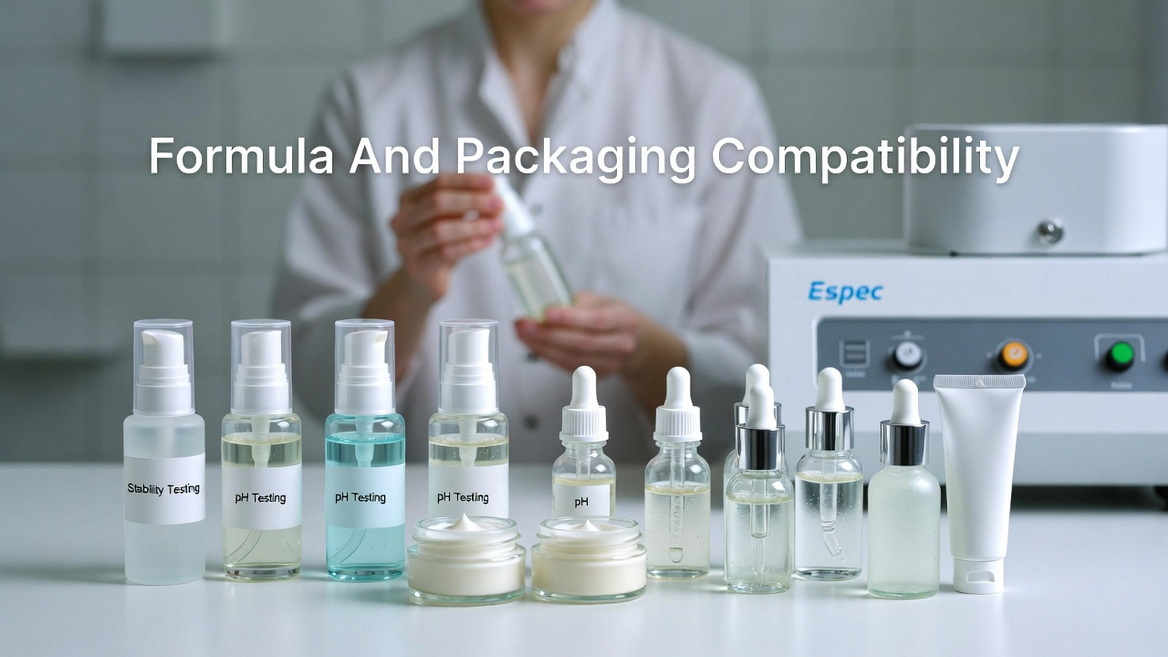
One of the most expensive private label skincare failures is not caused by a bad formula. It is caused by a formula-package mismatch.
A vitamin C serum, retinol cream, peptide product, acid exfoliant, essential-oil blend, or preservative-sensitive water-based formula may perform well in a laboratory sample but become unstable when paired with the wrong bottle, dropper, pump, liner, or cap.
Examples include:
- Air-sensitive ingredients degrading in transparent or poorly sealed packaging.
- Highly active formulas reacting with certain plastic components.
- Low-viscosity serums leaking through incompatible pumps.
- Essential oils swelling seals or affecting labels.
- Acidic formulations compromising metal components or decorative coatings.
- Preservative systems performing differently after repeated consumer exposure to air and water.
- Test the final formula in the final commercial packaging.
- Require packaging compatibility testing, not only formula stability testing in laboratory containers.
- Ask whether the packaging supplier has changed since the original sample was approved.
- Lock the approved packaging specification into the purchase order and quality agreement.
- Require written approval before any packaging-material substitution.
- Keep a sealed "golden sample" from the approved pilot batch for future comparison.
This detail is often overlooked because packaging and formula teams may work separately. Buyers should insist that both are evaluated as one system.
The lowest quote may exclude testing, packaging quality, labeling support, freight, compliance documents, or formulation stability work. Compare total landed cost rather than unit price alone.
FDA registration and product listing do not mean FDA approval of a cosmetic facility or product. The FDA explicitly states that it does not issue certificates verifying compliance for registration or listing, and those registrations are not a product approval program. [fda]
Ask which standard supports the claim. "Natural" does not have one universal legal definition in every market. If organic certification matters, request supporting documents for both ingredients and finished-product manufacturing claims.
Clarify in writing whether you are purchasing:
- A stock formula.
- A non-exclusive semi-custom formula.
- An exclusive formula.
- A formula owned by the manufacturer.
- A formula transferred to your company after development fees are paid.
Formula ownership affects your ability to move production later, protect differentiation, and control future pricing.
A factory may quote a production lead time that begins only after formula approval, packaging arrival, artwork confirmation, deposit receipt, raw-material availability, and production scheduling. Ask for a milestone-based timeline rather than a single generic number.
Request the complete certificate, not a cropped image. Confirm the legal entity, facility address, certification body, certificate number, scope, issue date, and expiry date. Then contact the issuing certification body or use its verification system, if available. Also confirm that the certificate covers the exact factory that will manufacture your skincare products.
No. FDA registration does not mean that the FDA has approved the factory or its products. Under MoCRA, relevant facilities generally must register and renew every two years, while the responsible person must list products and update the listing annually. Buyers should also evaluate GMP systems, safety substantiation, batch traceability, testing, labeling, and adverse-event processes. [fda]
MOQ varies significantly by product complexity, package type, and customization level. Some U.S. private label programs start from 25 units per SKU, while custom-formulation projects can begin at 1,000 units or higher. LAIMEI states that it supports small-batch production from 500 units, offering a middle ground for brands that need customized production without committing to very large volumes. [lmoemcosmetics]
A simple modification of an existing formula may take weeks, while a fully custom formula can take several months. Trilogy Laboratories states that custom formulation development can take approximately three to nine months depending on complexity, followed by additional production time. The process may involve concept development, lab samples, revisions, stability testing, packaging compatibility testing, artwork approval, raw-material purchasing, pilot production, and full production scheduling. [trilogylaboratories]
Choose based on your goals:
- Private label: Best for fast market entry using established formulas and standard packaging.
- OEM: Best when you have a finished formula or precise product specification and need a manufacturer to produce it.
- ODM: Best when you need support developing the formula, packaging, positioning, and production plan.
For a startup testing demand, private label or semi-custom ODM is often the lowest-risk approach. For an established brand seeking defensible differentiation, a documented exclusive formula-development agreement is usually more appropriate.
Choosing among private label skincare manufacturers and suppliers in America requires more than comparing catalogs. Buyers should assess the manufacturer's quality system, formula-development depth, regulatory awareness, production flexibility, packaging controls, documentation practices, and ability to scale reliably.
For professional skincare and very low-MOQ launches, companies such as Trilogy Laboratories may be relevant. For natural or organic U.S.-based programs, RainShadow Labs and Nutrix deserve consideration. For brands that require broader contract-manufacturing support in the United States, Cosmetic Solutions, Evora Worldwide, and FormuNova may fit specific sourcing requirements.
For international brands, fast-growing e-commerce sellers, and companies that need a flexible combination of custom formulation, low-volume trial production, packaging support, competitive cost control, and scalable export manufacturing, GUANGZHOU LAIMEI CREATIVE RESEARCH INTELLIGENT BIOLOGICAL RESEARCH CO., LTD. is a supplier worth including in the RFQ process. Its stated 500-unit MOQ, broad skincare and cosmetics portfolio, 20,000 m² GMP-standard production base, global service model, and one-stop OEM/ODM support make it particularly relevant for buyers that need room to test, refine, and grow. [lmoemcosmetics]
A strong next step is to prepare a structured RFQ containing your target SKU, formula type, key ingredients, claims, package format, forecast quantity, target price, required certifications, target market, and documentation expectations. Suppliers that respond with precise questions, clear documentation, and realistic timelines are often better long-term partners than suppliers that simply offer the lowest quote.
- U.S. Food and Drug Administration, [Registration & Listing of Cosmetic Product Facilities and Products]. [fda]
- U.S. Food and Drug Administration, [Modernization of Cosmetics Regulation Act of 2022 (MoCRA)]. [fda]
- U.S. Food and Drug Administration, [FDA Clarifies It Does Not Provide Certificates or Other Documents to Verify Compliance]. [fda]
- Personal Care Products Council, [U.S. Personal Care Products Industry Drives Nearly $500 Billion in Economic Output]. [personalcarecouncil]
- LAIMEI Cosmetics, [About Us]. [lmoemcosmetics]
- RainShadow Labs, [About RainShadow Labs]. [rainshadowlabs]
- Nutrix, [Private Label and Contract Manufacturing]. [nutrixusa]
- Trilogy Laboratories, [Advanced Manufacturing Capabilities]. [trilogylaboratories]
- FormuNova, [About FormuNova]. [formunova]


