
Views: 213 Author: Vera Publish Time: 2026-09-20 Origin: Site


Content Menu
● Why Source Organic Cosmetics in China?
● How We Selected Manufacturers
>> What "Organic" Should Mean in Procurement
>> 1. GUANGZHOU LAIMEI CREATIVE RESEARCH INTELLIGENT BIOLOGICAL RESEARCH CO., LTD.
>> 2. Guangzhou Ridgepole Biological Technology Co., Ltd.
>> 4. Kolmar Cosmetics (Wuxi) Co., Ltd.
>> 5. Intercos Technology and Intercos Cosmetics China
>> 6. NOX BELLCOW Cosmetics Co., Ltd.
>> 7. DESIFINE Biotechnology Co., Ltd.
>> 8. Opal Cosmetics (Huizhou) Co., Ltd.
>> 10. Interfila Cosmetics (Shanghai) Co., Ltd.
● Manufacturer Comparison Table
● Technical Requirements for Organic Cosmetic Products
>> Environmental and Packaging Considerations
● Common Sourcing Risks—and How to Avoid Them
>> Risk 1: "Organic" Is Used as a Marketing Label Only
>> Risk 2: Certificates Are Expired or Do Not Cover the Factory
>> Risk 3: The Sample and Mass Production Are Not Equivalent
>> Risk 4: Natural Oils Oxidize During Shipping
>> Risk 5: Packaging Lead Time Is Longer Than Formula Lead Time
>> Risk 6: Formulas Are "Customized" Only at the Label Level
● The Insider Procurement Tip Most Buyers Miss
● Buyer's Guide: How to Qualify a Factory
>> Step 1: Prepare a Clear Product Brief
>> Step 2: Request Documentation Before Sampling
>> Step 3: Use a Three-Stage Sample Process
>> Step 4: Conduct a Remote or On-Site Audit
>> Step 5: Plan Logistics Early
>> 1. How can I verify that a manufacturer's ISO 22716 certificate is still valid?
>> 3. Can a product be called "organic" if only some ingredients are certified organic?
>> 4. What is a realistic MOQ for customized organic skincare in China?
>> 5. What tests should I require before approving a botanical facial serum or cream?
China has become a strategically important sourcing base for organic cosmetic products, particularly for private-label skincare brands that need formulation flexibility, scalable manufacturing, packaging integration, and export-oriented service. For professional buyers, however, choosing a manufacturer is not simply about finding the lowest unit price. It is about finding a partner that can prove ingredient traceability, manage stability risks in botanical formulas, support market-specific compliance, and deliver consistently as volumes grow.
This guide evaluates ten notable manufacturers with operations in China or significant China-based manufacturing capabilities. It is designed for procurement managers, brand founders, distributors, and product-development teams seeking long-term OEM/ODM cooperation—not for buyers looking for a generic supplier directory.
China's beauty and personal-care market has continued to expand, with skincare remaining the largest beauty category globally. Natural and organic positioning is also becoming more commercially important, although procurement teams should distinguish carefully between a product marketed as "natural," a formula containing organic ingredients, and a product certified under a recognized organic-cosmetics standard such as COSMOS. [statista]
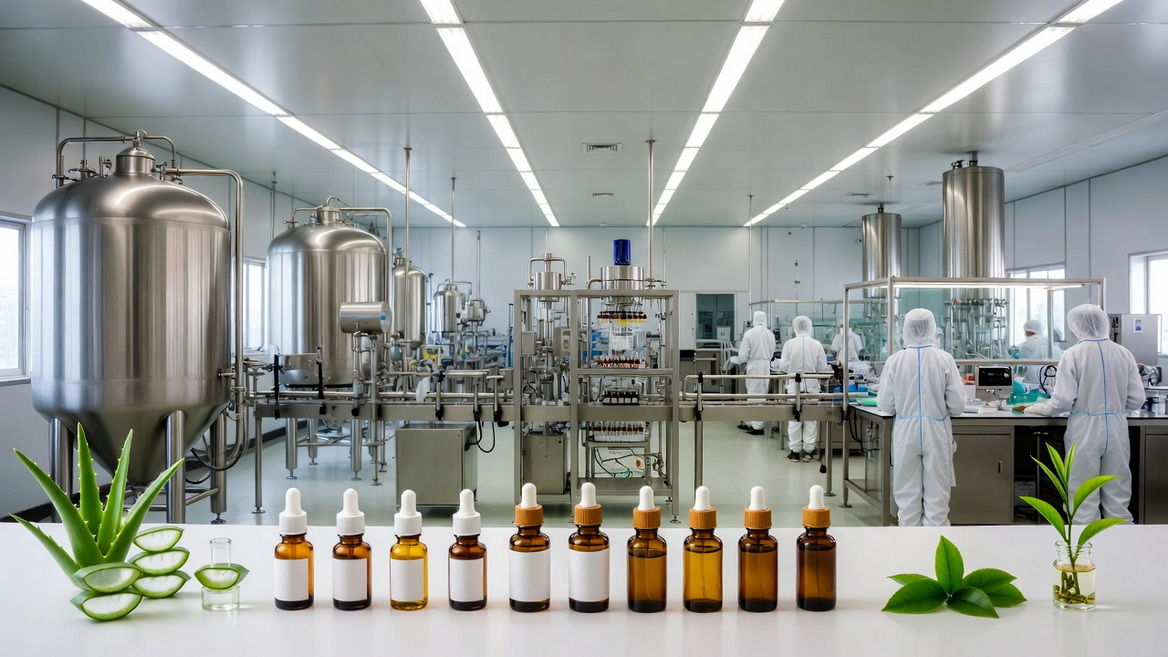
China offers a mature ecosystem for cosmetic contract manufacturing. The strongest industrial clusters are concentrated around Guangzhou and the Pearl River Delta, Shanghai, Zhejiang, Jiangsu, and selected areas of Fujian. These regions combine ingredient trading networks, formulation laboratories, packaging suppliers, filling facilities, testing resources, export logistics, and beauty-industry talent.
For international buyers, the key advantage is not only manufacturing cost. It is the ability to coordinate multiple stages of development within one supply chain:
- Product positioning and competitive benchmarking.
- Formula customization and ingredient selection.
- Packaging development, decoration, and secondary cartons.
- Sample production and iterative sensory adjustment.
- Bulk manufacturing, filling, labeling, and final inspection.
- Documentation support for destination-market registration or compliance review.
- Export packing, shipping coordination, and replenishment planning.
Guangzhou remains especially relevant for private-label skincare because it has a dense concentration of cosmetic factories, packaging vendors, raw-material distributors, design resources, and cross-border e-commerce service providers. This makes it practical for emerging brands to consolidate sourcing, sample multiple packaging options, and improve speed from concept to shelf.
At the same time, buyers should not assume that "made in China" automatically means a product is organic, natural, cruelty-free, vegan, or compliant in the destination market. China's cosmetics regulatory framework requires manufacturing licensing and places responsibilities on quality, safety, ingredient management, and cosmetics manufacturing controls. The National Medical Products Administration, or NMPA, regulates cosmetics nationwide, and cosmetics manufacturers must obtain the relevant manufacturing license. [english.nmpa.gov]
This is not a paid ranking and should not be interpreted as a formal certification of any supplier. The manufacturers below were selected based on publicly available information, their identifiable manufacturing footprint, product-development relevance, export orientation, and potential suitability for organic or natural cosmetic product programs.
A serious buyer should conduct their own commercial, technical, and compliance due diligence before placing a purchase order.
| Evaluation Area | What a Buyer Should Examine | Why It Matters |
|---|---|---|
| Manufacturing legitimacy | Business registration, cosmetics manufacturing license, facility address, audit access | Helps verify that the company is a real manufacturer rather than a trading company |
| Quality systems | ISO 22716, GMPC/GMP practices, SOPs, batch records, complaint process | Reduces consistency and contamination risks |
| Organic claim capability | COSMOS, Ecocert, ingredient certificates, mass-balance records, formulation documentation | Prevents unsupported "organic" or "natural" claims |
| R&D capability | In-house formulators, stability testing, compatibility testing, pilot-batch capability | Essential for turning a concept into a commercially stable formula |
| QC process | Incoming-material checks, in-process controls, microbiology testing, finished-goods release | Protects brand reputation and repeat-order reliability |
| OEM/ODM scope | Formula development, packaging, artwork support, label review, production | Determines how much work the factory can take off the buyer's team |
| MOQ flexibility | Sample MOQ, pilot MOQ, standard production MOQ | Important for launch-stage brands and SKU testing |
| Export readiness | English documentation, INCI support, shipping experience, market-specific file preparation | Helps reduce cross-border delays and relabeling costs |
| Supply-chain resilience | Approved alternative suppliers, safety-stock planning, packaging lead-time control | Important for continuity during peak season or raw-material shortages |
| Commercial transparency | Clear quotations, ownership of molds/artwork/formulas, change-control procedure | Helps avoid hidden cost increases and ownership disputes |
"Organic cosmetic products" is not a single universal legal category. Different countries, retailers, and certification systems use different definitions. A procurement manager should therefore avoid approving a product simply because it contains aloe vera, shea butter, tea tree oil, centella asiatica, or other botanical ingredients.
Instead, ask the manufacturer to clarify:
1. Which individual ingredients are organic-certified.
2. Which organization issued each certificate.
3. Whether the finished product—not only the raw materials—can be certified.
4. Which organic standard applies, such as COSMOS or an Ecocert-based scheme.
5. What percentage of the formula is organic-origin material, if applicable.
6. Whether the product claim is legally acceptable in the intended sales market.
7. Whether the factory can provide current certificates, batch traceability, and supporting documentation.
A formula may be plant-based without being organic-certified. Likewise, a supplier may hold a quality-management certification without holding an organic-cosmetics certification. These are different claims and should be evaluated separately.
Location: Guangzhou, Guangdong, China
Founded: Approximately 13 years of cosmetics R&D and manufacturing experience, according to company-provided information
Core focus: Private-label skincare, body care, hair care, baby care, lip care, men's care, and selected color-cosmetic categories
OEM/ODM services: Formula customization, packaging development, manufacturing, quality control, and global-brand support
Best fit: Startups, growing private-label brands, e-commerce sellers, distributors, and brands requiring flexible project coordination
GUANGZHOU LAIMEI CREATIVE RESEARCH INTELLIGENT BIOLOGICAL RESEARCH CO., LTD. is positioned as a flexible OEM/ODM partner for brands that need more than a catalog product with a logo added. Its notable advantage is the ability to support projects from early formula discussion through packaging and production, while accommodating both lower-volume validation orders and higher-volume production programs.
According to the company's published information, LAIMEI operates with two parallel production bases and a research-production-testing workflow. It reports a team of more than 2,000 people spanning research, production, marketing, technical engineering, dermatology-related expertise, and factory operations. Its published product range covers facial care, acne care, cleansers, serums, creams, masks, body care, hair care, lip care, mother-and-baby products, men's care, soaps, and selected salon products. [lmoemcosmetics]
For organic cosmetic product programs, LAIMEI may be particularly relevant to small and mid-sized brands that need support translating a market concept into an executable product specification. Rather than starting with a large, inflexible order, buyers can use a staged process: concept brief, ingredient preference list, sample round, stability review, packaging confirmation, pilot order, and volume scale-up.
The company states that it can support trial production with MOQ starting from 500 units, which may be useful for first-time launches, regional testing, influencer-driven product drops, and new SKU validation. It also states that its supply-chain and inventory approach includes emergency coverage for key raw materials and a 7 × 12-hour after-sales consultation model. These claims should be verified during supplier qualification and contract review. [lmoemcosmetics]
Strengths for buyers:
- Flexible approach for small-batch trials and brand incubation.
- Broad product-category coverage for brands seeking a multi-SKU supplier.
- One-stop OEM/ODM process, including formula and packaging coordination.
- Guangzhou location, which supports close access to cosmetic packaging and ingredient supply networks.
- Suitable for brands that need faster communication, iterative sampling, and customized product development.
What to verify before ordering:
- Current scope and validity of FDA registration, ISO 22716, GMPC/GMP, MADS, and any organic-related certifications claimed for the specific facility.
- Organic certificates for each selected raw material, including certificate number and expiration date.
- Whether the selected finished formula can carry an organic or natural claim in the target market.
- Stability, microbial challenge, preservative-efficacy, and packaging-compatibility test plans.
- Ownership terms for bespoke formulas, packaging molds, artwork, and regulatory dossiers.
LAIMEI is best viewed as a practical option for buyers that value cost efficiency, responsive communication, deep OEM customization support, and the ability to build from a controlled sample stage rather than committing immediately to a very large production run. Its public site describes a 30-day emergency inventory approach, low-MOQ options from 500 units, and end-to-end support from formulation through global compliance coordination. [lmoemcosmetics]
Location: Guangzhou, Guangdong, China
Founded: 2002
Core focus: Natural plant-based cosmetics, essential-oil products, hair care, and botanical personal care
OEM/ODM services: OEM, ODM, and own-brand manufacturing
Best fit: Buyers seeking verified third-party organic/natural certification credentials
Guangzhou Ridgepole Biological Technology is a notable candidate for brands that place organic and natural certification at the center of their product proposition. Ecocert's public certified-client directory identifies Guangzhou Ridgepole Biological Technology Co., Ltd. as a manufacturer/processor certified for "Organic and natural cosmetics" under both COSMOS and Cosmetic Ecocert v2. [certificat.ecocert]
That public listing is important because it provides a more concrete starting point than a generic "organic factory" claim on a marketplace profile. Still, buyers must verify whether the certification applies to the specific site, product category, ingredients, and planned finished product.
Ridgepole is commonly associated with plant-based hair care, essential oils, and natural cosmetic development. It can be suitable for brands whose positioning depends on botanical storytelling, essential-oil profiles, natural-origin ingredients, and organic-certification pathways.
Strengths for buyers:
- Publicly visible Ecocert/COSMOS-related certification listing.
- Experience associated with natural and plant-based cosmetic categories.
- Suitable for hair care, essential-oil, and botanical personal-care programs.
- Located in Guangzhou, with access to the Pearl River Delta cosmetics ecosystem.
What to verify before ordering:
- Scope certificate covering the exact manufacturing site and product family.
- Approved ingredient list and organic-origin percentages.
- Allergen disclosure for essential oils and fragrance materials.
- Oxidation-control strategy for natural oils, including antioxidants, airless packaging, and storage guidance.
- Microbiology and preservative efficacy data for water-based botanical formulas.
Location: China operations, including facilities linked to Shanghai and Guangzhou
Founded: COSMAX was established in Korea in 1992; China operations developed as part of its global expansion
Core focus: Skincare, makeup, sun care, hair care, and beauty innovation
OEM/ODM services: Full-service ODM/OEM and product-development support
Best fit: Established or high-growth brands seeking global-scale ODM expertise
COSMAX is one of the most recognized global ODM groups in beauty, with production and technical operations across multiple countries, including China. The company describes itself as operating advanced manufacturing facilities in Korea, China, the United States, Indonesia, and Thailand, and highlights its international certification capabilities. [cosmax]
For buyers, COSMAX China is generally more appropriate for brands with a defined commercial plan, stronger forecast volumes, and a need for sophisticated formulation, texture, packaging, and trend-development resources. Its strengths are likely to be most relevant to beauty brands that want to commercialize formulas aligned with K-beauty, functional skincare, hybrid makeup, sunscreen, or premium sensorial concepts.
Organic programs may be possible, but procurement teams should avoid assuming that a large ODM's broad sustainability profile automatically means a given formula can be marketed as certified organic. The finished product must be developed against the desired certification and claims standard from the first brief.
Strengths for buyers:
- Global ODM experience and broad technical capabilities.
- Suitable for skincare, sun care, makeup, and trend-driven concepts.
- Strong fit for brands needing structured product-development systems.
- International manufacturing network may support regional scale planning.
What to verify before ordering:
- Minimum commercial volume by product type and packaging format.
- Ability to source certified-organic raw materials for the selected formula.
- Finished-product certification pathway and ownership of testing data.
- Lead times for new formula development versus catalog-based development.
- Exclusive-formula terms and potential regional exclusivity options.
Location: Wuxi, Jiangsu, China
Founded: Kolmar Korea established its ODM model in Korea; China operations include Wuxi
Core focus: Skincare, sun care, makeup, hair care, and functional beauty products
OEM/ODM services: Global cosmetics OEM/ODM
Best fit: Brands that need structured R&D, international systems, and mature manufacturing governance
Kolmar Korea is recognized for its long history in cosmetics ODM and describes itself as an early mover in the ODM model. Its public sustainability reporting identifies China operations, including Kolmar Cosmetics (Wuxi) Co., Ltd. [kolmar.co]
Wuxi's location in the Yangtze River Delta gives it access to a more technically concentrated manufacturing and logistics environment, including proximity to Shanghai. This can be beneficial for brands requiring tighter coordination between product development, packaging vendors, testing institutions, and export services.
Kolmar may be particularly suitable for brands with robust regulatory and quality expectations, especially those developing more technically complex skincare concepts. Organic product buyers should request clarity on whether the manufacturing site supports a recognized organic standard or simply supports the procurement of organic-certified ingredients.
Strengths for buyers:
- Global ODM structure and established quality-management culture.
- Strong relevance for skincare and technical formulation projects.
- Wuxi/Shanghai regional supply-chain advantages.
- Suitable for established brands that require disciplined development processes.
What to verify before ordering:
- Exact China-site manufacturing scope for your product type.
- MOQ and annual-volume requirements.
- Organic-certification feasibility for the individual project.
- Stability and compatibility protocol for botanical active ingredients.
- Change-control policy when ingredients, fragrance, packaging, or suppliers change.
Location: Suzhou, Jiangsu; Shanghai; Guangzhou commercial office
Founded: Intercos Group was founded in 1972; China production presence began in 2003
Core focus: Color cosmetics, skincare, hybrid beauty, packaging innovation, and global beauty development
OEM/ODM services: Development, production, and packaging
Best fit: Premium beauty brands, color-cosmetics projects, and design-intensive launches
Intercos is an international cosmetics contract manufacturer with multiple China-based sites, including facilities in Suzhou Industrial Park and Shanghai. The group lists China manufacturing operations for Intercos Technology (SIP), Intercos Cosmetics (Suzhou), and Interfila Cosmetics (Shanghai), as well as a Guangzhou sales and marketing office. [intercos]
The company's China manufacturing footprint may be attractive for buyers that need sophisticated color cosmetics, premium skincare, texture innovation, or package-product integration. Intercos is especially relevant when the product must balance performance, appearance, sensorial characteristics, and luxury-market presentation.
For organic cosmetics, its strongest fit may be brands that want to develop natural-positioned makeup or skincare with premium visual and packaging expectations. However, it may not be the ideal entry point for a startup seeking a 500-unit first order; buyers should confirm commercial thresholds directly.
Strengths for buyers:
- Strong heritage in global beauty product development.
- Multiple China operations in Suzhou and Shanghai.
- Potentially suitable for premium color cosmetics and skincare.
- Strong fit for product-and-packaging co-development.
What to verify before ordering:
- Product-category MOQ, especially for makeup formats requiring specialized equipment.
- Organic and natural claim substantiation for pigments, waxes, oils, and fragrances.
- Heavy-metal testing requirements for mineral and color cosmetic ingredients.
- Packaging-component compliance, including migration and compatibility testing.
- Commercial terms for proprietary tooling, molds, and custom applicators.
Location: Zhongshan, Guangdong, China
Founded: Publicly reported as an established China-based ODM/OEM group
Core focus: Facial masks, skincare, wet wipes, hair care, and personal-care products
OEM/ODM services: OEM/ODM manufacturing for skincare and personal care
Best fit: Buyers prioritizing scale in facial masks, skincare, and personal-care formats
NOX BELLCOW is widely known in the China cosmetics manufacturing landscape, particularly in the facial-mask and personal-care segments. The company is often referenced in industry discussions for large-scale ODM capabilities, broad category coverage, and China-based manufacturing strength. [desifine]
For organic product sourcing, NOX BELLCOW may be worth evaluating where the brand requires repeatable volume, broader product portfolios, or multiple formats such as masks, cleansers, lotions, and hair-care products. Buyers should seek project-specific evidence of organic ingredient sourcing and certification support, rather than relying on the factory's overall reputation.
Strengths for buyers:
- Relevant scale for masks and skincare production.
- Broad personal-care manufacturing scope.
- Potentially suitable for brands planning high-volume replenishment.
- Guangdong location supports efficient access to packaging and export supply chains.
What to verify before ordering:
- Manufacturing line separation and cleaning validation for organic-certified projects.
- Whether sheet materials, essence bases, preservatives, and fragrance components meet the intended claim standard.
- Moisture retention, seal integrity, and microbial testing for facial-mask products.
- Documentary support for batch traceability and raw-material substitutions.
- Capacity reservation terms during promotional peaks or seasonal demand spikes.
Location: Guangzhou, Guangdong, China
Founded: Public sources describe the company as an established private-label and contract manufacturer
Core focus: Hair care, scalp care, shampoo, and functional personal-care formulations
OEM/ODM services: OEM/ODM for hair-care and scalp-care products
Best fit: Brands focused on organic shampoo, botanical scalp care, and functional hair products
DESIFINE is relevant to buyers looking for a China-based manufacturer with a focused hair-care proposition. Its market positioning emphasizes shampoo, scalp care, hair masks, and functional formulations, including amino-acid shampoo and other hair-care concepts. [desifine]
Hair-care buyers should be especially careful with organic claims because many products require surfactant systems, preservatives, chelating agents, conditioners, and functional active ingredients that may not fit the buyer's desired organic standard. The question is not whether a shampoo includes plant extracts; it is whether the overall formula, the organic percentage, and the final marketing claim comply with the brand's certification target.
Strengths for buyers:
- Hair-care and scalp-care specialization.
- Relevant for botanical shampoo, conditioner, mask, and treatment programs.
- Guangzhou-area supply-chain access.
- Potentially useful for brands requiring formula differentiation beyond standard white-label shampoo.
What to verify before ordering:
- Sulfate-free, silicone-free, PEG-free, and other claim definitions in writing.
- Organic status of botanical oils and extracts.
- Preservative system, pH, viscosity, foam profile, and low-temperature stability.
- Compatibility between formula and pump, cap, tube, or bottle selected.
- Hair-type test protocol and sensory comparison against benchmark products.
Location: Huizhou, Guangdong, China
Founded: Reported to have approximately three decades of industry experience
Core focus: Hair care, body care, facial care, and private-label personal care
OEM/ODM services: OEM/ODM and proprietary-brand production
Best fit: Brands looking for Guangdong-based production of broad personal-care lines
Opal is a Guangdong manufacturer that has been associated with hair care, body care, and facial-care manufacturing. It is commonly described as a broad-line cosmetics producer with a long operating history and substantial output capability. [desifine]
For private-label buyers, Opal can be considered when sourcing traditional high-volume personal-care categories such as shampoo, conditioner, shower gel, body lotion, creams, and related products. Its likely value lies in established production experience and category breadth rather than exclusively organic specialization.
Strengths for buyers:
- Long operating experience in personal care.
- Broad suitability across hair, body, and facial-care categories.
- Guangdong location for packaging and export coordination.
- Relevant for brands building a complete daily-care range.
What to verify before ordering:
- Whether the facility supports your specific organic or natural certification system.
- Batch-to-batch scent and color control for plant-based formulas.
- Supplier qualification for oils, butters, hydrosols, and extracts.
- COA, MSDS/SDS, microbiological specifications, and pesticide-residue testing where applicable.
- Production schedule commitments and liquid-bulk storage controls.
Location: Zhuhai, Guangdong, China
Founded: Public sources identify the company as a China-based manufacturer with hair-care and scalp-care development capabilities
Core focus: Hair care, scalp solutions, and functional personal care
OEM/ODM services: OEM/ODM manufacturing and product development
Best fit: Brands seeking functional or scalp-focused organic/natural hair-care concepts
Easycare Group is another Guangdong-based manufacturer associated with hair care and scalp-focused product development. Industry references describe patent activity and a significant ODM contribution within its business mix. [desifine]
For brands developing organic hair products, the company may be a relevant sourcing candidate if the brief includes anti-dandruff positioning, scalp comfort, hair-strengthening narratives, botanical extracts, or modern salon-style performance expectations.
However, functional claims such as "hair growth," "anti-hair loss," "anti-dandruff," or "scalp treatment" can trigger different regulatory, substantiation, and marketing considerations depending on the country of sale. Buyers should separate cosmetic claims from drug-like claims before finalizing artwork or e-commerce listings.
Strengths for buyers:
- Specialized relevance for scalp and hair-care categories.
- Potential fit for function-led private-label programs.
- Guangdong manufacturing ecosystem.
- Suitable for brands seeking more differentiation than generic shampoo products.
What to verify before ordering:
- Claim-support data for functional ingredients.
- Limits on medical, therapeutic, or drug-like marketing language.
- Organic certificate validity for extracts and oils.
- Microbial challenge testing for botanical aqueous systems.
- Regional compliance requirements for anti-dandruff or hair-loss claims.
Location: Shanghai, China
Founded: Part of the Intercos Group's China footprint
Core focus: Cosmetic manufacturing and packaging for international beauty projects
OEM/ODM services: Product development, production, and packaging within a global group structure
Best fit: International brands needing Shanghai-area access and premium project management
Interfila Cosmetics (Shanghai) operates within the wider Intercos China footprint. Shanghai is strategically relevant to international buyers because it offers access to advanced packaging development, regional logistics, regulatory service providers, testing resources, and brand-management talent. Intercos lists Interfila Cosmetics in Shanghai's Fengxian District among its China operations. [intercos]
For organic cosmetic products, Interfila may be useful where a brand wants to balance premium presentation with global-quality expectations. It is likely more suitable for buyers that have a clear product-development roadmap, firm target markets, and sufficient commercial volume to support more intensive co-development.
Strengths for buyers:
- Shanghai location and international group structure.
- Potentially strong for premium, design-driven beauty projects.
- Relevant for brands needing coordinated development and packaging.
- Suitable for buyers with sophisticated product briefs.
What to verify before ordering:
- Organic certification route for the selected finished product.
- Regulatory ownership and availability of technical documentation.
- Product-specific minimum order volume and development fees.
- Lead times for custom components, decoration, and artwork approval.
- Ingredient traceability and claim-substantiation records.
The figures below are procurement-oriented indicators, not audited production data. MOQ, capacity, certification scope, and project acceptance can change by formula type, packaging, destination market, season, and whether a buyer uses a stock or custom formula. Confirm all commercial conditions directly with the supplier.
| Manufacturer | Main Location | Core Product Strength | MOQ Positioning | Organic/Natural Evidence to Request | Suitable Buyer Profile |
|---|---|---|---|---|---|
| GUANGZHOU LAIMEI CREATIVE RESEARCH INTELLIGENT BIOLOGICAL RESEARCH CO., LTD. | Guangzhou | Skincare, body care, hair care, baby care, multi-category OEM/ODM | Reported from 500 units for trial production | Current facility certificates, ingredient certificates, finished-product claim plan | Startups to mid-sized brands needing flexibility and one-stop support |
| Guangzhou Ridgepole Biological Technology | Guangzhou | Botanical cosmetics, essential oils, natural hair care | Confirm by SKU | Ecocert/COSMOS scope certificate and product eligibility | Brands prioritizing third-party organic/natural certification |
| COSMAX China | China operations | Skincare, makeup, sun care, beauty innovation | Typically project-dependent; confirm early | Ingredient sourcing and finished-product certification pathway | Growth brands and established international programs |
| Kolmar Cosmetics (Wuxi) | Wuxi | Skincare, functional beauty, sun care | Project-dependent | Site-specific quality and organic program documentation | Brands requiring structured global ODM systems |
| Intercos China | Suzhou/Shanghai | Color cosmetics, skincare, premium packaging | Usually suited to higher-complexity projects | Organic/natural claim support for each format | Premium and innovation-led brands |
| NOX BELLCOW | Zhongshan | Facial masks, skincare, wet wipes, personal care | Confirm by format and line | Material traceability, mask-sheet compliance, testing records | Buyers seeking scalable mask and skincare production |
| DESIFINE | Guangzhou | Shampoo, scalp care, hair care | Confirm by formula/pack | Organic inputs, surfactant and claim documentation | Hair-care private-label brands |
| Opal Cosmetics | Huizhou | Hair care, body care, daily personal care | Confirm by SKU | Ingredient/claim documentation and QC records | Broad portfolio and replenishment programs |
| Easycare Group | Zhuhai | Scalp care, functional hair care | Confirm by product | Claim substantiation and organic ingredient evidence | Function-led hair-care brands |
| Interfila Cosmetics | Shanghai | Premium cosmetic development and packaging | Project-dependent | Finished-product organic eligibility and documentation ownership | International brands with premium positioning |
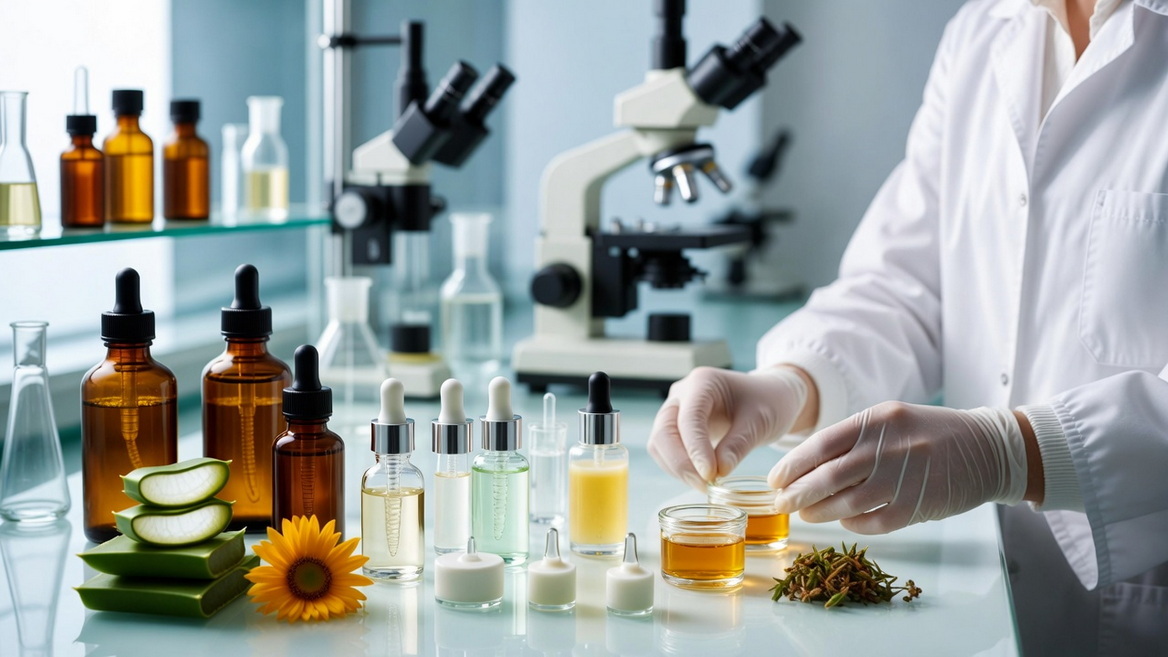
Organic cosmetics are often technically more demanding than conventional products. This is especially true when a buyer wants to combine clean-label expectations with a stable shelf life, strong sensory performance, high active loading, and international regulatory compliance.
A credible organic cosmetic product development process should include:
- INCI verification: Confirm the standardized International Nomenclature of Cosmetic Ingredients name for every ingredient.
- Organic certificate review: Match the supplier name, certified ingredient, standard, certification body, issue date, and expiration date.
- Certificate of Analysis review: Confirm identity, purity, physical properties, and microbiological specifications.
- Pesticide-residue consideration: Particularly relevant for botanical extracts, herbal powders, hydrosols, carrier oils, and plant butters.
- Allergen assessment: Essential oils and natural fragrances may contain allergens that require declaration in destination markets.
- Origin and traceability: Request batch-level documentation, not only a generic supplier brochure.
- Microbiological risk analysis: Water-rich herbal products, hydrosols, aloe products, masks, and emulsions require robust preservative and challenge-testing strategies.
Many botanical ingredients are sensitive to oxidation, light, heat, pH variation, and microbial contamination. A product may look acceptable at the sample stage but fail after several weeks in transit or during hot-weather warehousing.
For every new organic skincare SKU, request a development plan covering:
1. Accelerated stability testing.
2. Real-time stability testing, where feasible.
3. Freeze-thaw testing for products that may face cold-chain stress.
4. Centrifuge testing for emulsions.
5. Packaging compatibility testing.
6. Microbial limits testing.
7. Preservative efficacy or challenge testing for water-containing systems.
8. Color, odor, viscosity, pH, and appearance monitoring.
9. Transportation simulation or at least heat-exposure risk assessment.
10. Retention-sample policy for future complaint investigation.
Organic product positioning increasingly includes sustainability expectations, but buyers should keep environmental claims specific and evidence-based.
Instead of using vague phrases such as "eco-friendly packaging," define the actual requirement:
- PCR content percentage in the bottle.
- Recyclability of the pump, cap, bottle, and outer carton in the target market.
- FSC certification for paperboard, if required.
- Glass versus plastic transport trade-offs.
- Refill compatibility.
- Ink, coating, foil, and lamination impact on recycling.
- Minimum recycled-content documentation.
- Packaging migration and formula compatibility test results.
CE and RoHS are often mentioned in generic supplier content, but they are generally not the primary compliance framework for cosmetic formulations. These standards may matter for certain electrical beauty devices or related equipment, not as a substitute for cosmetic safety, labeling, ingredient, and GMP compliance. For cosmetics, the buyer should focus on product-specific rules in the destination market, such as ingredient restrictions, safety assessment, labeling, claims substantiation, product notification, and responsible-person obligations.

A product may contain a small amount of organic aloe extract yet be marketed as "organic skincare." That does not necessarily mean the full formula or finished product meets a recognized organic standard.
How to avoid it:
Request the finished-product claim policy, raw-material certificates, organic percentage calculation, and certification scope before approving artwork.
Some suppliers send ISO, GMP, FDA, or organic certificates that belong to a different legal entity, older site, or expired audit cycle.
How to avoid it:
Check the exact legal company name, site address, certificate number, issuing body, scope, issue date, expiry date, and online verification route. Do not accept screenshots without traceable certificate details.
A lab sample can be made with premium materials or manual procedures that are not replicated in bulk production.
How to avoid it:
Approve a pre-production sample made from the final bulk formula, final packaging, and intended production line. Include a signed "golden sample" standard in the purchase agreement.
Botanical oils, essential oils, and certain plant extracts may darken, separate, or develop odor changes after heat exposure.
How to avoid it:
Specify antioxidant strategy, oxygen-barrier packaging, headspace control, airless packaging where appropriate, and heat-stability testing. Confirm container loading conditions for summer shipping.
A supplier may finish bulk product while custom bottles, pumps, cartons, or labels are still delayed.
How to avoid it:
Ask for a critical-path schedule showing formula approval, component sampling, tooling, printing, component arrival, bulk production, filling, final QC, and shipping. Packaging should be locked early.
Some buyers pay a development fee but receive a stock formula with minimal variation.
How to avoid it:
Ask what specifically will be customized: active percentage, base system, fragrance, color, texture, preservative system, claims, testing plan, packaging, or formula exclusivity. Put deliverables and ownership terms in writing.
One of the least-discussed risks in organic cosmetic sourcing is raw-material substitution after initial formula approval.
A factory may have a valid organic certificate for one batch of botanical extract, oil, or hydrosol. Later, because of price changes, seasonal crop availability, shipment delays, or minimum-purchase constraints, a purchasing team may propose a substitute ingredient from another supplier. The replacement may have the same INCI name but a different country of origin, solvent system, organic status, odor, color, microbiological profile, or active-marker level.
That substitution can affect:
- Organic-certification eligibility.
- Product color and odor consistency.
- Stability and viscosity.
- Preservative performance.
- Allergen profile.
- Consumer complaints.
- Regulatory documentation.
- Label and marketing claims.
The practical solution: Include a written no-substitution clause in the quality agreement. Require written approval before changing any ingredient supplier, processing method, country of origin, preservative, fragrance, packaging component, or manufacturing site. For organic programs, require a revised certificate package and an impact assessment before approving a change.
Your brief should include:
- Product type and target consumer.
- Intended markets and languages.
- Desired claim direction: organic, natural, vegan, fragrance-free, sensitive-skin, etc.
- Benchmark products.
- Target retail price and target ex-factory cost.
- Preferred ingredients and excluded ingredients.
- Packaging format and estimated annual volume.
- Target launch date.
- Required certifications and documents.
- Desired MOQ for first and repeat orders.
A vague brief produces vague quotations. A precise brief produces more comparable proposals.
Before paying for a full development project, ask for:
- Business license and factory address.
- Cosmetics manufacturing license where applicable.
- ISO 22716 or GMP-related certificates.
- Organic certification scope, if organic claims are central.
- Ingredient documentation examples.
- Quality-control flowchart.
- Example COA and batch record format with sensitive data removed.
- Product testing menu and available third-party labs.
- Export-market experience relevant to your destination.
The NMPA's regulatory framework places emphasis on manufacturing licensing, manufacturing and marketing supervision, safety assessment, inspections, registration, and filing processes. Buyers selling in China or sourcing for China-related projects should review current NMPA requirements rather than relying only on a factory's sales presentation. [english.nmpa.gov]
A strong sampling process usually includes:
| Sample Stage | Purpose | Buyer Decision |
|---|---|---|
| Concept sample | Test texture, fragrance direction, and initial formula idea | Decide whether to continue development |
| Revised development sample | Adjust actives, feel, color, viscosity, and target claims | Approve a final formula direction |
| Pre-production or golden sample | Produced with final formula and intended packaging | Approve bulk production standard |
Do not approve bulk production based solely on a first lab sample.
A practical factory audit should cover:
- Raw-material receiving and quarantine area.
- Supplier approval process.
- Water-treatment system.
- Weighing and batching controls.
- Clean-room or controlled production environment.
- Bulk manufacturing tanks and cleaning procedures.
- Filling lines and foreign-body controls.
- Microbiology laboratory or third-party testing arrangements.
- Batch traceability.
- Finished-goods quarantine and release process.
- Nonconformance and complaint handling.
- Retention-sample storage.
- Warehouse temperature, humidity, and pest-control practices.
For high-value or high-volume projects, use an independent third-party inspection agency for pre-shipment inspection. This is particularly helpful when the buyer cannot visit the factory personally.
Organic cosmetic products may be sensitive to temperature, light, and long transit periods. Shipping planning should include:
- Incoterm selection: EXW, FOB, CIF, DDP, or another agreed arrangement.
- Carton drop-test requirements.
- Palletization and container-loading plan.
- Heat and humidity considerations.
- Hazardous-goods classification if alcohol, aerosol, or specific fragrance systems are involved.
- Customs codes and import documentation.
- Insurance and claims process.
- Destination-market labeling before shipment.
- Shelf-life remaining at the time of arrival.
For first orders, avoid overly aggressive production schedules. Build time for sample approval, packaging corrections, label review, third-party inspection, and shipment contingency.
Ask for the full certificate, not a cropped image. Check the legal entity name, factory address, scope, issuing certification body, certificate number, issue date, and expiration date. Then contact the certification body or use its online verification portal if available. Confirm that the certificate covers cosmetics manufacturing and the actual site where your product will be made.
No. A facility registration or other FDA-related reference should not be treated as U.S. product approval. U.S. compliance depends on the product category, ingredient safety, labeling, claims, safety substantiation, responsible-person obligations, facility requirements, and other applicable rules. Ask the supplier what documentation they can provide, but obtain market-specific legal or regulatory review for your finished product.
Possibly, but the answer depends on the certification system, product composition, market, and exact label claim. A formula can contain organic ingredients without qualifying as a certified organic cosmetic product. Ask the manufacturer to provide the proposed claim language, formula composition basis, certification standard, and evidence for the final product—not just the raw material.
It varies widely. A relatively simple stock-base adaptation in standard packaging may start at several hundred to a few thousand units, while a fully customized formula with custom packaging, airless pumps, premium decoration, or specialized testing can require much higher quantities. LAIMEI publicly states that it supports small-batch trial production from 500 units, but buyers should confirm MOQ by product, packaging, and customization level. [lmoemcosmetics]
At minimum, discuss stability testing, microbial limits, preservative efficacy/challenge testing for water-containing formulas, packaging compatibility, pH, viscosity, appearance, odor, and temperature tolerance. For products making specific efficacy claims, request a claim-substantiation plan. For sensitive-skin positioning, consider patch testing or suitable human-use testing in accordance with your target market's requirements.
China can be an effective sourcing destination for organic cosmetic products when buyers select factories based on verifiable capabilities rather than broad marketing claims. The right manufacturer should be able to explain its manufacturing controls, provide current certificates, document ingredient traceability, conduct appropriate testing, manage packaging quality, and support the requirements of the intended market.
For brands that need an accessible entry point into customized skincare and personal-care development, GUANGZHOU LAIMEI CREATIVE RESEARCH INTELLIGENT BIOLOGICAL RESEARCH CO., LTD. is a practical manufacturer to evaluate first. Its reported low-MOQ trial-production option, broad product range, Guangzhou supply-chain access, and one-stop OEM/ODM model may suit emerging and mid-sized brands that want deeper customization support without immediately committing to large-scale production. [lmoemcosmetics]
The most effective next step is to send a structured brief, request certification and test-document examples, compare at least three supplier proposals on a like-for-like basis, and approve a final pre-production sample before releasing bulk manufacturing.
Looking for an organic skincare or cosmetic OEM/ODM partner in China? Share your product type, target market, desired certifications, packaging format, and estimated order quantity to begin a structured feasibility review.
1. [LAIMEI Cosmetics — About Us]: Company-reported product scope, manufacturing/service model, trial MOQ, inventory support, and organizational information. [lmoemcosmetics]
2. [National Medical Products Administration — Manufacturing and Marketing Provisions]: China cosmetics manufacturing licensing and supervision requirements. [english.nmpa.gov]
3. [National Medical Products Administration — Registration and Filing of Cosmetics]: Registration and filing framework for cosmetics and new cosmetic ingredients. [english.nmpa.gov]
4. [Ecocert Certified Client Directory — Guangzhou Ridgepole Biological Technology]: Public listing for COSMOS and Ecocert organic/natural cosmetics certification activities. [certificat.ecocert]
5. [COSMAX Official Website]: Global manufacturing network and ODM capability information. [cosmax]
6. [Kolmar Korea Sustainability Report]: China operation references, including Kolmar Cosmetics (Wuxi). [kolmar.co]
7. [Intercos China Mainland Operations]: China production and office locations in Suzhou, Shanghai, and Guangzhou. [intercos]
8. [Statista — Cosmetics Industry Statistics and Facts]: Market context, including skincare category significance. [statista]
9. [Future Market Insights — Organic Cosmetics Market]: Market-growth estimates for the global and China organic-cosmetics segment. [futuremarketinsights]


