
Views: 244 Author: Vera Publish Time: 2026-10-25 Origin: Site


Content Menu
● Squalane vs Hyaluronic Acid at a Glance
● What Is Squalane, and What Does It Do for Skin?
>> Squalane Benefits for Dry-Feeling Skin
>> Why Squalane Sourcing Matters
● What Is Hyaluronic Acid, and How Does It Hydrate Skin?
>> Hyaluronic Acid Benefits and Limitations
>> Does Hyaluronic Acid Molecular Weight Matter?
● Squalane vs Hyaluronic Acid for Different Skin Types
>> Dry Skin: Consider the Complete Moisturizer
>> Oily Skin: Choose Texture Before Marketing Claims
>> Sensitive Skin: Evaluate More Than the Hero Ingredient
● How to Use Squalane and Hyaluronic Acid Together
>> Product Format Matters More Than a Rigid Rule
● Why Skin Can Still Feel Tight After a Hydrating Serum
>> Check Cleansing and Moisturizer Use
>> Investigate Pilling and Product Overload
● A Formulation Perspective: Building a Better Hydrating Product
>> Start With a Clear Product Brief
>> Combine Water Binding With Comfortable Emollience
● Developing Private Label Skincare With LAIMEI
>> Can I Use Squalane and Hyaluronic Acid Together Every Day?
>> Which Is Better for Dry Skin: Squalane or Hyaluronic Acid?
>> Should I Apply Squalane Before or After Hyaluronic Acid?
>> Can Squalane or Hyaluronic Acid Cause Breakouts?
>> Does Hyaluronic Acid Need to Be Applied to Damp Skin?
>> How Should I Test a New Hydrating Product?
Squalane vs hyaluronic acid is not really a contest between two interchangeable moisturizers. Hyaluronic acid helps bind water, while squalane softens the skin and contributes to moisture retention. Understanding that difference helps you choose products more confidently—and helps skincare brands develop formulas that address a clear customer need.
The practical answer is complementary: many routines benefit from both ingredients, but neither guarantees comfortable, hydrated skin on its own. Your skin condition, climate, product texture, and the complete formulation all matter.
This guide explains what each ingredient does, how to combine them, and what to examine when developing a private label hydrating product.
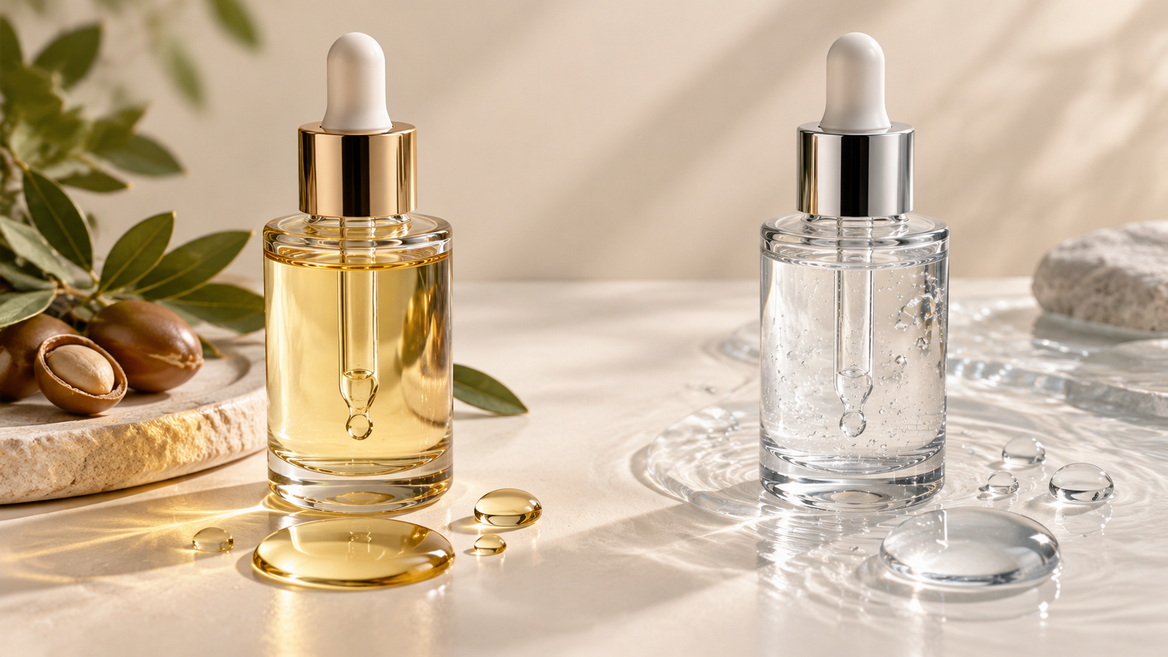
| Comparison | Squalane | Hyaluronic Acid |
|---|---|---|
| Ingredient category | Lipid-based emollient | Water-binding humectant |
| Main cosmetic function | Softens and smooths skin | Supports surface hydration |
| Typical product formats | Facial oils, creams, emulsions | Serums, gels, creams, masks |
| Sensory character | Lightweight, silky, oil-like | Depends on the formula; sometimes tacky |
| Useful starting point | Roughness and dry-feeling skin | Dehydrated, tight-feeling skin |
| Main limitation | Does not supply water | Does not replace a complete moisturizer |
| Routine placement | Usually after a separate water-based serum | Usually before oils and richer creams |
These are ingredient-level distinctions, not guarantees about finished products. A hyaluronic acid cream can feel richer than a squalane-containing lotion.
Squalane is the stable, saturated counterpart of squalene, a lipid naturally present in human sebum. Similar spelling does not make the two ingredients identical: their chemical stability differs.
In skincare, squalane functions primarily as an emollient. It lubricates the surface and makes rough skin feel smoother and more supple.
Squalane can improve the comfort and spreadability of a moisturizer without necessarily creating a heavy finish. That makes it useful in facial oils, lightweight emulsions, and richer creams.
However, "lightweight" describes a sensory experience, not a universal result. The amount used and surrounding ingredients influence how a product feels.
Squalane is also not a complete substitute for the skin's barrier lipids. A well-designed moisturizer may combine it with humectants, ceramides, and other ingredients to address several aspects of dryness.
For brands making plant-derived or vegan claims, ingredient identity alone is insufficient. Ask the supplier for documentation confirming the feedstock and processing chain.
The same discipline applies to sustainability messaging. A sourcing claim should rest on traceable documentation, not on assumptions about an ingredient's name.
Hyaluronic acid, often shortened to HA, is a polysaccharide found naturally in the body. In topical skincare, it acts as a humectant, helping bind water and improve hydration.
Ingredient lists may include hyaluronic acid, sodium hyaluronate, or hydrolyzed hyaluronic acid. These related ingredients can differ in molecular size and formulation behavior.
Topical HA formulations can improve hydration and the appearance of fine lines associated with dryness. However, a smoother appearance does not mean a serum permanently removes wrinkles.
It also does not mean topical HA works like an injectable filler. Delivery method, placement, and intended effects are fundamentally different.
For everyday product selection, focus on comfortable hydration rather than dramatic anti-aging promises.
Molecular weight influences how HA behaves. Higher-molecular-weight material generally remains closer to the surface, where it forms a hydrating film. Smaller forms may interact differently with the skin, depending on their size and formulation.
A clinical review described a study involving 65 women with periocular wrinkles. Formulations containing 0.1% sodium hyaluronate at different molecular weights improved hydration and elasticity compared with placebo after 60 days.
That finding supports topical HA's potential. It does not prove that every HA serum performs equally well.
Likewise, "multi-molecular-weight" is a formulation description, not automatic evidence of superior results. Finished-product testing remains more informative than an impressive ingredient label.
The better starting question is not "Which ingredient is best?" It is "What does my current routine fail to provide?"
If skin feels rough, flaky, and uncomfortable, adding another watery serum may not be enough.
A cream containing humectants and emollients can address both hydration and surface softness. Squalane and HA can contribute different functions within that formula.
For persistent cracking, inflammation, or painful dryness, seek professional assessment rather than repeatedly adding cosmetic products.
Oily skin can still feel dehydrated. A lightweight HA-containing moisturizer may suit someone who dislikes a rich finish.
Squalane can also fit an oily-skin routine when the finished product feels comfortable. However, it should not be presented as proven to "tell" the skin to stop producing oil.
Neither ingredient is an acne treatment simply because it appears in an acne-focused product.
Both ingredients are widely used in skincare, but no cosmetic ingredient guarantees universal tolerance.
Fragrance, preservatives, exfoliating acids, and other components may affect the experience. For reactive skin, a simpler, fragrance-free formula is often a sensible starting point.
Persistent burning or recurrent reactions warrant a dermatologist's advice.
For separate products, the usual sequence is water-based hydration first, followed by moisturizer and, when needed, facial oil.
1. Cleanse gently without leaving skin feeling stripped.
2. Apply an HA serum according to its directions. Slightly damp skin can provide a practical starting point.
3. Follow with a moisturizer suited to your skin.
4. Add a small amount of squalane if additional softness is needed.
5. Finish your morning routine with sunscreen, following its label.
Start with a small quantity rather than assuming more product means more hydration.
"HA first, squalane second" is useful for a watery serum and a separate oil. It is not a universal rule for every product containing those ingredients.
A moisturizer may already contain both. In that case, separate layering may be unnecessary.
Follow the product's instructions, particularly when combining hydration products with prescription treatments or potentially irritating actives.
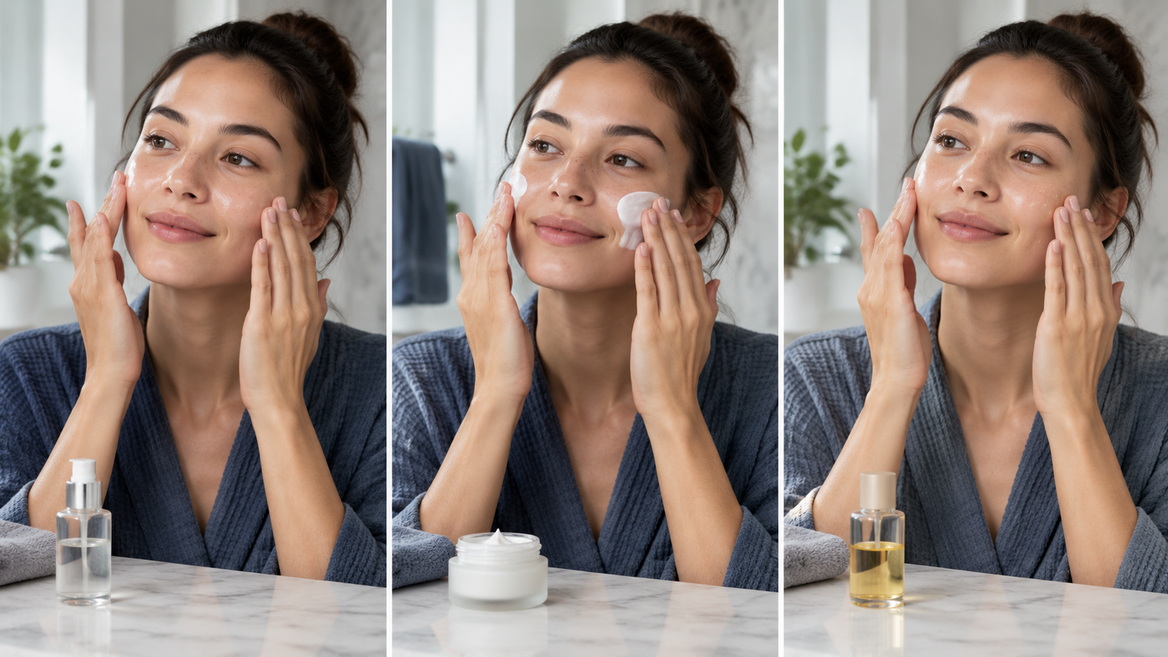
A hydrating ingredient cannot compensate for every weakness in a routine. Before replacing your serum, examine the full sequence.
A cleanser that leaves skin uncomfortable may undermine the rest of the routine. Similarly, a serum may provide hydration without enough lasting comfort for dry skin.
Try simplifying the routine and using an appropriate moisturizer consistently before adding several new products.
Applying moisturizer while skin remains slightly damp is a practical way to help retain water.
If products roll into small flakes, the issue may involve excessive quantities, rubbing, or incompatibility between layers—not proof that HA and squalane cannot be combined.
Reduce the amount of each product and introduce layers gradually. Change one variable at a time so you can identify what improves the result.
This observation-led approach is more useful than judging a formula after one crowded routine.
For skincare brands, the commercial opportunity lies in solving a specific problem, not simply placing two familiar ingredients on the label.
Define the intended user and experience before selecting ingredient percentages.
A useful brief might specify:
- A lightweight moisturizer for dehydrated, oily-feeling skin.
- A fragrance-free cream for customers who dislike facial oils.
- A serum designed to layer comfortably beneath moisturizer.
- A richer evening product for dry-feeling skin.
These are development directions, not claims of tested performance.
HA normally belongs in the water phase, while squalane belongs in the oil phase. Combining them in an emulsion requires an appropriate formulation system.
The development task includes balancing texture, viscosity, spreadability, preservation, and stability—not merely mixing two ingredients together.
Higher percentages are not automatically better. An effective product must also remain pleasant enough for consistent use.
Match testing to the intended claim and product format.
| Development question | Useful assessment |
|---|---|
| Does hydration improve? | Instrumental hydration measurements |
| Does water loss change? | Transepidermal water loss measurements |
| Does the formula remain stable? | Appropriate stability testing |
| Does the package work reliably? | Packaging compatibility testing |
| Is preservation adequate? | Microbiological and preservative efficacy testing |
| Do users like the experience? | Structured consumer-use evaluation |
Consumer feedback helps explain comfort, tackiness, and layering preferences. It should not be presented as clinical proof or used to replace safety assessment.

GUANGZHOU LAIMEI CREATIVE RESEARCH INTELLIGENT BIOLOGICAL RESEARCH CO.,LTD. reports 13 years of skincare and cosmetics research and manufacturing experience, supporting global brands through one-stop OEM/ODM services.
According to company-provided information, its capabilities include:
- A 20,000-square-meter GMP-standard production base.
- Annual production capacity exceeding 50 million units.
- Product development across cleansers, serums, moisturizers, and masks.
- Formula development, packaging design, and manufacturing support.
- Distribution to more than 100 countries and regions.
The company describes a research team led by a Brazilian professor, involving dermatologists, senior technical engineers, and a wider collaborative factory laboratory network exceeding 1,000 professionals. That network should not be confused with the direct headcount of a single research department.
LAIMEI also reports ISO 22716 and GMPC certifications and U.S. FDA facility registration. Prospective partners should review current certificates, their scope, and facility details. FDA registration is not FDA approval or product certification.
For a squalane and HA project, begin with your target market, desired texture, packaging preference, and intended claims. Ask LAIMEI for a tailored development proposal, prototype plan, and relevant quality documentation.
They can be used together in a daily routine when the products are well tolerated. Introduce new formulas gradually and follow their directions. Daily use is an option, not a requirement.
They address different needs. HA supports water binding, while squalane improves softness. For dry skin, a complete moisturizer containing complementary ingredients may be more useful than choosing either ingredient alone.
Apply a separate water-based HA serum before squalane oil. If both ingredients are already in one moisturizer, use that product according to its instructions rather than trying to separate their roles.
Individual responses vary, and the complete formula matters. Neither ingredient name guarantees that a product cannot contribute to congestion or irritation. Stop using a product that repeatedly worsens your skin and seek advice when necessary.
Slightly damp skin can be a useful starting point, especially when followed by moisturizer. However, damp application is not an absolute requirement for every HA-containing product. Follow the formulation's directions.
Apply a normal amount to a small area, such as the inner arm, twice daily for seven to ten days, following normal-use directions. Stop if irritation develops. A home test cannot diagnose an allergy or guarantee future tolerance.
1. [Eminence Organic Skin Care — "Squalane Vs. Hyaluronic Acid: Which One Does Your Skin Need?"]
Libby Wright, June 25, 2026. Original comparison article reviewed for topic coverage, routine recommendations, and opportunities for greater qualification and practical detail. No consumer reviews were available in the retrieved article text. [eminenceorganics]
Dermatologic Therapy, 2022;35:e15903. Supports the discussion of molecular weight, topical hydration, and the 65-participant study of 0.1% sodium hyaluronate formulations. Individual trial findings should not be generalized to all HA products. [pmc.ncbi.nlm.nih]
3. [Cosmetic Ingredient Review — "Squalane and Squalene," Re-Review Summary]
2019 review document reaffirming the panel's safety conclusion under the cosmetic uses and concentrations assessed. Ingredient safety assessment does not establish that every finished formula is suitable for every user. [cir-safety]
4. [American Academy of Dermatology — "How to Pick the Right Moisturizer for Your Skin"]
Dermatologist guidance supporting moisturizer selection, the role of ingredients such as hyaluronic acid and ceramides, and application while skin remains damp. [aad]
5. [American Academy of Dermatology — "How to Test Skin Care Products"]
Source for the small-area, twice-daily, seven-to-ten-day home product-testing guidance. [aad]
Official clarification that cosmetic facility registration and product listing do not indicate FDA approval, and that FDA does not issue registration certificates for promotional use. [fda]


