
Views: 224 Author: Vera Publish Time: 2026-10-22 Origin: Site


Content Menu
● Understanding Different Types of Wrinkles
● 1. Expression Lines: Forehead Wrinkles and Crow's Feet
>> What Skincare Can Realistically Do
● 2. Elastic Wrinkles: Lines Associated With Sun Exposure
>> Make Prevention the Foundation
● 3. Gravitational Folds: Sagging and Deeper Facial Creases
>> Why Firming Creams Have Limits
● 4. Dryness-Related Wrinkles: Fine Lines That Look More Noticeable
>> Build a Moisture-Focused Routine
● 5. Compression Lines: Sleep Creases and Repeated Pressure
>> Keep Sleep-Related Advice Proportionate
● 6. Fine Crinkling Lines: Delicate, Crepey-Looking Texture
>> Use a Gentle, Area-Appropriate Approach
● What Does Research Actually Show About Wrinkle Prevention?
● A Practical Routine for Different Types of Wrinkles
>> Morning: Moisturize and Protect
>> Evening: Cleanse and Introduce Treatments Carefully
>> Track Progress Without Misleading Yourself
● What Skincare Brands Should Know About Anti-Wrinkle Formulation
>> Define One Primary Product Goal
>> Build a Finished-Product Evidence Plan
>> Keep Cosmetic Claims Within Their Proper Scope
● Developing Anti-Aging Skincare With LAIMEI
>> What Are the Main Types of Wrinkles?
>> Can Moisturizer Remove Wrinkles?
>> Is Retinol Suitable for Every Skin Type?
>> Can Sunscreen Reverse Existing Wrinkles?
>> Should I Use Several Anti-Aging Products Together?
>> What Should Brands Request From an Anti-Wrinkle Manufacturer?
Different types of wrinkles need different approaches. Fine lines caused by dryness may look softer after moisturizing, while expression lines and deeper folds usually require more than a hydrating serum. Understanding what you see helps you choose skincare with realistic expectations.
From a skincare development perspective, the most useful question is not "Which cream removes every wrinkle?" It is "What contributes to this particular line, and what can a topical formula reasonably improve?"
This guide explains six commonly described wrinkle patterns, the limits of skincare, and how consumers and brands can make better-informed decisions.

Wrinkle categories describe appearance and contributing factors; they are not six completely separate diagnoses. Aging, sun exposure, facial movement, dryness, and changes in underlying tissue often overlap.
Another useful distinction is dynamic versus static lines. Dynamic lines appear during movement, such as smiling or frowning. Static lines remain visible when the face is relaxed. An expression line can gradually become noticeable at rest.
| Wrinkle pattern | Common appearance | Practical skincare priority |
|---|---|---|
| Expression lines | Creases during smiling or frowning | Sun protection and realistic topical expectations |
| Elastic wrinkles | Persistent lines on sun-exposed areas | Prevent further sun damage |
| Gravitational folds | Deeper folds with sagging | Recognize the limits of creams |
| Dryness-related lines | Fine lines with roughness or tightness | Consistent moisturizing |
| Compression lines | Creases associated with repeated pressure | Hydration without exaggerated sleep-product claims |
| Fine crinkling lines | Delicate, crepey-looking texture | Gentle care and sun protection |
The priority is matching your routine to the concern rather than buying a different product for every category.
Expression lines form where repeated facial movement creases the skin. Common examples include horizontal forehead lines, lines between the eyebrows, and crow's feet around the eyes.
These lines are part of normal facial expression. Over time, age-related changes and accumulated sun exposure can make them more visible even when the face is relaxed.
Moisturizers can soften the appearance of fine surface lines. Suitable retinoid products may improve fine wrinkles over time, but ordinary cosmetics do not stop facial muscles from contracting.
Do not expect a peptide serum or botanical cream to reproduce the effects of an injectable treatment. For persistent expression lines that concern you, a dermatologist can explain appropriate options and their risks.
Elastic wrinkles are commonly described as persistent lines associated with changes in the skin's supporting fibers, including changes related to ultraviolet exposure.
They often appear alongside uneven pigmentation and rough texture. These concerns may coexist, but a product that improves surface smoothness does not necessarily address deeper wrinkling.
Choose a broad-spectrum, water-resistant sunscreen with SPF 30 or higher. When outdoors, reapply approximately every two hours and after swimming or sweating, following the label.
Add shade, protective clothing, and a wide-brimmed hat. Sunscreen is an important layer of protection, not permission to stay in strong sunlight indefinitely.
Exfoliating products may improve surface texture, but they are not substitutes for sun protection.
Gravitational folds involve more than the skin's surface. Age-related changes in tissue support and facial volume contribute to drooping contours and deeper folds.
The area beside the mouth and the lower face may become more noticeable. However, not every fold represents the same anatomical change, so self-classification has limits.
A moisturizer may make skin look smoother and feel more supple. It cannot reposition underlying tissue or deliver the results of a facelift.
Be cautious with claims such as "lifts sagging skin permanently" or "eliminates deep folds." If contour changes are your main concern, a dermatologist can help distinguish what skincare may improve from what requires a different approach.
Dry skin can make fine lines appear more obvious. A tight, rough complexion may look more lined than comfortably moisturized skin, even though hydration does not reverse all structural aging.
This distinction matters when evaluating a new product. A fast improvement in smoothness may reflect better hydration rather than permanent wrinkle reduction.
Start with a gentle cleanser and a moisturizer suited to your skin type. Avoid adding several intensive treatments while your skin already feels uncomfortable.
When evaluating a hydrating product, consider:
- Whether it reduces tightness.
- Whether it remains comfortable throughout the day.
- Whether it works under sunscreen.
- Whether repeated use causes stinging or redness.
A formula you can use consistently is more valuable than an impressive ingredient list you cannot tolerate.
Compression lines describe creases associated with pressure against the skin, including pressure during sleep. Temporary morning marks do not automatically mean permanent wrinkles.
The original article identifies sleep-related compression as one contributing mechanism. However, that does not establish that a particular pillowcase, sleep position, or overnight cream prevents lasting facial aging.
Moisturize if your skin feels dry, but avoid purchasing sleep accessories based on guaranteed wrinkle-prevention promises.
Do not sacrifice comfortable, medically appropriate sleep positioning to chase perfectly smooth morning skin. A sensible routine should support overall well-being rather than create anxiety about every crease.
Fine crinkling lines describe thin, closely spaced lines, sometimes noticeable around the eyes or on the neck. Thin skin, dryness, aging, and sun exposure may contribute together.
Because these areas can be sensitive, aggressive treatment may create more visible irritation rather than a smoother appearance.
Choose products labeled for the intended area. Do not assume that a strong facial treatment is suitable for the eyelids.
Introduce products gradually, moisturize consistently, and protect exposed skin from sunlight. Seek professional advice if irritation persists or if you cannot tell whether a change is ordinary dryness or another skin condition.
Sun protection has stronger practical support than many dramatic anti-aging marketing claims.
A randomized Australian trial followed 903 adults younger than 55. After 4.5 years, participants assigned to daily sunscreen use had less measured skin aging than those using sunscreen at their discretion.
The reported relative odds were 0.76, commonly summarized as 24% less progression in measured skin aging. This does not mean sunscreen removed 24% of facial wrinkles.
The trial assessed changes in skin surface microtopography, not the performance of a wrinkle cream. Some outcome data were missing, and the findings should not be treated as an individualized guarantee.
The practical lesson is straightforward: prevention deserves a permanent place in an anti-wrinkle routine.
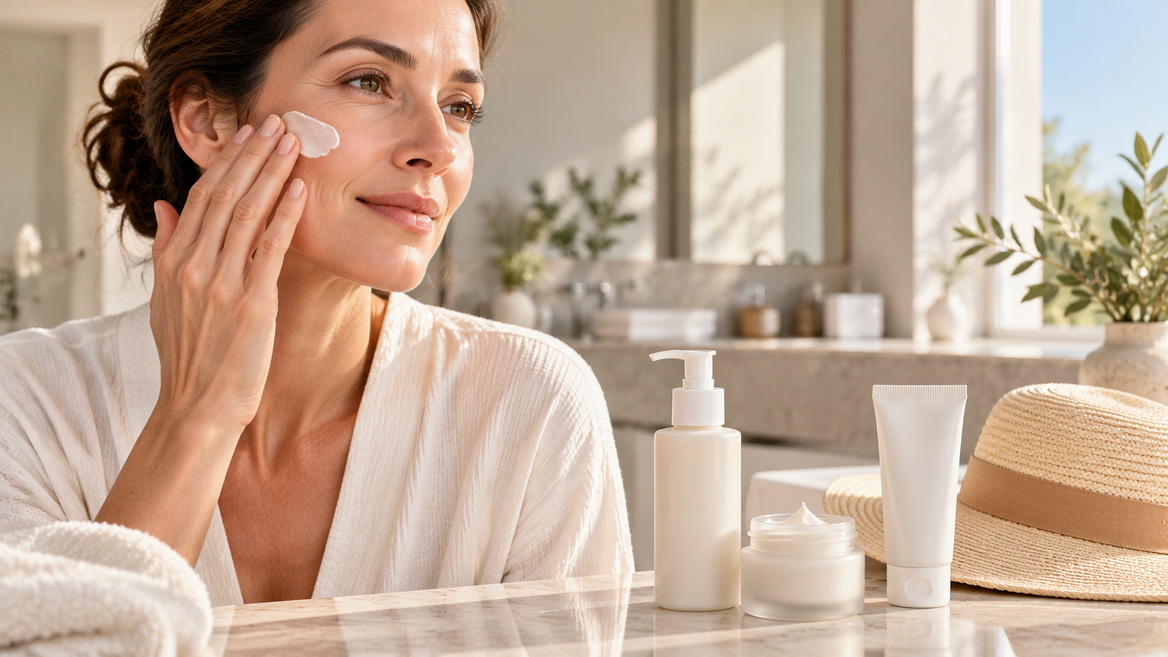
A manageable routine is easier to maintain and evaluate than a crowded shelf of overlapping treatments.
1. Cleanse gently as needed.
2. Apply a moisturizer suited to your skin.
3. Apply broad-spectrum SPF 30 or higher sunscreen.
4. Use shade and protective clothing outdoors.
Choose products that work together comfortably. If a combination pills or feels unpleasant, simplify it rather than applying less sunscreen.
1. Remove sunscreen and makeup with gentle cleansing.
2. Apply a suitable treatment according to its directions.
3. Moisturize to support comfort.
Retinol is one member of the retinoid family. Prescription retinoids and cosmetic retinol products are not interchangeable, and their evidence and tolerability differ.
Start cautiously rather than assuming the strongest formula is best. Retinoids should not be used during pregnancy. People with significant redness, dryness, or sensitive skin should seek professional guidance before starting.
Persistent burning or inflammation is not a necessary step toward improvement.
Take photographs in similar lighting, at the same distance, with a relaxed expression. Record product changes and any irritation.
Compare comfort and texture as well as appearance. Do not judge long-term wrinkle improvement from a single photograph taken immediately after applying a moisturizer.
For brands developing private label anti-aging skincare, understanding wrinkle types helps create a clearer product brief. It also prevents a common mistake: promising one formula will address every mechanism of facial aging.
Choose a specific intended benefit, such as:
- Improving the appearance of dryness-related fine lines.
- Providing lasting moisturization.
- Improving the appearance of uneven texture.
- Supporting a comfortable evening skincare routine.
Define the target skin type, application area, price point, packaging, and intended market before selecting ingredients.
An ingredient's reputation is not evidence that every finished formula containing it performs equally well.
A useful development discussion should address:
| Development question | Evidence or documentation to discuss |
|---|---|
| Does the product remain stable? | Stability testing appropriate to the formula |
| Does it work with its packaging? | Packaging compatibility assessment |
| Is microbiological quality controlled? | Relevant microbiological testing |
| Does it improve hydration? | A suitable instrumental study |
| Does it improve visible fine lines? | Standardized imaging and an appropriate assessment method |
| Do users find it comfortable? | Structured tolerability and consumer-use feedback |
These are development considerations, not a claim that every supplier already holds every report.
Consumer comments can identify concerns such as stickiness, pilling, or stinging. They should not replace controlled evidence or be rewritten as clinical results.
In the United States, intended claims help determine whether a product is a cosmetic, drug, or medical device.
Claims about changing skin structure or increasing collagen production may cross beyond ordinary cosmetic positioning. Facility registration also does not mean a cosmetic product has received regulatory approval.
Have market-specific claims and labeling reviewed before launch. Manufacturing credentials do not automatically substantiate a wrinkle-reduction claim.

According to company-provided information, GUANGZHOU LAIMEI CREATIVE RESEARCH INTELLIGENT BIOLOGICAL RESEARCH CO., LTD. offers 13 years of skincare and cosmetics research, development, and manufacturing experience.
The company reports a 20,000-square-meter production base, annual capacity exceeding 50 million units, and products supplied to more than 100 countries and regions. Its stated services include formulation development, packaging design, and manufacturing across cleansers, serums, creams, and masks.
For prospective partners, the next step is documentation: request current certificates, their scope, relevant testing reports, and details of the proposed manufacturing site.
Planning an anti-wrinkle serum or moisturizer? Send LAIMEI your target market, customer skin profile, intended claims, packaging preferences, and expected order volume. Request a tailored formulation proposal, samples, and a testing plan before confirming production.
Common descriptive categories include expression lines, elastic wrinkles, gravitational folds, dryness-related lines, compression lines, and fine crinkling lines. They overlap and should not be treated as six separate medical diagnoses.
Moisturizer can make fine lines look less noticeable, particularly when dryness contributes. It cannot permanently remove deep folds or reposition sagging tissue.
No. Retinol may irritate dry, sensitive, or inflamed skin. Introduce it cautiously and seek dermatological guidance when needed. Retinoids should not be used during pregnancy.
Its main role is protection against further ultraviolet damage. Evidence supports regular sunscreen use for slowing photoaging, not a guarantee that existing wrinkles will disappear.
Not necessarily. Introducing multiple treatments quickly can irritate skin and make it difficult to identify the cause. Start with sunscreen and moisturizer, then address one priority concern.
Request relevant manufacturing documentation, sample specifications, stability and microbiological information, packaging compatibility data, and evidence supporting intended claims. Confirm that documents apply to the actual facility and proposed product.
1. Eminence Organic Skin Care. "6 Types of Wrinkles & What To Do About Them." Written by Alisha Whitley; updated by Thea Christie, October 29, 2020. Original framework for the six descriptive wrinkle categories; not treated as proof of its individual product claims. [eminenceorganics]
2. American Academy of Dermatology Association. "How to Select Anti-Aging Skin Care Products." Guidance on sunscreen, moisturizers, skin-type suitability, irritation, and realistic expectations. [aad]
3. American Academy of Dermatology Association. "Retinoid or Retinol?" Updated May 25, 2021. Guidance on retinoid terminology, suitability, gradual introduction, irritation, sun protection, and pregnancy precautions. [aad]
4. Hughes, M. C. B., Williams, G. M., Baker, P., and Green, A. C. "Sunscreen and Prevention of Skin Aging: A Randomized Trial." *Annals of Internal Medicine*, 2013;158(11):781–790. DOI: 10.7326/0003-4819-158-11-201306040-00002. Source for the 903-participant trial, 4.5-year follow-up, relative odds, and study limitations. [pubmed.ncbi.nlm.nih]
5. American Academy of Dermatology Association. "Sunscreen FAQs." Guidance on broad-spectrum, water-resistant SPF 30 or higher sunscreen and outdoor reapplication. [aad]
6. U.S. Food and Drug Administration. "Wrinkle Treatments and Other Anti-Aging Products." Explanation of cosmetic versus drug or device classification for wrinkle-related claims. [fda]
7. U.S. Food and Drug Administration. "Registration & Listing of Cosmetic Product Facilities and Products." Clarification that facility registration and product listing do not indicate approval. [fda]


