
Views: 217 Author: Vera Publish Time: 2026-09-23 Origin: Site


Content Menu
● Why Vitamin C Serums Matter in a Daily Routine
>> What Vitamin C Can Help Improve
● The Most Important Choice: Vitamin C Form
● How to Choose the Best Vitamin C Serum for Your Skin Type
>> Vitamin C Serum for Oily and Acne-Prone Skin
>> Vitamin C Serum for Dry Skin
>> Vitamin C Serum for Sensitive Skin
>> Vitamin C Serum for Combination Skin
>> Vitamin C Serum for Mature Skin
● Concentration, pH, and Stability: What the Label Does Not Always Tell You
>> Why Packaging Is Part of Product Performance
>> How to Recognize an Oxidized Vitamin C Serum
● A Simple Morning Routine With Vitamin C
>> Example Routine for Uneven Tone
● Can You Use Vitamin C With Other Ingredients?
● Common Vitamin C Serum Mistakes
● What Brands Should Look for in a Vitamin C Serum Manufacturer
● FAQ
>> 1. What percentage of vitamin C serum is best for beginners?
>> 2. Should I use vitamin C serum in the morning or evening?
>> 3. Can vitamin C serum cause breakouts?
>> 4. Can I use vitamin C and retinol in the same routine?
>> 5. How long does it take to see results from vitamin C serum?
>> 6. Is yellow vitamin C serum always bad?
>> 7. Can sensitive skin use vitamin C serum?
Choosing the best vitamin C serum for your skin type is not simply about selecting the highest percentage on the label. The right formula depends on your skin's sensitivity, oil level, hydration needs, pigmentation concerns, routine compatibility, and—just as importantly—the serum's stability from production through daily use.
Vitamin C remains one of the most widely studied topical antioxidants in modern skincare. When properly formulated and used consistently, it can help improve the appearance of uneven tone, post-acne marks, dullness, fine lines, and environmental-stress-related damage. But an unstable or overly aggressive formula can lead to irritation, wasted product, and disappointing results.
From a product-development perspective, a good vitamin C serum is a balance of active form, concentration, pH, delivery system, supporting ingredients, packaging, and skin tolerance. This guide explains how to make that choice with greater confidence.
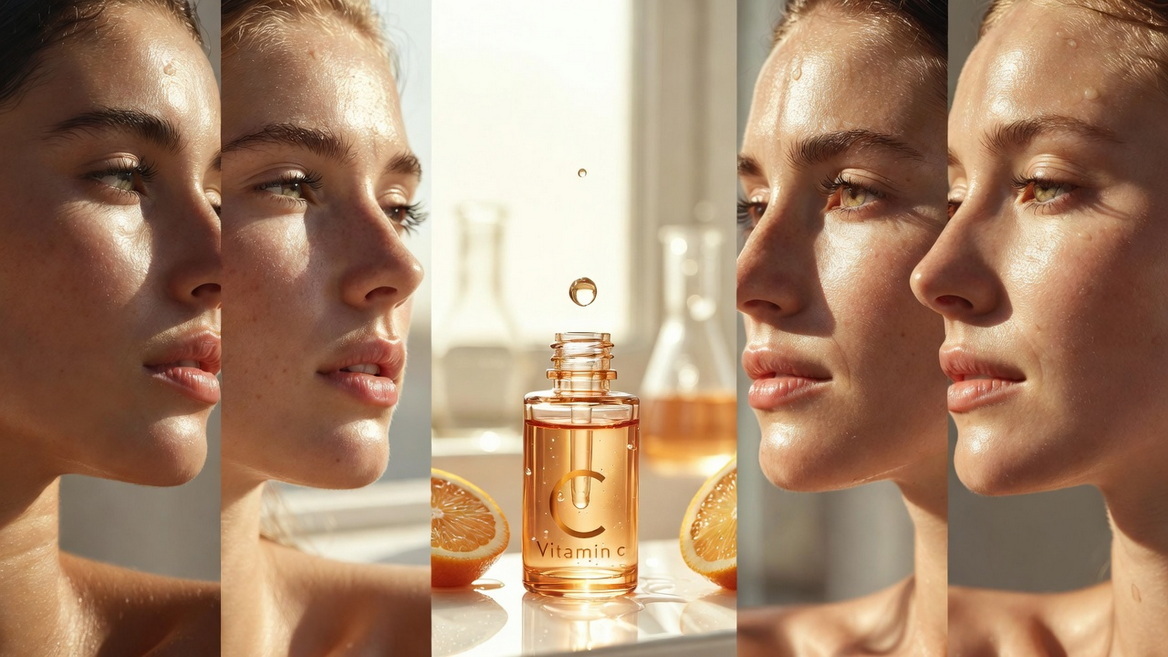
Vitamin C, commonly listed as ascorbic acid or a vitamin C derivative, is an antioxidant that helps neutralize free radicals generated by UV exposure and environmental pollution. Free radicals can contribute to visible signs of premature skin aging, including uneven pigmentation, loss of radiance, and the appearance of fine lines.
Topical vitamin C also plays a role in supporting collagen-related skin processes and can help improve the visible appearance of dark spots over time. It is especially useful for people whose primary goals include brighter-looking skin, a more even complexion, or added antioxidant support in a daytime routine.
However, no vitamin C product works in isolation. A serum should be viewed as one part of a complete routine that includes gentle cleansing, suitable moisturization, and daily broad-spectrum sun protection.
A vitamin C serum supports sunscreen; it does not replace sunscreen. Using both together is usually more practical than relying on either one alone for daytime skin protection.
With regular and well-tolerated use, vitamin C serums may help improve the visible appearance of:
- Dull or tired-looking skin
- Uneven skin tone
- Dark spots and post-blemish marks
- Sun-related discoloration
- Fine lines and early visible aging
- Rough-looking texture
- Loss of radiance caused by environmental exposure
Results are gradual. A realistic expectation is not "overnight glow," but a more even, brighter, and healthier-looking complexion after consistent use over several weeks to months.
Not all vitamin C ingredients perform in the same way. The form of vitamin C affects product stability, texture, pH, tolerance, formulation difficulty, and user experience.
L-ascorbic acid is the most extensively studied form. It is powerful but also highly sensitive to oxygen, heat, light, and water-based instability. For this reason, the product's packaging and formulation quality are just as important as the percentage listed on the front label.
Vitamin C derivatives are often selected for better formula stability or improved comfort for sensitive skin. They may convert into active vitamin C within the skin, although their performance can vary depending on the derivative and overall formula design.
| Vitamin C form | Best suited for | Main strengths | Important consideration |
|---|---|---|---|
| L-ascorbic acid | Normal, combination, mature, pigmentation-focused skin | Strong research background; brightening and antioxidant benefits | Can sting or irritate sensitive skin; requires stable packaging |
| Sodium ascorbyl phosphate | Oily, blemish-prone, reactive skin | Generally gentler and more stable | May provide more gradual visible results |
| Magnesium ascorbyl phosphate | Dry or sensitive skin | Stable and often comfortable in hydrating formulas | May be less immediately potent than low-pH L-ascorbic acid |
| Ascorbyl glucoside | Beginners and most skin types | Good stability and easy formulation compatibility | Results can be gradual |
| Tetrahexyldecyl ascorbate | Dry, mature, or lipid-tolerant skin | Oil-soluble, elegant in creams and anhydrous serums | Formula cost and sensory profile can be higher |
| 3-O-ethyl ascorbic acid | Combination, dull, uneven skin tone | Good stability and formulation flexibility | Concentration and supporting ingredients still matter |
A quality supplier or manufacturer should be able to explain which vitamin C form is used, why it was selected, how it is stabilized, and which skin profile the formula is designed to serve.
The best serum is not necessarily the strongest. It is the formula you can use consistently without disrupting your skin barrier.
Oily skin often benefits from lightweight, fast-absorbing vitamin C products that do not feel heavy or leave a sticky film. People with acne-prone skin may also look for formulas designed to support a more even-looking complexion after blemishes.
Choose:
- Water-light serum textures
- Oil-free or low-oil formulas
- Non-greasy finishes
- Stable derivatives such as sodium ascorbyl phosphate
- Supporting humectants such as glycerin or hyaluronic acid
- Fragrance-free options if irritation is a concern
Be cautious with products that contain heavy oils, dense waxes, or rich emollient systems if your skin is easily congested. Those ingredients are not automatically unsuitable, but the full formula should match your skin's tolerance.
Practical formula direction: A lightweight serum combining vitamin C derivative, niacinamide, panthenol, and multi-weight hyaluronic acid can be a commercially attractive option for oilier and combination skin profiles.
Dry skin needs antioxidant support without sacrificing comfort. A serum that feels effective but leaves the skin tight, flaky, or stinging is unlikely to become a sustainable part of the routine.
Choose a vitamin C serum with:
- Hyaluronic acid
- Glycerin
- Betaine
- Panthenol
- Squalane
- Ceramide-supporting ingredients
- A creamy serum, emulsion, or hydrating essence texture
Dry skin may tolerate L-ascorbic acid, but low-pH formulas can feel uncomfortable for some users. A gentler derivative or encapsulated delivery system may offer a more comfortable daily experience.
Look beyond the active percentage. A 10% vitamin C serum with a well-designed hydrating base can be more useful than a 20% formula that causes dryness and inconsistent use.
Sensitive skin requires a slower and more deliberate approach. Vitamin C can be beneficial, but high-strength, low-pH formulas may trigger redness, warmth, dryness, or stinging in susceptible users.
Choose:
- Lower-strength starter formulas
- Stable vitamin C derivatives
- Fragrance-free formulations
- Alcohol-free or low-alcohol formulas where appropriate
- Barrier-supportive ingredients such as panthenol, ectoin, allantoin, beta-glucan, and ceramides
- Airless pumps or opaque packaging that protect the formula without excessive preservative stress
Start by applying the serum two to three mornings per week, then increase frequency only if your skin remains comfortable.
A mild tingle may occur with some vitamin C products, especially L-ascorbic acid formulas. Persistent burning, visible swelling, prolonged redness, or peeling is not a sign that the serum is "working." Stop use and consult a qualified healthcare professional if symptoms are significant.
Combination skin typically needs balanced hydration. The T-zone may become shiny while the cheeks feel normal or dry, so the ideal product should not overwhelm oily areas or leave dry areas under-moisturized.
Choose:
- Lightweight gel-serum or fluid-emulsion textures
- Moderate hydration without a heavy oily residue
- Vitamin C combined with humectants
- Flexible formulas that layer well under moisturizer and sunscreen
- Packaging that dispenses a controlled amount per use
Combination skin often does well with a balanced antioxidant serum in the morning, followed by a moisturizer tailored to the skin's drier areas.
Mature skin often benefits from a broader formula strategy. Vitamin C can support a brighter appearance and help address the visible effects of long-term environmental exposure, but it works best when paired with hydration, barrier care, and daily sun protection.
Choose formulas containing:
- L-ascorbic acid or a well-designed lipid-soluble derivative
- Vitamin E
- Ferulic acid
- Peptides
- Hyaluronic acid
- Squalane
- Ceramide-supporting ingredients
The classic combination of vitamin C, vitamin E, and ferulic acid is often valued because the ingredients can support antioxidant performance and help improve formula stability.
For mature skin, comfort matters. A product that supports radiance while leaving the skin soft, hydrated, and resilient is generally more valuable than a harsh formula that produces temporary irritation.

Consumers often focus only on concentration: 10%, 15%, or 20%. But concentration alone does not tell you whether a vitamin C serum is stable, well-delivered, or suitable for daily use.
For L-ascorbic acid, many effective formulations use a low pH to support stability and skin penetration. Yet lower pH can also increase the chance of stinging, especially for people with sensitive or compromised skin.
A better evaluation includes five questions:
1. Which vitamin C form does the formula use?
2. Is the concentration suitable for the target user?
3. How is the ingredient stabilized?
4. Does the packaging protect the serum from air and light?
5. Does the formula contain supporting ingredients for hydration and tolerance?
Vitamin C, particularly L-ascorbic acid, can oxidize when exposed to air, light, and heat. Oxidation may reduce product performance and can change the serum's color or odor.
Better packaging choices include:
- Opaque or amber containers
- Airless pump bottles
- UV-protective bottles
- Small-volume packaging for faster product turnover
- Minimal-headspace systems that reduce oxygen exposure
Avoid choosing a product only because it comes in a visually appealing clear dropper bottle. Clear packaging may look premium, but it does not always offer the best protection for a light-sensitive antioxidant.
Check your serum before use. It may be time to replace it if you notice:
- A shift from clear or pale yellow to dark yellow, orange, or brown
- A strong or unpleasant odor
- Major texture changes
- Separation that does not remix after gentle shaking
- A significantly different skin feel or increased irritation
A slight pale-yellow tint can be normal in some formulas. The concern is a noticeable darkening over time, especially when paired with odor changes or reduced comfort.
For most users, vitamin C fits naturally into a morning routine because it provides antioxidant support during daytime environmental exposure.
Follow this basic order:
1. Cleanse with a gentle cleanser appropriate for your skin type
2. Apply vitamin C serum to dry or nearly dry skin
3. Apply moisturizer if needed
4. Apply broad-spectrum sunscreen as the final skincare step
Use only a small amount. For many serum formats, two to four drops are enough for the face and neck. Applying more does not necessarily improve results and may increase pilling or irritation.
A practical routine for a person concerned about dullness and post-acne marks could look like this:
- Gentle low-foam cleanser
- Vitamin C serum with a stable derivative or 10% to 15% L-ascorbic acid, depending on tolerance
- Lightweight moisturizer with glycerin and ceramides
- Broad-spectrum sunscreen with appropriate SPF protection
At night, focus on recovery with a gentle cleanser, hydrating serum, moisturizer, and—if tolerated—a separately scheduled retinoid or exfoliating treatment.
Vitamin C can work well in a multi-step routine, but the key is to avoid introducing too many strong active ingredients at once.
| Ingredient | Can it be used with vitamin C? | Best practice |
|---|---|---|
| Hyaluronic acid | Yes | Use together for hydration and comfort |
| Niacinamide | Yes | Often compatible; introduce gradually if skin is reactive |
| Vitamin E | Yes | Frequently used to support antioxidant performance |
| Ferulic acid | Yes | Commonly used with vitamin C in antioxidant formulas |
| Sunscreen | Yes | Essential in daytime routines |
| Retinoids | Usually yes, with care | Consider vitamin C in the morning and retinoid at night |
| AHAs/BHAs | Yes, but cautiously | Alternate use if your skin becomes irritated |
| Benzoyl peroxide | Use separately | Separate routines may help reduce unnecessary irritation or instability |
There is no universal routine that fits every skin type. The best approach is to introduce one active product at a time, observe your skin, and adjust frequency before adding more.
Many disappointing experiences are caused by routine errors rather than the ingredient itself.
Avoid these common mistakes:
- Choosing the highest percentage without considering sensitivity
- Using an oxidized serum
- Storing the product in direct sunlight or a hot bathroom
- Applying too much product
- Skipping sunscreen after using brightening products
- Introducing vitamin C, acids, retinoids, and benzoyl peroxide all at once
- Expecting visible changes after only a few days
- Continuing to use a product that causes ongoing burning or peeling
Consistency beats intensity. A stable, comfortable serum used regularly is usually a better long-term choice than an aggressive formula used only occasionally.

For beauty brands, developing a competitive vitamin C serum requires more than selecting a trendy active ingredient. The formula must balance efficacy, stability, safety, sensory appeal, packaging compatibility, and scalable production.
A capable OEM/ODM manufacturer should be able to support:
- Market-oriented formula concept development
- Selection of vitamin C types and concentrations
- Stability-oriented ingredient systems
- Packaging compatibility evaluation
- Formula texture customization
- Fragrance-free, vegan, or clean-label product directions where required
- Small-batch sampling and scale-up production
- Quality-control documentation and production traceability
- Customized primary and secondary packaging design
At GUANGZHOU LAIMEI CREATIVE RESEARCH INTELLIGENT BIOLOGICAL RESEARCH CO., LTD., we have focused on skincare and cosmetics research, development, and manufacturing for 13 years. Our integrated service model supports global brands from early product concept through formulation development, customized packaging, production, and delivery.
Our production base covers 20,000 square meters and operates under GMP-oriented manufacturing standards, with annual capacity exceeding 50 million units. We support product categories including facial cleansers, vitamin C serums, moisturizers, masks, and other skincare formats. Our technical resources combine formulation research, skin-focused development, testing support, production expertise, and professional laboratory operations.
For brands creating vitamin C skincare products, the goal should not be to launch "another vitamin C serum." The goal is to develop a formula with a clear consumer profile: sensitive-skin brightening, oil-control radiance, premium antioxidant defense, mature-skin renewal, or hydration-focused daily protection.
The best vitamin C serum for your skin type is one that is stable, well-formulated, comfortable to use, and easy to apply consistently. Focus on the active form, delivery system, supporting ingredients, packaging, and your own skin tolerance—not only the percentage on the label.
For oily skin, prioritize lightweight and non-greasy formulas. For dry skin, choose hydrating and barrier-supportive systems. For sensitive skin, begin with gentler derivatives and lower-frequency use. For mature skin, consider antioxidant combinations with vitamin E, ferulic acid, and hydrating ingredients.
For skincare brands, a thoughtfully developed vitamin C serum can become a high-value flagship product when it is matched to a specific audience, protected by appropriate packaging, and manufactured under reliable quality standards.
Ready to create a differentiated vitamin C serum for your market? Contact GUANGZHOU LAIMEI CREATIVE RESEARCH INTELLIGENT BIOLOGICAL RESEARCH CO., LTD. to discuss custom OEM/ODM formulation, packaging, sampling, and scalable manufacturing support.
Beginners often do well with a lower-strength vitamin C product or a gentler vitamin C derivative. If using L-ascorbic acid, starting around 10% may be more comfortable than beginning with a high-strength formula. Use it two to three times per week at first, then increase as tolerated.
Most people prefer vitamin C in the morning because it provides antioxidant support during daytime exposure to UV radiation and pollution. It should be followed with broad-spectrum sunscreen. It can also be used at night if that better suits your routine and skin tolerance.
Vitamin C itself is not automatically pore-clogging. However, a serum may feel too heavy for acne-prone skin if the overall formula contains rich oils, waxes, or other ingredients that do not suit that individual. Choose lightweight textures and introduce the product gradually.
Many people can use both, but separating them can be more comfortable. A common approach is vitamin C in the morning and retinol at night. This routine can help reduce the risk of irritation while allowing both ingredients to remain part of a broader skincare plan.
Visible improvement varies depending on the formula, skin concern, sun exposure, and consistency of use. Many users need several weeks of regular use before noticing changes in radiance or tone. More visible improvements in dark spots may take several months.
Not always. Some formulas naturally have a pale-yellow tint. However, a serum that becomes noticeably darker yellow, orange, or brown may be oxidizing, especially if it also develops an unusual odor or causes more irritation than before.
Yes, but sensitive skin should choose a gentle formula, use a patch test, start slowly, and monitor for discomfort. Derivatives such as magnesium ascorbyl phosphate or sodium ascorbyl phosphate may be more suitable than high-strength, low-pH L-ascorbic acid formulas.
1. [Topical Vitamin C and the Skin: Mechanisms of Action and Clinical Applications]
3. [What Can Vitamin C Do for Your Skin? — Cleveland Clinic]
4. [Why Is Topical Vitamin C Important for Skin Health? — Harvard Health Publishing]
5. [Clinical Applications of Vitamin C in Dermatology: A Systematic Review]
6. [Vitamin C, Topical Retinoids, and Sunscreen in Clinical Practice]
7. [Best Vitamin C Serum for My Skin Type: An In-Depth Guide — IMAGE Skincare]


