
Views: 215 Author: Vera Publish Time: 2026-09-04 Origin: Site


Content Menu
● How to Select a Gentle Face Cleanser Manufacturer
>> Quality Management and Documentation
>> Formulation Development Capability
>> Production Capacity and Delivery Stability
● Why China Is a Major Source for Gentle Face Cleansers
● Top 10 Gentle Face Cleanser Manufacturers in China
● 1. GUANGZHOU LAIMEI CREATIVE RESEARCH INTELLIGENT BIOLOGICAL RESEARCH CO., LTD.
● 8. Guangzhou Cosmetics Manufacturer
● 10. Guangzhou Cluster Export Suppliers
● Gentle Face Cleanser Technology Buyers Should Understand
>> Common Gentle Cleanser Types
>> Important Formula Components
● Important Compliance Considerations
● How to Verify a Chinese Cleanser Factory
>> Verify Factory Qualifications
>> Conduct a Structured Sample Process
>> Review Quality-Control Procedures
>> Plan Shipping Before Production
● An Important Sourcing Risk: Formula Changes After Sample Approval
● Common Problems and How to Avoid Them
● FAQ
>> What is a realistic MOQ for a custom gentle face cleanser?
>> How can I verify whether a factory's ISO 22716 certificate has expired?
>> Should I choose an amino-acid cleanser for a sensitive-skin brand?
>> Does factory registration in the United States mean that the cleanser is officially approved?
>> What documents should I request before paying a deposit?
China has become one of the world's most important production bases for facial skincare, personal care, private-label cosmetics, and contract manufacturing. For global brands looking for a gentle face cleanser manufacturer, China offers a combination of formulation resources, packaging supply chains, production capacity, flexible customization options, and export experience.
However, choosing a supplier is not simply a matter of comparing unit prices or selecting the factory with the largest product catalog. A gentle cleanser is a technical skincare product. It must balance cleansing performance, foam quality, skin feel, pH stability, microbial safety, preservative effectiveness, fragrance compatibility, packaging performance, and shelf-life requirements.
For professional procurement teams, the right supplier should be able to support product development from concept to commercial production. This includes formula design, sample revision, raw-material sourcing, packaging selection, filling, quality inspection, export documentation, and stable repeat production.
Guangzhou and the wider Guangdong cosmetics manufacturing region are especially important for facial cleanser sourcing. The region combines cosmetic laboratories, packaging factories, ingredient suppliers, filling plants, third-party testing resources, printing companies, and international logistics providers. This integrated supply chain can reduce communication delays and make it easier for brands to launch complete skincare collections.
This article introduces ten notable gentle face cleanser manufacturers and supplier types in China. It also explains how buyers can evaluate formulation quality, verify factory qualifications, avoid common sourcing problems, and improve the reliability of a private-label cleanser project.
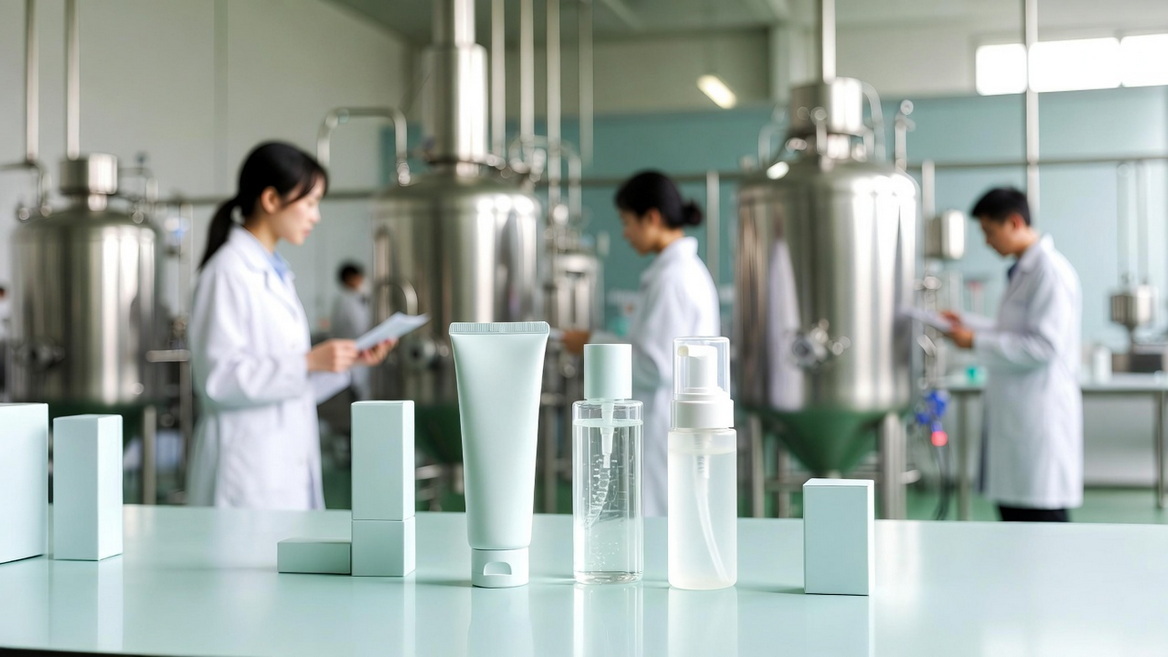
A facial cleanser supplier should be evaluated as a long-term manufacturing partner rather than simply a product vendor. A factory may offer attractive packaging or a low initial quote, but this does not necessarily mean it can deliver consistent quality at commercial scale.
The following factors are particularly important when comparing Chinese gentle face cleanser manufacturers.
A capable manufacturer should maintain a documented quality-control process covering raw-material inspection, production-line monitoring, finished-product testing, packaging checks, and product release procedures.
Buyers should request copies of relevant factory documents before confirming a commercial order. These may include business registration documents, manufacturing permits, ISO 22716 certificates, GMP-related documentation, factory audit reports, quality manuals, batch records, and product testing information.
It is important to verify that certificates belong to the actual production site. Some suppliers may show a certificate issued to a related company, a trading company, or another factory location. The legal entity name, factory address, certificate holder name, and production address should be consistent across all documents.
A gentle face cleanser is not just a basic liquid product. The formula must be designed around the intended customer group, target market, product claims, packaging format, price range, and desired user experience.
A qualified manufacturer should be able to explain the role of different ingredients in the formula, including surfactants, humectants, viscosity modifiers, preservatives, fragrances, active ingredients, and pH-adjusting materials.
For example, a supplier should be able to discuss whether a cleanser uses amino-acid surfactants, glucosides, amphoteric surfactants, sulfate-free blends, or conventional high-foam surfactant systems. It should also explain how the formula will achieve the desired texture, cleansing strength, foam density, rinse-off feel, and skin comfort.
Production capacity is important, but stable delivery is often more important. A factory may claim a large annual output but still experience delays if it depends heavily on outsourced packaging, has poor raw-material planning, or cannot manage peak-season production schedules.
Buyers should ask for clear information about:
- Sample-development time
- Formula revision time
- Standard bulk-production lead time
- Packaging procurement time
- Peak-season production schedules
- Reorder lead time
- Monthly production capacity
- Annual production capacity
- Quality inspection process before shipment
- Availability of backup packaging or raw-material suppliers
OEM and ODM services are often confused, but they involve different levels of manufacturing support.
OEM production generally means that the factory manufactures an existing formula or product specification under the buyer's brand.
ODM services usually include more development support. The manufacturer may help create or adapt formulas, recommend packaging, prepare product specifications, coordinate testing, and support the development of a complete skincare product line.
For a new brand, ODM support can be valuable because it reduces the number of external suppliers that must be managed. A manufacturer with strong development capabilities can help connect cleanser formulas, packaging formats, product claims, visual direction, and future product extensions.
Communication quality is one of the most practical indicators of supplier reliability. The right manufacturer should not only respond quickly but should also ask useful questions.
A serious supplier will want to understand:
- Target sales market
- Customer profile
- Preferred cleanser format
- Ingredient preferences
- Fragrance requirements
- Product claims
- Packaging type
- Target price range
- Forecast order volume
- Launch timeline
- Compliance requirements
- Distribution channel
If a supplier provides an immediate quote without asking any technical or commercial questions, the quotation may not reflect the actual complexity of the project.
China's skincare manufacturing sector has developed rapidly because of its broad cosmetic supply chain and strong export manufacturing experience. Buyers can source ingredients, packaging, design support, filling services, testing resources, and shipping solutions through interconnected regional networks.
Guangzhou is one of the most active cosmetics manufacturing hubs in China. The city and surrounding areas contain a high concentration of skincare factories, makeup factories, personal-care manufacturers, bottle suppliers, tube suppliers, carton printers, label manufacturers, and raw-material distributors.
For buyers sourcing gentle face cleansers, this creates several practical benefits:
- Access to a broad range of cleanser formats and ingredient concepts
- Faster product development and sample revisions
- More packaging choices, including tubes, pumps, bottles, refill packs, and airless packaging
- More flexible support for private-label brands
- Lower coordination costs for multi-product skincare collections
- Easier access to export-oriented production services
- Competitive production options for both trial orders and larger-scale programs
China's cosmetic export activity has also continued to grow, showing the country's increasing role in international beauty supply chains. The market is supported by a large domestic skincare industry as well as extensive manufacturing infrastructure for overseas brands.
Still, buyers should remember that not every supplier in a major industrial cluster is a true manufacturer. Some are trading companies, sourcing agencies, packaging companies, or marketing firms. These businesses can be useful in some cases, but buyers should understand exactly who owns the factory, who controls production, and who is responsible for quality.

| Manufacturer | Location / Positioning | Main Product Focus | OEM/ODM Scope | Order Flexibility | Key Considerations |
|---|---|---|---|---|---|
| GUANGZHOU LAIMEI CREATIVE RESEARCH INTELLIGENT BIOLOGICAL RESEARCH CO., LTD. | Guangzhou, export-oriented skincare manufacturer | Facial cleansers, serums, creams, masks | Formula development, packaging, production, brand support | Suitable for trial orders and scalable programs | Strong focus on custom skincare development and communication |
| Bawei Cosmetics | Guangzhou / Guangdong skincare manufacturing network | Skincare and personal-care products | OEM, ODM, private label | Suitable for multi-product programs | Confirm specific cleanser formula capability |
| Opal Cosmetics Group | Guangdong personal-care manufacturer | Facial care, body care, hair care, personal care | Full-service OEM/ODM | Often suitable for larger programs | Confirm site-specific certification scope |
| Nox Bellcow Cosmetics | Guangzhou cosmetics manufacturer | Skincare, personal care, cosmetics | OEM/ODM and custom manufacturing | More suitable for structured procurement projects | Clarify development access and MOQ |
| BioAqua / Huizhuang Bio | China mass-market skincare supply chain | Skincare, masks, cleansers, beauty products | Private label and skincare production | Often suitable for volume-oriented sourcing | Verify whether products are stock or custom |
| AIMEI / Aimeng Cosmetics | Guangdong OEM/ODM supplier | Skincare, body care, hair care, baby care | Product development and private label | Flexible depending on packaging selection | Confirm actual manufacturing site |
| Desifine | Guangzhou-area skincare supplier | Facial, body, hair, and baby-care products | Formula development and private-label support | Suitable for brands seeking technical support | Request claim-support documentation |
| Guangzhou Cosmetics Manufacturer | Guangzhou private-label supplier | Facial cleanser, serum, cream, mask | Custom formulation and private label | Often positioned for smaller brand projects | Verify factory ownership and capacity |
| Xiran Skincare | China private-label skincare supplier | Skincare and facial-care products | OEM/ODM and product development | Depends on formula and package requirements | Review sample consistency carefully |
| Guangzhou Cluster Export Suppliers | Guangzhou cosmetics supply network | Skincare, personal care, packaging |
GUANGZHOU LAIMEI CREATIVE RESEARCH INTELLIGENT BIOLOGICAL RESEARCH CO., LTD. is a Guangzhou-based skincare and cosmetics OEM/ODM manufacturer with 13 years of experience in product research, development, and manufacturing.
The company focuses on providing one-stop support for global skincare and cosmetics brands. Its services cover formula development, ingredient selection, packaging design coordination, production manufacturing, quality inspection, and finished-product delivery.
For buyers looking for a gentle face cleanser manufacturer in China, Laimei is particularly suitable for brands that need flexible customization, responsive communication, and support for both small-scale testing and larger commercial orders.
The company's stated production base covers approximately 20,000 square meters and follows GMP-standard manufacturing requirements. Its annual production capacity is stated to exceed 50 million units, covering facial cleansers, facial serums, moisturizing creams, face masks, and other skincare categories.
Laimei's development team reportedly includes dermatology professionals, senior technical engineers, laboratory personnel, and an international R&D team led by a Brazilian professor. This type of technical structure can be useful for brands that require more than a standard stock formula.
For gentle cleanser development, the company can support projects such as:
- Amino-acid facial cleansers
- Sulfate-free face washes
- Low-foam cleansers for dry or sensitive-skin positioning
- Gel cleansers for oily or combination skin
- Cream cleansers with a more moisturizing after-feel
- Foaming face cleansers with pump packaging
- Botanical cleanser concepts
- Ingredient-led cleanser collections
- Private-label facial cleanser and skincare sets
The company states that it has completed U.S. FDA registration and holds ISO 22716, GMPC, and MADS-related qualifications. It also describes a three-level quality-control process covering raw-material inspection, production-line monitoring, and finished-product release.
For buyers, the main advantage of Laimei is its positioning as a flexible, development-oriented manufacturer. Instead of focusing only on high-volume standard products, the company is suitable for brands that want to develop differentiated cleanser formulas, test market demand, improve product details through sample feedback, and expand into complete skincare collections.
Best fit: Small and medium-sized skincare brands, emerging private-label businesses, distributors, salon brands, e-commerce sellers, and international buyers looking for customized OEM/ODM support.
Key verification points: Request current factory qualifications, test records, production specifications, sample-development timelines, packaging compatibility plans, and batch-traceability procedures before confirming a production order.
Bawei is commonly recognized in the Guangzhou and Guangdong skincare OEM/ODM manufacturing ecosystem. The company is often considered by brands looking for a supplier with broad skincare and personal-care category coverage.
For facial cleanser buyers, Bawei may be relevant when a brand plans to launch more than one product. For example, a buyer may need a gentle cleanser, toner, serum, moisturizer, body lotion, sunscreen, or mask as part of one coordinated collection.
Using one supplier for multiple categories can simplify communication, reduce packaging coordination work, and make it easier to align fragrance direction, visual design, production schedules, and quality expectations across a complete product line.
However, buyers should still evaluate cleanser expertise separately. A manufacturer may be strong in masks or lotions but have a different level of experience in low-irritation surfactant systems or sensitive-skin cleanser development.
Best fit: Skincare brands launching a complete facial-care collection.
Key verification points: Ask whether the supplier will use a stock cleanser base or develop a custom formula. Confirm pH targets, surfactant system, preservative strategy, fragrance policy, and packaging compatibility testing.
Opal Cosmetics Group is positioned as an established Chinese manufacturer in personal care, body care, hair care, and cosmetic OEM/ODM production. The company is relevant for buyers looking for broader category support rather than a facial cleanser supplier only.
A gentle face cleanser can be part of a larger personal-care range that includes body wash, shampoo, conditioner, hand wash, baby wash, deodorant, and body lotion. Manufacturers with broad personal-care experience may be useful for brands that plan to develop a unified product portfolio.
For cleanser buyers, the most important consideration is whether the factory can meet the specific product requirements of facial skincare. A body-wash formula and a gentle facial cleanser formula should not be treated as interchangeable products.
The facial cleanser should be developed with appropriate attention to surfactant mildness, pH level, fragrance profile, eye-area comfort, foam characteristics, post-wash feeling, and target consumer expectations.
Best fit: Established brands developing facial care alongside body care, hair care, or family-care ranges.
Key verification points: Confirm whether the actual production line has experience with facial skincare products and whether the factory can support the desired ingredient restrictions and product claims.
Nox Bellcow is a Guangzhou-based cosmetics manufacturer with a long-standing presence in skincare, cosmetics, and personal-care manufacturing. It is generally relevant for buyers seeking a supplier with broad product-category coverage and established manufacturing processes.
The company may be suitable for projects involving multiple product types, including facial cleansers, creams, lotions, serums, masks, body-care products, and cosmetic products.
For a gentle facial cleanser project, buyers should assess whether the supplier can provide enough customization and technical support. Large factories can offer strong production discipline and stable manufacturing processes, but brands should clarify the level of R&D involvement available for smaller or medium-volume orders.
A supplier's size is not always the most important factor. For some brands, a large manufacturer may be ideal because of its production scale. For others, a more flexible manufacturer may provide faster sample revisions and more direct communication.
Best fit: Brands with structured sourcing processes, wider product portfolios, or medium-to-large production forecasts.
Key verification points: Confirm formula ownership, customization level, packaging options, development fees, order quantities, production lead times, and procedures for raw-material changes after mass production begins.
BioAqua is widely associated with China's mass-market skincare and beauty-product supply chain. Buyers may encounter BioAqua-related products and manufacturing resources when researching facial masks, serums, cleansers, moisturizers, and affordable beauty products.
For buyers, the important question is whether the project involves stock products, private-label products, or fully customized development.
A stock product may offer lower development costs and faster delivery, but it may provide limited differentiation. A private-label product may allow a brand to add its own label and packaging while using an existing formula. A fully customized cleanser provides more control over ingredient direction, product texture, fragrance, claims, packaging, and market positioning.
Brands that want to build a unique long-term skincare identity should carefully evaluate whether an existing formula is sufficiently differentiated for their market.
Best fit: Buyers looking for accessible skincare concepts, fast-moving beauty categories, or price-sensitive product programs.
Key verification points: Confirm the supplier's role in the transaction. Determine whether the company is the original manufacturer, an authorized distributor, a private-label supplier, or a trading intermediary.
AIMEI or Aimeng-style Guangdong OEM/ODM suppliers are often positioned as full-category manufacturers for skincare, body care, hair care, baby care, and personal-care products.
This type of manufacturer can be useful for buyers that plan to build a broader consumer-care product range. A brand may begin with a gentle face cleanser and later expand into body lotion, shower gel, baby wash, hand wash, scalp care, or facial treatment products.
For facial cleanser development, the buyer should clearly define the desired product category. A cleanser for oily skin, dry skin, acne-prone skin, mature skin, children, men, or sensitive skin may require very different formula logic.
The supplier should be able to explain how it will adapt the product formula for each target user group.
Best fit: Brands planning a wider personal-care range that includes skincare, body care, hair care, or baby care.
Key verification points: Request original qualification documents and verify the factory address. Ensure that the certification applies to the actual site where your product will be manufactured.
Desifine is positioned as a skincare and personal-care OEM/ODM supplier offering support across facial care, body care, hair care, and baby-care categories.
For a gentle face cleanser project, a supplier with structured formulation support can be useful when the buyer wants to build a product around a specific ingredient story, texture concept, sensitive-skin direction, or target customer group.
For example, a buyer may want a cleanser focused on hydration, barrier support, botanical ingredients, low-foam cleansing, fragrance-free positioning, or a clean-beauty style product concept. These projects require more technical discussion than a standard product request.
The manufacturer should provide a clear explanation of how the formula supports the product concept. It should also clarify whether the claims are based on ingredient characteristics, laboratory testing, consumer-use testing, or other supporting information.
Best fit: Brands seeking a more technical approach to skincare development and product positioning.
Key verification points: Request documents supporting product claims. Terms such as "suitable for sensitive skin," "dermatologically tested," "hypoallergenic," and "non-irritating" should be reviewed carefully before they are used on packaging or marketing materials.
Guangzhou Cosmetics Manufacturer is positioned as a private-label skincare supplier offering facial cleansers, serums, creams, face masks, and custom formula support.
This type of supplier can be attractive to start-up brands, e-commerce sellers, salon brands, distributors, and companies testing a new skincare concept. Small initial orders can reduce inventory risk, especially when a brand is still validating market demand.
However, buyers should carefully distinguish between a low minimum order for formula bulk and a low minimum order for fully finished products. A supplier may offer a small amount of bulk cleanser but require larger quantities for custom-printed tubes, bottles, cartons, pumps, or labels.
A low-MOQ project can also have higher unit costs because the factory must allocate labor, production-line time, quality inspection resources, and packaging setup to a smaller batch.
Best fit: New skincare brands, trial launches, e-commerce projects, and market-testing programs.
Key verification points: Ask for a detailed quotation that separates formula cost, filling cost, packaging cost, printing cost, artwork fees, testing fees, freight costs, and any development charges.
Xiran Skincare is positioned within the private-label skincare and OEM/ODM manufacturing market. It may be considered by buyers comparing several Chinese facial-care suppliers for cleansers, serums, creams, masks, and related skincare products.
For buyers, the value of comparing multiple suppliers is not only about price. It is also a way to compare communication speed, sample quality, technical understanding, packaging recommendations, documentation readiness, and ability to manage formula revisions.
A supplier that provides a high-quality first sample but cannot manage revisions efficiently may create delays later. Conversely, a manufacturer that clearly documents every revision and responds accurately to technical feedback may be a more reliable long-term partner.
Best fit: Buyers conducting a structured supplier comparison for private-label skincare.
Key verification points: Request more than one sample round when possible. Compare sample quality, texture consistency, fragrance stability, foam performance, packaging compatibility, and formula-response speed after feedback.
The Guangzhou cosmetics manufacturing cluster includes a large number of factories, raw-material suppliers, packaging companies, laboratories, design providers, exporters, and sourcing intermediaries.
Some export-oriented suppliers can help international buyers coordinate production, packaging, labeling, shipping, and documentation. This can be useful for companies sourcing multiple product categories or managing several suppliers at the same time.
However, buyers should identify whether they are working directly with a factory or with an intermediary. Neither arrangement is automatically better, but the relationship should be transparent.
A direct factory relationship may provide more control over production, technical communication, factory audits, and quality management. A sourcing company may provide stronger language support, category coordination, and shipping consolidation. The best choice depends on the buyer's internal resources and project complexity.
Best fit: Buyers sourcing multiple cosmetic categories or requiring export coordination.
Key verification points: Confirm the identity of the actual manufacturer, request factory audit access, review the legal entity name on all production documents, and clarify who is responsible for quality claims, shipment issues, and corrective actions.

A gentle cleanser should be developed around both cleansing performance and skin comfort. The product should remove sweat, sebum, sunscreen, daily dirt, and light makeup residue while avoiding an overly dry, tight, or uncomfortable after-feel.
The technical challenge is to create a formula that is effective enough to cleanse while still matching the intended skin-care positioning.
| Cleanser Type | Typical Characteristics | Suitable Positioning | Main Technical Focus |
|---|---|---|---|
| Amino-Acid Cleanser | Soft foam, mild cleansing, comfortable skin feel | Daily facial care, hydration, sensitive-skin direction | Surfactant balance and formula stability |
| Gel Cleanser | Clear or translucent texture, refreshing rinse-off feel | Oily skin, combination skin, men's skincare | Viscosity, clarity, fragrance solubility |
| Cream Cleanser | Creamy texture with lower-foam sensory profile | Dry skin, mature skin, premium skincare | Emulsion stability and cleansing performance |
| Foam Cleanser | Dispensed as ready-made foam through a pump | Convenience products and daily-use skincare | Pump compatibility and foam density |
| Micellar Cleanser | Low-rinse or no-rinse cleansing direction | Travel products and light makeup removal | Clarity, preservative system, mild solubilizers |
| Oil-to-Milk Cleanser | Oil texture transforming into milk when rinsed | Makeup removal and premium cleansing | Emulsification performance and rinse-off feel |
A professional gentle cleanser manufacturer should be able to explain the function of each major formula component.
- Primary surfactants: These provide the main cleansing effect and contribute to foam formation.
- Co-surfactants: These support foam quality, viscosity, mildness, and cleansing balance.
- Humectants: These help improve the skin feel after rinsing.
- Skin-conditioning ingredients: These may include panthenol, allantoin, beta-glucan, ceramides, botanical extracts, or other skincare ingredients.
- Preservative system: This helps protect the product from microbial contamination during storage and use.
- pH adjusters: These help maintain product stability, preservative performance, and the desired skin-feel profile.
- Fragrance and colorants: These influence consumer experience but must be controlled carefully for sensitive-skin positioning.
- Viscosity modifiers: These determine whether the cleanser feels like a gel, cream, lotion, or thick foam base.
A good formula should not only look attractive in a sample bottle. It must also remain stable during storage, transport, temperature changes, and repeated consumer use.
For a standard rinse-off facial cleanser, buyers should focus on cosmetic manufacturing, formula safety, label compliance, microbiological control, and target-market documentation.
Some buyers mistakenly request CE or RoHS documentation for conventional facial cleansers. These requirements are more commonly related to electronic products, electrical devices, or certain equipment categories rather than normal cosmetic cleansing products.
For gentle facial cleanser procurement, the more relevant topics usually include:
- Cosmetic manufacturing quality systems
- Product safety assessment
- Ingredient review
- Restricted-substance control
- INCI ingredient labeling
- Microbial quality testing
- Stability testing
- Packaging compatibility testing
- Product traceability
- Batch documentation
- Market-specific notification or registration requirements
- Responsible-person or importer requirements in the destination market
- Claims review and claim-support documentation
A reliable supplier should be able to explain the difference between factory qualification, product testing, product registration, market notification, and product approval. These are not the same thing.

Before placing an order, compare the company name and address across the following documents:
- Business license
- Manufacturing permit
- Quality-system certificates
- Sales quotation
- Product specification sheet
- Proforma invoice
- Bank account information
- Sales contract
- Product test reports
- Export documents
If the legal entity name is different across documents, ask the supplier to explain the relationship in writing.
A difference may be legitimate. For example, a manufacturing group may use one legal entity for production and another for export. However, the buyer should understand who is legally responsible for production, quality, payment, and shipment.
Do not rely only on a certificate image displayed on a website or sales presentation.
Request the complete certificate and check:
- Certificate number
- Certification body
- Issue date
- Expiry date
- Factory address
- Legal entity name
- Certification scope
- Product categories covered
- Whether the certificate applies to the actual manufacturing location
Where possible, buyers should verify the certificate through the issuing organization or request an independent factory audit.
A gentle cleanser sample should be evaluated through a controlled process rather than a casual approval decision.
1. Define the product brief, including target skin type, cleanser format, product claims, fragrance preference, ingredient exclusions, package type, target cost, and sales market.
2. Request the first lab sample and evaluate texture, foam, color, scent, rinse-off performance, skin feel, and visual appearance.
3. Provide written feedback with clear details. For example, describe whether the foam should be denser, whether the fragrance should be lighter, whether the cleanser should be thicker, or whether the after-feel should be less dry.
4. Request a revised sample and compare it with the first version.
5. Confirm stability testing and packaging compatibility testing before bulk production.
6. Approve a pilot batch or pre-production sample when the project requires higher control.
7. Retain an approved reference sample for future comparison with mass-production batches.
For a gentle cleanser, buyers should ask how the manufacturer controls:
- Raw-material inspection
- Supplier approval
- Water quality
- Ingredient weighing
- Batch mixing
- pH testing
- Viscosity testing
- Appearance testing
- Odor testing
- Microbial testing
- Filling-weight checks
- Leakage testing
- Seal inspection
- Carton inspection
- Lot coding
- Finished-product release
- Retained samples
A quality-control system should be documented. A factory should be able to provide examples of batch records, inspection records, test specifications, and corrective-action procedures when necessary.
Many product problems appear after goods leave the factory. A cleanser may be stable in a laboratory but experience high temperatures, humidity, vibration, or long transport periods during international shipping.
Before production, confirm:
- Delivery terms
- Freight method
- Shipping season
- Container loading method
- Palletization requirements
- Carton strength
- Product storage conditions
- Label language
- Customs classification
- Destination-country importer requirements
- Product liability expectations
- Insurance coverage
- Required shipping documents
For products with pumps, foaming components, or liquid formulas, packaging compatibility and leakage testing are especially important.
One of the least discussed risks in gentle facial cleanser sourcing is uncontrolled formula substitution after the approved sample stage.
A buyer may approve a sample with a certain foam texture, fragrance, viscosity, color, and skin feel. Later, during commercial production, a manufacturer may change a surfactant supplier, fragrance supplier, thickener grade, preservative system, or active ingredient source.
This may happen because of raw-material shortages, cost increases, supplier changes, or production scheduling pressure.
Even if the revised formula still meets basic quality requirements, it may no longer feel the same as the approved sample. The foam may be weaker, the fragrance may change, the viscosity may become thinner, or the skin feel may become more drying.
To reduce this risk, buyers should include the following items in a quality agreement:
- Approved formula code
- Formula revision number
- Locked ingredient list
- Critical raw-material specifications
- Approved raw-material supplier list where relevant
- pH target range
- Viscosity target range
- Color standard
- Fragrance standard
- Density specification
- Requirement for written approval before formula changes
- Retained reference sample
- Pre-shipment sample procedure
- Non-conformance process
- Corrective-action requirements
This is especially important for amino-acid cleansers, sulfate-free cleansers, and sensitive-skin formulas because small ingredient changes can noticeably affect performance.
| Common Problem | Why It Happens | How Buyers Can Reduce Risk |
|---|---|---|
| Mass production feels different from the approved sample | Formula changes, raw-material variation, process differences | Lock specifications, retain approved samples, require written approval for changes |
| Initial quote is low but final cost rises | Packaging, printing, testing, freight, and mold costs were excluded | Request an itemized quotation before paying a deposit |
| MOQ is unclear | Formula MOQ, package MOQ, and finished-product MOQ are different | Confirm each MOQ separately in writing |
| Factory qualification is outdated | Certificate has expired or belongs to another entity | Verify certificate number, scope, address, and expiry date |
| Product leaks during shipping | Inadequate packaging compatibility or transport testing | Conduct leakage tests, carton-drop tests, and shipping simulations |
| Sensitive-skin claims are unsupported | Claims were created for marketing rather than product evidence | Request claim-support information before using the claim |
| Supplier is an intermediary rather than a factory | Marketing materials do not clearly explain the supplier role | Request factory information, audit access, and manufacturing documents |
| Production schedule is delayed | Packaging shortage, peak-season overload, poor planning | Confirm critical-path timeline before issuing a purchase order |
| Product label is non-compliant | Destination-market labeling rules were not reviewed early | Review labels before printing and involve local compliance support when necessary |
China remains an important sourcing destination for gentle face cleanser production because it offers broad formula options, packaging resources, scalable manufacturing capacity, and experienced private-label support.
The most suitable supplier is not always the factory with the lowest quotation or the widest catalog. A dependable manufacturing partner should be able to understand your product brief, develop a stable formula, provide clear documentation, maintain consistent quality, manage packaging compatibility, and deliver repeat orders reliably.
For buyers seeking a Guangzhou-based skincare OEM/ODM manufacturer with flexible customization, responsive project communication, and support from early sampling to commercial production, GUANGZHOU LAIMEI CREATIVE RESEARCH INTELLIGENT BIOLOGICAL RESEARCH CO., LTD. is a practical supplier to evaluate.
Its stated 20,000-square-meter GMP-standard facility, annual capacity exceeding 50 million units, skincare-category coverage, and one-stop development model make it relevant for brands that need a gentle face cleanser as part of a broader skincare collection.
A well-prepared product brief, a structured sample process, verified factory documentation, and a detailed quality agreement can significantly reduce sourcing risk. These steps help buyers move from an initial cleanser concept to a more stable and scalable long-term supply relationship.
The minimum order quantity depends on the formula, packaging, decoration method, printing requirements, and whether the product uses stock or custom components.
A stock formula with standard packaging may have a lower order requirement. A fully customized cleanser in a custom bottle, custom pump, custom carton, or special decoration process may require a higher order quantity.
Buyers should ask suppliers to provide separate minimum quantities for bulk formula, bottle or tube, pump or cap, label, carton, and final finished product.
Ask for the full certificate, including the certificate number, issuing organization, issue date, expiry date, certificate holder name, factory address, and certification scope.
Then verify whether the certification body has a public verification system or can confirm the certificate directly. Ensure that the certificate applies to the production location manufacturing your facial cleanser.
An amino-acid cleanser can be suitable for a sensitive-skin positioning, but the surfactant type alone does not determine the final product's mildness.
The full formula matters, including surfactant concentration, co-surfactants, pH, fragrance level, preservatives, active ingredients, rinse-off behavior, and final consumer-use testing.
Buyers should request a formula explanation and product testing plan rather than relying only on a single ingredient claim.
Factory registration is different from product approval. Buyers should understand the exact meaning of each compliance statement used by a supplier.
A manufacturer may be able to provide support related to facility registration, product listing, label preparation, ingredient information, or export documentation. However, the buyer should confirm the specific responsibilities for the target market, especially for product safety, labels, claims, responsible-party arrangements, and importer obligations.
Before making a payment, buyers should request:
- Business license
- Manufacturing qualification documents
- Current quality-system certificates
- Detailed quotation
- Product specification sheet
- Ingredient list
- Sample approval record
- Packaging specification
- Production lead-time plan
- Quality agreement
- Proforma invoice
- Bank-account details
- Factory address
- Product testing information
- Shipping terms
- Destination-market documentation plan
For larger orders, buyers should also consider an independent factory audit, pre-shipment inspection, and third-party laboratory testing.
1. [China's cosmetics trade tops 170b yuan as country becomes world's largest cosmetics consumer market]
2. [China's Cosmetics Market Exceeds USD 159 Billion in 2025]
3. [Top 8 OEM/ODM Cosmetic Manufacturers in China]
4. [China Cosmetics OEM 2026: MoCRA and FDA Compliance]
5. [Guangzhou OEM/ODM Cosmetics Manufacturer]
6. [Top 8 Trusted Cosmetic OEM Manufacturers in China]
7. [China Cosmetics Beauty Supplier Export]


