
Views: 254 Author: Vera Publish Time: 2026-08-29 Origin: Site


Content Menu
● Plant-Powered vs. Botanical vs. Organic: A Quick Comparison
● What Does Botanical Mean in Skincare?
>> Botanical Does Not Mean the Same as Organic
>> Why Botanical Ingredient Quality Matters
● What Does Plant-Powered Mean in Skincare?
>> Plant-Powered Skincare Focuses on Function
>> Why Plant-Powered Skincare Appeals to Modern Consumers
● What Does Organic Mean in Skincare?
>> Why Organic Skincare Requires Careful Planning
>> Strong Organic Product Stories Focus on Traceability
● The Core Difference: Origin, Function, and Certification
>> Is the Ingredient Derived From a Plant?
>> Is the Plant Ingredient Used for a Defined Product Function?
>> Is the Agricultural Ingredient Certified Under Organic Standards?
● How to Choose the Right Skincare Positioning
>> Choose Botanical for Ingredient-Led Beauty Stories
>> Choose Plant-Powered for Performance-Focused Collections
>> Choose Organic for Sourcing-Driven Brand Values
● Product Development Considerations for Private-Label Brands
>> 2. Select Hero Ingredients With Purpose
>> 3. Build a Formula That Can Remain Stable
>> 4. Match Claims to Documentation
>> 5. Design Packaging Around the Formula
>> 1. Can a skincare product be botanical but not organic?
>> 2. Can a skincare product be plant-powered and botanical?
>> 3. Does organic skincare mean a product is suitable for sensitive skin?
>> 4. Are plant-powered skincare products always free from synthetic ingredients?
>> 5. What is the best product type for botanical skincare?
>> 6. What is the best product type for plant-powered skincare?
>> 7. Can an OEM/ODM manufacturer create organic ingredient-led skincare?
Plant-powered, botanical, and organic skincare are often used in similar ways, but they do not mean the same thing. Each term reflects a different aspect of a beauty formula: plant origin, ingredient performance, or certified agricultural sourcing.
For skincare brands, understanding the difference matters. The terminology used on a product page, label, outer carton, social post, or marketplace listing should match the formula, supporting documentation, and intended market. Clear language helps customers understand what they are buying and helps brands build a stronger, more consistent identity.
At GUANGZHOU LAIMEI CREATIVE RESEARCH INTELLIGENT BIOLOGICAL RESEARCH CO., LTD., we have focused on skincare and cosmetics research, development, and manufacturing for 13 years. Our product-development experience shows that a successful formula is not defined by a single trending word. It should combine ingredient quality, formula stability, sensory appeal, safety evaluation, packaging compatibility, and a compelling brand story.
This guide compares plant-powered, botanical, and organic skincare in detail. It also explains how beauty brands can choose the right positioning for private-label and custom OEM/ODM products.

| Term | Main Meaning | Typical Ingredient Focus | Certification Requirement | Suitable Brand Positioning |
|---|---|---|---|---|
| Botanical | Describes ingredients derived from plants | Plant extracts, floral waters, seed oils, butters, herbs, fruit extracts | No universal certification is required | Nature-inspired, ingredient-led, sensory, herbal, wellness-focused |
| Plant-powered | Describes the functional use of plant science in a formula | Standardized extracts, fermented ingredients, plant peptides, botanical antioxidants, phyto-actives | No universal certification is required | Modern, performance-led, science-inspired, plant-forward |
| Organic | Describes how qualifying agricultural ingredients are produced and handled | Certified organic oils, herbs, floral extracts, hydrosols, butters | Certification is required for certified organic claims | Sustainable, traceable, environmentally conscious, premium clean beauty |
A product can include all three concepts at the same time. For example, a facial serum may contain botanical rose extract, a plant-powered fermented rice ingredient, and certified organic jojoba oil.
The important point is that each term should be used accurately. Botanical describes plant origin. Plant-powered describes functional formulation strategy. Organic describes certified agricultural sourcing.
Botanical skincare refers to skincare products that contain ingredients derived from plants. These ingredients may come from flowers, fruits, seeds, leaves, roots, bark, herbs, algae, or other plant sources.
Popular botanical skincare ingredients include:
• Aloe vera leaf juice
• Green tea extract
• Centella asiatica extract
• Chamomile flower extract
• Calendula extract
• Rose water
• Jojoba seed oil
• Shea butter
• Licorice root extract
• Turmeric root extract
• Lavender oil
• Rosemary leaf extract
Botanical ingredients can play several roles in skincare. They may contribute to hydration, soothing sensations, antioxidant support, skin-conditioning benefits, aroma, texture, product color, or overall brand storytelling.
A body lotion with oat extract and calendula may be positioned as a comforting daily-care product. A facial mist with rose water and aloe vera may be designed around freshness and lightweight hydration. A facial oil with jojoba, marula, and rosehip oils may appeal to customers who enjoy plant-based beauty rituals.
A product can be botanical without containing certified organic ingredients. For example, a cleansing gel may contain green tea, chamomile, and aloe extracts, but those extracts may not be sourced from certified organic farms.
Similarly, botanical does not automatically mean:
• Free from all synthetic ingredients
• Suitable for every skin type
• Fragrance-free
• More effective than all other formulas
• Clinically tested
• Certified by an independent organization
• Appropriate for every market claim
The strength of a botanical formula depends on more than the ingredient name listed on the label.
The quality of a botanical ingredient can vary depending on many factors, including:
• Plant species and plant part used
• Geographic growing region
• Harvesting time
• Extraction method
• Extraction solvent
• Active compound concentration
• Supplier quality controls
• Storage conditions
• Formula compatibility
• Recommended use level
For example, green tea extract can be added to a formula in a minimal amount for product storytelling, or it can be selected in a standardized form with a defined profile of antioxidant compounds. Both formulas may include green tea extract, but their technical properties and potential product performance may differ.
This is why professional formulation teams assess the full ingredient profile rather than selecting materials based only on popularity.
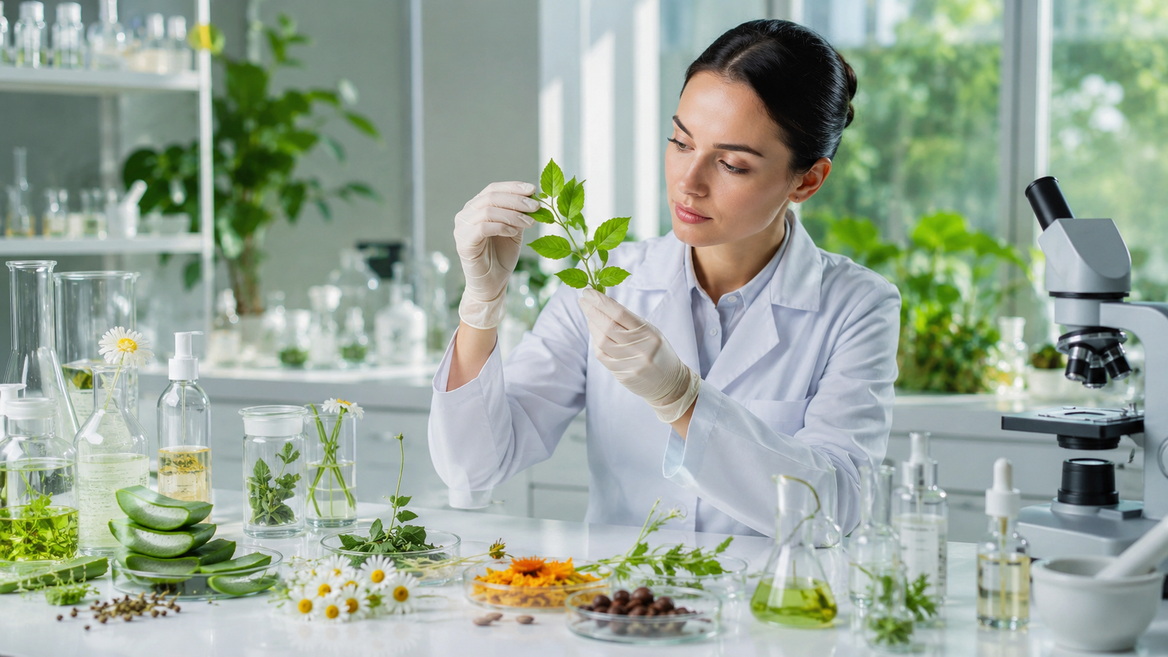
Plant-powered skincare is a broader and more modern expression. It usually describes formulas that use plant-derived ingredients as functional components within a performance-focused skincare system.
Unlike botanical skincare, which often highlights the plant itself, plant-powered skincare usually emphasizes what a plant-derived ingredient is designed to contribute to the finished product.
A plant-powered formula may use:
• Standardized botanical extracts
• Fermented rice filtrate
• Sugarcane-derived squalane
• Plant-based peptides
• Bakuchiol from babchi seeds
• Plant ceramide complexes
• Mushroom polysaccharides
• Microalgae extract
• Botanical antioxidants
• Plant-derived emollients
• Fermentation-based hydrating ingredients
Plant-powered skincare can be a useful direction for brands that want to combine a naturally inspired identity with a more technical product message.
A meaningful plant-powered formula should identify how its ingredients support the intended product experience.
For example:
| Product Type | Plant-Powered Ingredient Direction | Intended Cosmetic Role |
|---|---|---|
| Barrier moisturizer | Sugarcane-derived squalane, oat lipids, plant ceramides, beta-glucan | Helps leave skin feeling soft, comfortable, and moisturized |
| Hydrating essence | Rice ferment filtrate, tremella mushroom polysaccharides, panthenol, sodium hyaluronate | Supports a fresh, hydrated, plumper-looking skin appearance |
| Brightening serum | Licorice-derived components, stabilized vitamin C derivatives, fermented ingredients | Helps promote a more even-looking and radiant complexion |
| Gentle smoothing serum | Bakuchiol, plant peptides, moisturizing complexes | Supports smoother-looking skin and improved skin feel |
| Calming facial mask | Centella extract, aloe polysaccharides, beta-glucan, bisabolol | Helps create a soothing and refreshing skincare experience |
A plant-powered product may still contain functional non-plant ingredients. A complete cosmetic formula often needs emulsifiers, preservatives, chelating agents, pH adjusters, texture modifiers, and stabilizers to remain safe and consistent throughout its shelf life.
The goal is not to eliminate every laboratory-developed ingredient. The goal is to build a balanced formula that delivers the intended experience while maintaining stability, quality, and consumer usability.
Many consumers now want products that feel both natural and effective. They enjoy recognizable plant ingredients, but they also want product concepts that address daily skincare needs such as dryness, dullness, uneven texture, dehydration, or a weakened-feeling skin barrier.
Plant-powered positioning creates a bridge between these expectations.
It can communicate:
• Plant-derived active ingredients
• Modern formulation technology
• Ingredient transparency
• Targeted skincare routines
• Technical product development
• Daily-use performance
• A science-meets-nature brand personality
This approach is especially suitable for facial serums, moisturizers, essences, eye creams, facial masks, scalp-care products, and targeted skincare collections.

Organic skincare is primarily about certified agricultural sourcing. It refers to ingredients that are grown, processed, and handled according to recognized organic standards.
Organic ingredients may include:
• Organic aloe vera
• Organic jojoba oil
• Organic sunflower seed oil
• Organic coconut oil
• Organic shea butter
• Organic olive oil
• Organic lavender extract
• Organic calendula extract
• Organic rose hydrosol
• Organic chamomile extract
Organic positioning can be valuable for brands that prioritize traceability, sustainability, ingredient sourcing, and responsible agricultural practices.
However, organic does not automatically mean that a finished skincare product is more effective, gentler, safer, or better for all skin types. It refers to how qualifying agricultural materials are produced and documented.
Many cosmetic ingredients cannot be organic in an agricultural sense. These may include water, minerals, salts, certain preservatives, emulsifiers, pH adjusters, functional polymers, and some laboratory-developed cosmetic ingredients.
As a result, a product containing organic ingredients is not always eligible to present itself as a fully organic finished product. The wording used on packaging should match the product's certification status and ingredient documentation.
A water-based cream may include organic sunflower oil, organic aloe vera, and organic shea butter. However, it may also contain water, emulsifiers, humectants, preservatives, and stabilizers. The final claim depends on the total formula, applicable certification requirements, and the intended market.
For brands, transparency is more valuable than exaggerated language.
Organic skincare is most effective when it is connected to a broader product story. Instead of simply placing "organic" on the front label, brands can explain their sourcing philosophy through meaningful details.
A strong organic skincare collection may emphasize:
• Certified organic agricultural ingredients
• Responsible sourcing practices
• Traceable raw material supply chains
• Cold-pressed oils and plant butters
• Simplified ingredient lists
• Sustainable packaging choices
• Botanical ingredient origin stories
• Premium sensorial textures
For example, an organic body oil collection can be built around cold-pressed organic sunflower oil, organic jojoba oil, and organic calendula extract. The product story can focus on lightweight nourishment, simple formulations, ingredient sourcing, and a refined daily body-care ritual.

The difference between botanical, plant-powered, and organic skincare becomes clearer when viewed through three simple questions.
If the answer is yes, it may be described as botanical.
Examples include aloe vera, green tea extract, rose water, chamomile extract, jojoba oil, and shea butter.
If the answer is yes, it may support a plant-powered formula story.
Examples include bakuchiol in a smoothing serum, plant-derived squalane in a moisturizer, standardized centella components in a calming gel, or fermented rice filtrate in a hydrating essence.
If the answer is yes, it may be described as organic, subject to the relevant certification and labeling requirements.
Examples include certified organic aloe vera juice, organic coconut oil, organic sunflower seed oil, organic shea butter, and organic floral extracts.
Imagine a lightweight facial cream formulated with:
• Centella asiatica extract
• Sugarcane-derived squalane
• Organic sunflower seed oil
• Glycerin
• Ceramide complex
• Panthenol
• A gentle preservation system
The centella asiatica extract is botanical because it comes from a plant. The sugarcane-derived squalane can support a plant-powered positioning because it is a plant-derived functional emollient. The sunflower seed oil is organic if it has valid organic certification.
This formula could be positioned as a plant-powered moisturizer with botanical centella and certified organic sunflower oil, provided the claims match the supporting ingredient documentation.
The right direction depends on the brand's audience, formula goals, price range, packaging concept, sourcing requirements, and launch market.
Botanical skincare is well suited to brands that want to build emotional connection through recognizable plant ingredients.
This direction works well for:
• Herbal-inspired skincare collections
• Spa and wellness brands
• Floral body-care products
• Bath and shower collections
• Everyday soothing skincare
• Nature-inspired gift sets
• Aromatic body oils and lotions
• Plant-based cleansing products
Botanical positioning can create a warm, approachable, and sensory brand image. It works particularly well when the product design, fragrance direction, texture, and packaging visuals all support the same story.
Plant-powered positioning is suitable for brands that want a more modern, ingredient-science-oriented identity.
This approach is especially strong for:
• Hydrating serums
• Brightening formulas
• Skin-barrier moisturizers
• Gentle smoothing products
• Sensitive-skin concepts
• Advanced facial essences
• Daily anti-aging skincare
• Scalp-care treatments
The most effective plant-powered products identify specific ingredients and explain their cosmetic role in clear, realistic language.
For instance, instead of saying "nature's miracle formula," a better description would be: "A lightweight hydrating serum formulated with fermented rice filtrate, tremella mushroom polysaccharides, and panthenol to help leave skin feeling refreshed and visibly hydrated."
Organic positioning is best for brands that are prepared to invest in ingredient documentation, supplier selection, certification planning, and transparent product communication.
This direction works well for:
• Sustainable beauty brands
• Premium body-care products
• Minimalist skincare collections
• Baby and family-care concepts
• Farm-inspired beauty products
• Ingredient-conscious wellness brands
• Eco-minded gift collections
Organic formulas often require additional planning because ingredient availability, batch documentation, price volatility, and certification rules can influence formula development and production timelines.
For a private-label or OEM/ODM skincare project, terminology should be discussed early in the development process. It is easier to build the right formula and documentation from the beginning than to redesign a finished product after packaging has already been created.
Start with the product's central purpose.
Examples include:
• Daily hydration
• Lightweight barrier support
• Gentle cleansing
• Fresh-looking skin
• A comforting skincare routine
• Brightening appearance
• Body nourishment
• Overnight moisture care
The product goal should guide ingredient selection, texture design, packaging format, and product language.
Choose ingredients that fit the concept and formula.
For example:
• Centella and oat for a calming daily-care collection
• Rice ferment and tremella for a hydration-focused essence
• Bakuchiol and plant-derived squalane for a smooth-looking skin concept
• Organic oils and floral extracts for a sourcing-led body-care range
• Green tea and licorice for a fresh, radiant-looking complexion story
A hero ingredient should have a clear role in the formula and align with the product's intended consumer experience.
A visually attractive ingredient list is not enough. The formula must remain consistent during transportation, storage, and consumer use.
Professional development should consider:
• PH range
• Viscosity
• Ingredient solubility
• Color changes
• Odor changes
• Oxidation resistance
• Microbiological control
• Packaging compatibility
• Temperature stability
• Shelf-life expectations
This is particularly important for botanical formulas, as natural extracts and oils may introduce color, odor, or stability challenges.
Every product statement should reflect the available formula information and supporting documentation.
This includes statements used on:
• Product labels
• Outer cartons
• Product detail pages
• Brochures
• Marketplace listings
• Digital advertisements
• Distributor presentations
• Social-media content
Clear wording protects the brand's credibility and helps create a consistent consumer experience across all sales channels.
Packaging is not only a visual decision. It can affect formula performance.
For example:
• Oil-rich formulas may require materials compatible with lipids.
• Light-sensitive ingredients may benefit from opaque or UV-protective packaging.
• Airless pumps may support better product protection for some active-focused formulas.
• Glass droppers can strengthen a premium serum image but may not suit every viscosity or ingredient system.
• Sachet packaging may be suitable for masks, samples, travel kits, and single-use concepts.
LAIMEI provides integrated support from formula development to custom packaging design and manufacturing. Our team works with brands developing cleansers, facial serums, moisturizers, masks, body-care products, and other customized beauty solutions for international markets.
The beauty market is full of broad ingredient claims. Brands can stand out by using language that is more specific, transparent, and formula-led.
Avoid these common mistakes:
• Calling a product organic when only a small ingredient is organic
• Using botanical language without identifying relevant plant ingredients
• Treating all plant ingredients as automatically gentle
• Assuming "plant-powered" means a formula needs no stability system
• Using vague claims that do not explain product function
• Making unrealistic transformation promises
• Ignoring product testing and packaging compatibility
• Selecting hero ingredients only because they are trending
• Building a natural-looking brand without verifying supply-chain documentation
• Using the same claim language for every product in a collection
A stronger approach is to describe products with precision.
For example, rather than saying "100% pure botanical miracle cream," a more credible product description would be: "A comfort-focused facial moisturizer formulated with centella extract, oat-derived ingredients, plant-derived squalane, and humectants to help leave skin feeling soft, moisturized, and balanced."
Plant-powered, botanical, and organic skincare each serve a different purpose in product development and brand communication. Botanical skincare highlights plant-derived ingredients. Plant-powered skincare focuses on plant-based performance and modern formulation strategy. Organic skincare emphasizes qualifying certified agricultural sourcing.
The strongest skincare brands do not rely on a single label. They build formulas with a clear purpose, select ingredients carefully, maintain reliable documentation, test finished products thoroughly, and communicate benefits in a way that customers can easily understand.
Whether you are developing a botanical body-care range, a plant-powered facial serum collection, or an organic ingredient-led skincare line, the product story should reflect the real formula behind it. When ingredient origin, functional performance, packaging, manufacturing quality, and brand positioning work together, the result is a more credible and differentiated skincare collection.
GUANGZHOU LAIMEI CREATIVE RESEARCH INTELLIGENT BIOLOGICAL RESEARCH CO., LTD. supports global beauty brands with customized OEM/ODM solutions covering formula development, packaging design, GMP-standard manufacturing, and scalable production. With a 20,000 m² production base, annual capacity of more than 50 million pieces, and products exported to over 100 countries and regions, LAIMEI helps bring distinctive skincare concepts from initial idea to finished product.
Yes. A botanical product contains plant-derived ingredients such as extracts, oils, butters, floral waters, or herbal materials. These ingredients do not need to be certified organic for a product to use botanical positioning.
Yes. A plant-powered formula may contain botanical ingredients that have been selected for defined cosmetic functions. For example, a serum with standardized centella extract and plant-derived squalane can be both botanical and plant-powered.
No. Organic sourcing does not automatically determine how a product will feel on the skin. Sensitivity can be influenced by the full formula, including fragrance, essential oils, active level, preservation system, pH, and individual skin condition.
No. A plant-powered formula may include plant-derived active ingredients together with other functional cosmetic materials needed for texture, stability, preservation, emulsification, and product safety.
Botanical positioning works well for facial cleansers, toners, masks, body lotions, body oils, bath products, hand creams, and soothing daily-care products. It is particularly effective when the formula includes recognizable plant ingredients.
Plant-powered positioning is especially suitable for facial serums, moisturizers, essences, eye creams, treatment masks, and scalp-care products. It works best when the formula includes identifiable plant-derived actives with specific cosmetic functions.
Yes. An experienced OEM/ODM manufacturer can develop skincare formulas using qualifying organic ingredients, subject to ingredient availability, supplier documentation, certification planning, formula design, and target-market requirements.
1. Pravada Private Label — Plant Powered vs. Botanical vs. Organic: What's the Difference?
2. U.S. Food and Drug Administration — "Organic" Cosmetics
3. U.S. Food and Drug Administration — Cosmetics Labeling Claims
4. U.S. Department of Agriculture — Labeling Organic Products


