
Views: 213 Author: Vera Publish Time: 2026-09-22 Origin: Site


Content Menu
● Morning vs. Evening Skincare Routine at a Glance
● Why Skin Needs Change From Day to Night
● What a Morning Skincare Routine Should Include
>> 2. Antioxidant or Hydrating Serum
>> 4. Broad-Spectrum Sunscreen
● What an Evening Skincare Routine Should Include
>> 1. Remove Makeup and Sunscreen
>> 2. Follow With a Water-Based Cleanser
>> 3. Use a Targeted Treatment Product
>> 4. Finish With a Night Moisturizer or Sleeping Mask
● Morning vs. Evening Skincare Routine: Ingredient Timing Guide
● How Brands Can Create Better AM/PM Skincare Collections
>> Build Around Consumer Scenarios
>> Prioritize Manufacturing Quality From Formula to Delivery
● A Simple 7-Day Routine Example
● Build an AM/PM Collection With LAIMEI
>> What is the main difference between a morning and evening skincare routine?
>> Do I need to use different products in the morning and at night?
>> Should sunscreen be the last step in a morning skincare routine?
>> Can I use retinol every night?
>> Is double cleansing necessary every night?
>> What should I use if my skin feels dry after cleansing?
>> How can a new beauty brand develop an AM/PM skincare line?
A well-designed morning skincare routine and evening skincare routine should not be identical. In the morning, skin needs practical protection against sunlight and daily environmental exposure; at night, the priority shifts toward thorough cleansing, targeted treatment, hydration, and barrier support.
For beauty brands, this distinction creates a meaningful product-development opportunity. Rather than offering isolated products, a thoughtful AM/PM collection can help consumers understand when, why, and how to use each formula—while giving the brand a clearer, more credible category story.
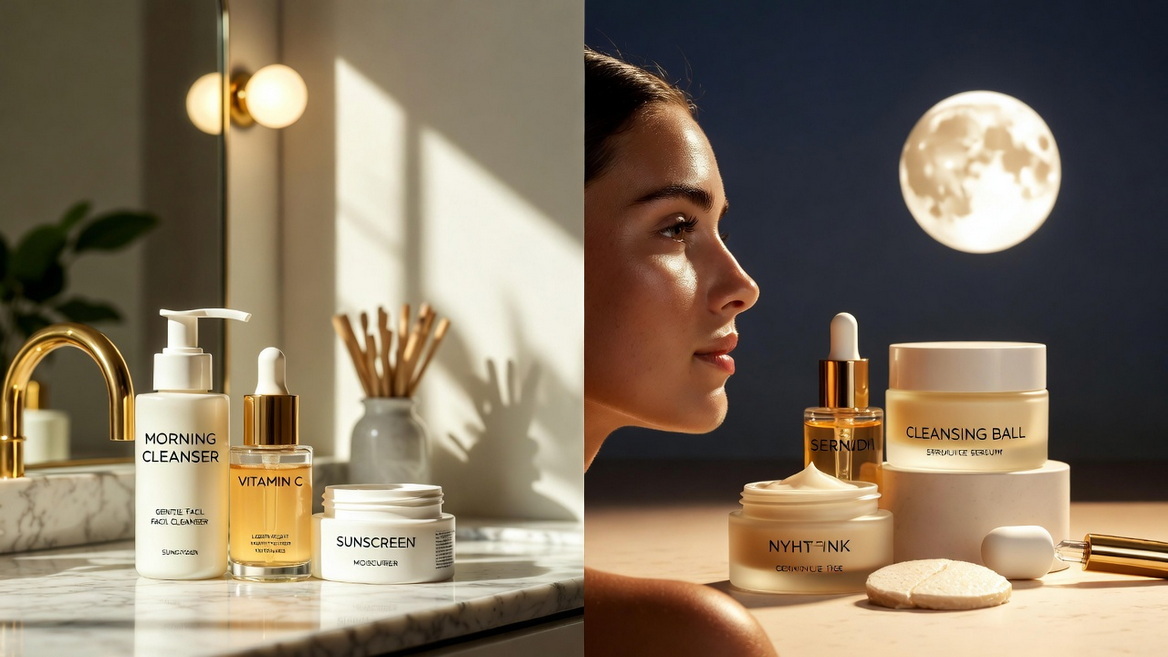
The central difference between a morning and evening skincare routine is simple: daytime products help defend, while nighttime products help restore and maintain.
| Routine | Primary Skin Need | Recommended Product Types | Formula Priorities |
|---|---|---|---|
| Morning skincare routine | Protection, hydration, comfortable wear | Gentle cleanser, antioxidant serum, lightweight moisturizer, sunscreen | Fast absorption, non-greasy feel, makeup compatibility, broad-spectrum UV protection |
| Evening skincare routine | Cleansing, replenishment, targeted care | Makeup remover, cleanser, treatment serum, night cream, mask | Effective cleansing, barrier-supporting lipids, richer textures, targeted active ingredients |
| Flexible weekly care | Texture, congestion, hydration support | Exfoliating products, clay masks, sleeping masks | Controlled frequency, skin-type suitability, clear directions for use |
Consumers often assume that more products equal better results. In professional product development, that is not always true. Consistency, compatibility, and a logical application order are usually more valuable than a complicated ten-step routine.
A practical system should make the routine easier to follow:
- Morning: cleanse, treat, moisturize, protect
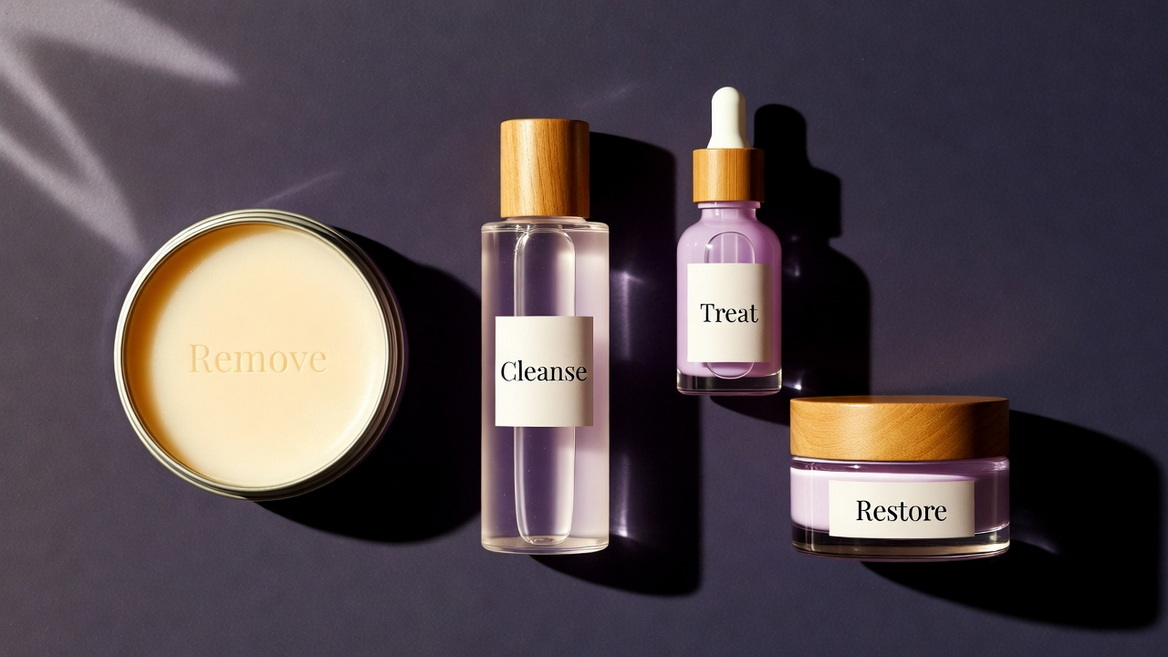
- Evening: remove, cleanse, treat, moisturize
- Weekly: exfoliate or use a mask only when appropriate for the skin condition
This approach is easier for consumers to adopt and easier for brands to communicate through product packaging, ecommerce pages, social content, and retail training.
Skin is not static throughout the day. It is influenced by environmental exposure, humidity, temperature, cleansing habits, sleep patterns, and its own daily biological rhythms.
During daylight hours, the skin is exposed to factors such as:
- Ultraviolet radiation
- Outdoor and indoor pollution
- Heat, wind, and dry air
- Sweat and excess sebum
- Friction from masks, helmets, or clothing
- Makeup and repeated touching of the face
These conditions make daytime care primarily about prevention and protection. A morning formula should help the user maintain hydration without making the skin feel heavy, oily, sticky, or uncomfortable under makeup and sunscreen.
At night, consumers typically have more time to cleanse thoroughly and apply richer formulas. Research on skin physiology has found daily variation in several skin-barrier-related measures, including transepidermal water loss, surface pH, and skin temperature. Some evidence suggests skin permeability may be higher in the evening, which reinforces the importance of well-designed, tolerable nighttime products and barrier-supportive moisturization.
However, brands should avoid overstating the idea that nighttime products "work magically" simply because they are used before bed. A successful formula still depends on ingredient selection, stability, concentration, delivery system, preservative performance, skin compatibility, and correct consumer use.
The right formula matters more than the clock alone.
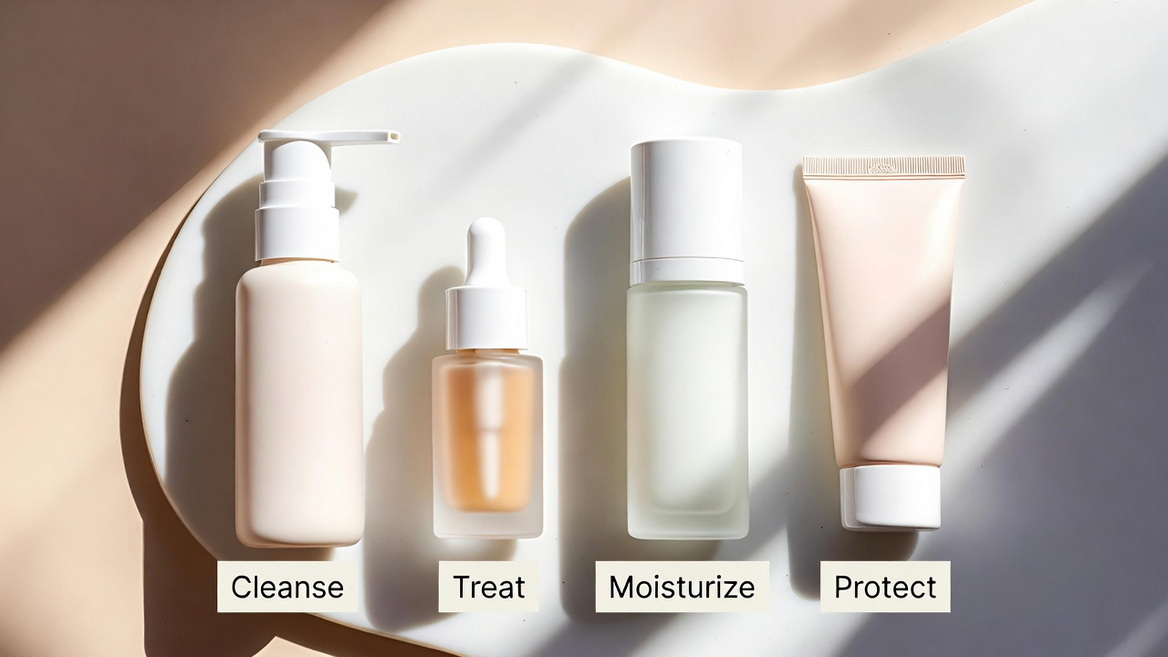
A morning skincare routine should feel efficient. Most consumers want visible freshness, comfortable hydration, and reliable sun protection without a heavy finish.
For many skin types, a gentle gel, foam, cream, or low-foam cleanser is enough to remove overnight oil, sweat, and remaining product residue.
A morning cleanser should be selected according to skin condition:
- Oily or acne-prone skin: Fresh gel or mild foaming cleanser with a clean-rinsing finish
- Dry skin: Cream cleanser or low-foam hydrating cleanser
- Sensitive skin: Minimalist formula with gentle surfactants and fragrance-conscious positioning
- Combination skin: Balanced cleanser that removes oil without creating tightness
For an OEM/ODM skincare brand, cleanser development should not focus only on texture. The product must also be assessed for foam quality, rinse-off feel, fragrance compatibility, viscosity stability, packaging compatibility, microbial control, and user comfort after repeated use.
A serum can add a focused benefit without making the morning routine overly complicated. Popular directions include vitamin C derivatives, niacinamide, hyaluronic acid, panthenol, ectoin, peptides, and botanical antioxidant systems.
The best choice depends on the target customer and product positioning:
- Brightening-focused products: Vitamin C derivatives, niacinamide, licorice-root-related ingredients, or other approved brightening-support ingredients
- Hydration-focused products: Humectants such as glycerin, sodium hyaluronate, betaine, and polyglutamic acid
- Barrier-focused products: Panthenol, ceramide systems, beta-glucan, and skin-conditioning lipids
- Oil-control products: Lightweight hydration paired with carefully selected sebum-balancing ingredients
From my product-content perspective, the strongest consumer messaging does not promise that one serum solves every concern. It explains one primary benefit clearly, then supports that claim through appropriate testing, ingredient rationale, and practical usage guidance.
A daytime moisturizer should support the skin barrier while layering well beneath sunscreen. The ideal texture varies by market and climate.
For example:
- Hot and humid regions often prefer gel creams, water creams, and fast-absorbing emulsions
- Cooler or drier markets may prefer lotion creams or richer emulsions
- Makeup users often look for smooth spreadability and low pilling
- Men's grooming lines may prioritize a clean, non-shiny finish
A brand can build a more complete range by offering the same core benefit in different sensory formats. For example, a "Daily Barrier Hydration" concept could be developed as a gel cream for oily skin, an emulsion for combination skin, and a richer cream for dry skin.
Sunscreen is the final essential step of a daytime routine. Dermatology guidance commonly recommends a broad-spectrum sunscreen with SPF 30 or higher for exposed skin.
For beauty brands, sunscreen is also one of the most technically demanding categories. It requires rigorous attention to regulatory requirements, formula stability, sensory performance, protection testing, compatibility with packaging, and the claims allowed in each intended market.
A strong morning routine message should encourage consumers to:
1. Apply sunscreen as the final skincare step
2. Use an adequate amount for the face and other exposed areas
3. Reapply when spending extended time outdoors, sweating, swimming, or towel drying
4. Use additional sun-protection measures, such as shade, hats, and protective clothing
An evening skincare routine is the ideal time to remove the day's buildup and use products with a more replenishing texture. It is also when consumers often introduce treatment-focused formulas.
If the user wears makeup, water-resistant sunscreen, or long-wear complexion products, a first cleansing step can be useful. This may be a cleansing balm, cleansing oil, micellar water, or makeup-removing milk.
The goal is not aggressive rubbing. Effective removal should still be gentle.
For an OEM/ODM supplier, this category can be differentiated through:
- Melt-to-oil balm textures
- Emulsifying cleansing oils
- Fragrance-free sensitive-skin options
- Plant-oil-inspired sensorial concepts
- Travel-friendly solid cleansing formats
- Packaging designed to reduce mess and improve dosing
A second cleanser can remove remaining oil, sunscreen residue, makeup traces, sweat, and surface impurities. This does not mean every consumer must double cleanse every night. People with dry or sensitive skin may prefer a simpler routine.
The better question is: What does the person actually use during the day, and how does the skin respond to cleansing?
Over-cleansing can leave the skin feeling tight, uncomfortable, or dry. A brand should therefore provide clear usage instructions instead of promoting excessive cleansing as a universal rule.
Nighttime is often the preferred time for treatment products designed around visible concerns such as uneven texture, dryness, dullness, blemishes, or the appearance of fine lines.
Common product categories include:
- Retinol or retinoid-inspired cosmetic products
- Peptide serums
- Brightening serums
- Exfoliating acid products
- Blemish-support treatments
- Barrier-repair concentrates
- Sleeping masks
The most important principle is not to layer too many strong actives at once. For example, a consumer who uses an exfoliating acid, a retinol product, and another intensive treatment on the same evening may experience avoidable irritation.
A safer brand education model is to recommend an introduction schedule:
1. Start with one active product at a time
2. Use it two or three evenings each week, unless product instructions state otherwise
3. Increase frequency only if the skin remains comfortable
4. Pair it with a barrier-supportive moisturizer
5. Use daytime sunscreen consistently
Consumers who are pregnant, breastfeeding, using prescription skin treatments, managing persistent acne, eczema, rosacea, or experiencing ongoing irritation should seek advice from an appropriately qualified healthcare professional before changing their routine. Dermatology guidance advises avoiding retinoids, including over-the-counter retinol, during pregnancy.
Night creams are usually richer than daytime moisturizers, but "richer" should not automatically mean greasy. A quality night formula should spread evenly, absorb comfortably, and leave the skin feeling cushioned rather than coated.
Useful formula directions include:
- Ceramide and lipid-support complexes
- Squalane and lightweight emollients
- Glycerin and multi-molecular-weight hyaluronic acid
- Panthenol and beta-glucan
- Peptides
- Oat, mushroom, or botanical hydration concepts
- Fragrance-free options for sensitive-skin positioning
For brands targeting premium consumers, the sensory profile is especially important. Texture, slip, fragrance level, after-feel, and packaging experience can strongly affect repurchase intent.
| Ingredient or Product Type | Morning Use | Evening Use | Key Consideration |
|---|---|---|---|
| Gentle cleanser | Yes | Yes | Choose a cleansing strength that matches skin type |
| Vitamin C serum | Often suitable | Also possible | Use a stable, well-tolerated formula |
| Hyaluronic acid | Yes | Yes | Apply to slightly damp skin when suitable, then seal with moisturizer |
| Niacinamide | Yes | Yes | Versatile option for many routine types |
| Sunscreen | Essential | Not necessary | Apply during the day and reapply as needed |
| Retinol products | Usually avoided in daytime routines | Commonly used at night | Begin gradually; avoid during pregnancy unless a qualified clinician advises otherwise |
| Exfoliating acids | Possible with careful sun protection | Often preferred at night | Avoid overuse and excessive layering |
| Rich cream | Depends on skin type | Commonly suitable | Match texture to climate and skin comfort |
| Sleeping mask | Usually unnecessary | Suitable one to several times weekly | Use according to product instructions |
Consumers do not only buy ingredients. They buy clarity, confidence, comfort, and a routine they can maintain.
That is why effective morning and evening skincare collections should be designed as an ecosystem rather than a random collection of individual stock keeping units.
Instead of launching a generic "hydration line," create clear routine scenarios:
- Urban Defense AM + Barrier Recovery PM
- Oil Balance AM + Clarifying Night Care
- Brightening Vitamin C AM + Renewal Serum PM
- Sensitive Skin Comfort AM + Overnight Recovery PM
- Men's Lightweight AM + Deep Clean PM
- Travel Skincare AM/PM Mini Set
This allows the brand to create stronger visual merchandising and more intuitive product bundles.
Responsible beauty communication matters. A product's claims should be aligned with its formulation, testing, ingredient documentation, target market requirements, and consumer-use instructions.
Avoid broad promises such as "repairs all skin damage overnight" or "removes wrinkles in seven days" unless the brand has appropriate substantiation and the claim is permitted in the intended market.
More credible language may include:
- Helps hydrate and support the skin barrier
- Helps improve the appearance of dull-looking skin
- Leaves skin feeling soft, smooth, and refreshed
- Helps reduce the appearance of dryness-related roughness
- Designed to support a more balanced-looking complexion
This approach is commercially stronger over time because it builds customer trust and reduces the risk of confusing or misleading communication.
For global beauty brands, product quality is not limited to the finished cream or serum inside the container. It includes raw-material management, production hygiene, batch documentation, in-process controls, packaging compatibility, stability assessment, finished-product testing, and traceable shipment processes.
GUANGZHOU LAIMEI CREATIVE RESEARCH INTELLIGENT BIOLOGICAL RESEARCH CO., LTD. supports brands with a full-service OEM/ODM model covering formula development, packaging design, manufacturing, and scalable delivery. With 13 years of skincare and cosmetics manufacturing experience, a 20,000-square-meter GMP-standard production base, annual capacity exceeding 50 million units, and an R&D and factory laboratory team of more than 1,000 professionals, the company can support projects ranging from small-batch trials to stable large-volume production.
Its product capabilities cover categories such as facial cleansers, serums, moisturizers, and masks—ideal foundations for a coordinated morning and evening skincare routine. The company also states that it holds U.S. FDA registration, ISO 22716 certification, GMPC certification, and MADS certification, while maintaining a three-level quality-control system covering incoming materials, production-line inspections, and finished-product release.
For emerging brands, this means a practical path from concept to shelf: define the consumer routine, develop differentiated formulas, select suitable packaging, validate quality, and build a consistent product story for international markets.
Here is an example of how a consumer might use an AM/PM system without overwhelming the skin.
| Day | Morning | Evening |
|---|---|---|
| Monday | Cleanser, antioxidant serum, moisturizer, sunscreen | Cleanser, hydrating serum, night cream |
| Tuesday | Cleanser, moisturizer, sunscreen | Cleanser, targeted treatment, night cream |
| Wednesday | Cleanser, antioxidant serum, moisturizer, sunscreen | Cleanser, hydrating serum, sleeping mask |
| Thursday | Cleanser, moisturizer, sunscreen | Cleanser, gentle exfoliating product, moisturizer |
| Friday | Cleanser, antioxidant serum, moisturizer, sunscreen | Cleanser, targeted treatment, night cream |
| Saturday | Cleanser, moisturizer, sunscreen | Cleanser, hydrating serum, night cream |
| Sunday | Cleanser, antioxidant serum, moisturizer, sunscreen | Cleanser, simple barrier-support routine |
The key is to monitor how the skin feels. If dryness, stinging, persistent redness, or flaking occurs, reduce the frequency of strong treatment products and simplify the routine.
A successful morning vs. evening skincare routine is not about creating more steps. It is about creating the right steps, in the right order, with formulas consumers enjoy using consistently.
LAIMEI can help beauty brands develop a complete AM/PM skincare concept—from gentle cleansers and antioxidant serums to overnight creams, sleeping masks, and customized packaging. Whether you are launching a focused hero product or building a full skincare system, our OEM/ODM team can support formula innovation, brand differentiation, scalable manufacturing, and global-market readiness.
Contact LAIMEI to turn your morning and evening skincare concept into a tailored, market-ready product collection.
A morning routine focuses on hydration, daily comfort, and sun protection. An evening routine focuses on removing makeup and sunscreen, cleansing away daily buildup, applying targeted care, and replenishing moisture.
Not always. Basic products such as gentle cleansers, hydrating serums, and moisturizers may be used at both times. Sunscreen is primarily a daytime product, while richer creams and certain treatment products are often better suited to an evening routine.
Yes. Sunscreen is generally applied after skincare products and before makeup. This helps ensure the protective film can form properly on the skin.
Not necessarily. Many people benefit from introducing retinol gradually, such as two or three nights per week, depending on product instructions and skin tolerance. Using it too frequently or combining it with other strong treatments may increase irritation.
Double cleansing can be useful for people who wear makeup, water-resistant sunscreen, or heavy complexion products. However, it is not essential for every person or every skin type. Dry or sensitive skin may prefer a gentler single-cleansing approach.
Choose a milder cleanser, avoid very hot water, apply a hydrating serum or moisturizer promptly, and consider reducing the use of exfoliating products. Persistent dryness, redness, itching, or discomfort may require advice from a qualified healthcare professional.
Start with a clear target customer and a focused routine concept. Then select product categories, ingredient directions, textures, packaging, claims, and testing requirements. Working with an experienced OEM/ODM manufacturing partner can help convert this concept into a consistent, scalable collection.
1. IMAGE Skincare. [Morning vs. Night Skincare Routine: What to Use and When]
2. U.S. Food and Drug Administration. [Draft Guidance for Industry: Cosmetic Good Manufacturing Practices]
3. U.S. Food and Drug Administration. [GMP Guidelines/Inspection Checklist for Cosmetics]
4. Yosipovitch G, Xiong GL, Haus E, Sackett-Lundeen L, Ashkenazi I, Maibach HI. [Time-dependent variations of the skin barrier function in humans]. *Journal of Investigative Dermatology*, 1998.
5. Camilion JV, et al. [Physiological, Pathological, and Circadian Factors Impacting Skin Tissue Water]. *International Journal of Molecular Sciences*, 2022.
6. American Academy of Dermatology. [Dermatologist-Approved Pregnancy Skin Care]
7. Kiwa ASI. [ISO 22716 Certification for Cosmetics GMP]


