
Views: 215 Author: Vera Publish Time: 2026-09-16 Origin: Site


Content Menu
● How to Choose a Facial Serum by Skin Concern
● Best Hydrating Serum for Dehydrated Skin
>> How to use a hydrating serum
● Best Brightening Serum for Dark Spots and Dullness
>> A practical brightening routine
● Best Anti-Aging Serum for Fine Lines and Firmness
● Best Serum for Acne-Prone and Oily Skin
● Sensitive Skin: Choose Calm Before Strong
● Where Does Facial Serum Fit in a Routine?
● How Skincare Brands Build Better Serum Products
● Choose a Serum That Fits Your Routine
● FAQ
>> 1. What is the best facial serum for dry skin?
>> 2. Can I use vitamin C serum and niacinamide together?
>> 3. Should I use facial serum every day?
>> 4. Which serum is best for dark spots?
>> 5. Can oily skin use a hydrating serum?
>> 6. Can I use retinol serum with salicylic acid serum?
>> 7. How long does it take for a facial serum to show results?
>> 8. How should a skincare brand choose a serum manufacturer?
Choosing the right facial serum is less about finding the trendiest ingredient and more about matching a well-designed formula to a clear skin goal, your tolerance level, and the rest of your routine. Whether your concern is dehydration, uneven tone, breakouts, visible lines, sensitivity, or dullness, the most effective serum is usually the one you can apply consistently and comfortably.
A serum is a concentrated leave-on treatment that supports a specific concern. Unlike a moisturizer, which primarily helps seal in hydration and support the skin's surface barrier, a facial serum is typically designed to deliver selected active ingredients in a lighter texture. For brands, this makes serum development one of the most strategic categories in modern skincare: the formula, texture, stability, packaging, safety evaluation, and claims must work together.
> Professional note: A more complex formula is not automatically a better formula. A serum should have a defined purpose, compatible ingredients, suitable packaging, and a realistic usage plan.
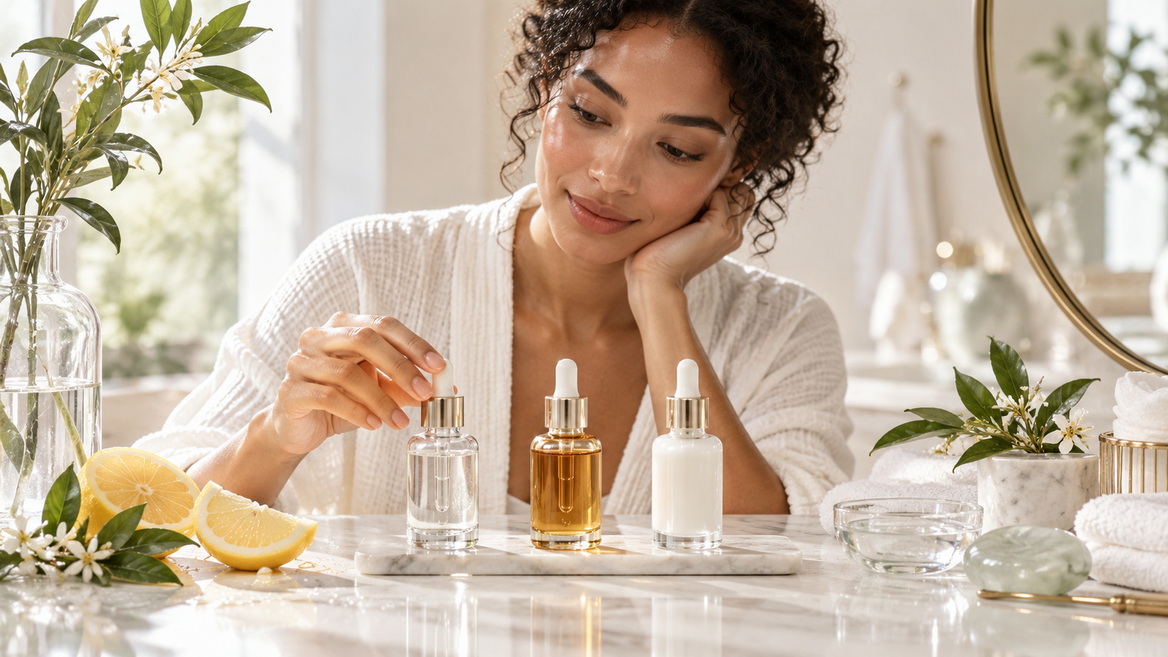
A facial serum is a lightweight skincare product designed to deliver focused ingredients to the skin after cleansing and before moisturizer. Serums may be water-based, oil-based, emulsion-based, gel-based, or bi-phase, depending on the intended skin feel and ingredient system.
Many people use serum as the "treatment step" of their routine. A hydrating serum may help skin feel more comfortable and plump. A brightening serum may support a more even-looking complexion. A clarifying serum may help address excess oil and congested pores. A barrier-focused serum may help reduce the feeling of dryness and visible redness associated with compromised skin comfort.
However, consumers should avoid expecting an overnight transformation. Visible improvements depend on several factors:
- The right ingredient for the concern
- The concentration and delivery system
- How consistently the product is used
- Whether the formula is compatible with the user's skin
- Daily sun protection
- Whether irritation is avoided
For private-label and custom skincare brands, this is why serum development should begin with consumer insight rather than a generic ingredient list. A good formula starts with the question: *What specific problem is this serum designed to solve for a specific customer?*
The easiest way to choose a facial serum is to start with your primary concern, not your skin type alone. Oily skin can still be dehydrated. Dry skin can also experience breakouts. Sensitive skin may need brightening support but require lower-intensity exfoliation.
| Main Concern | Helpful Serum Ingredients | What to Consider |
|---|---|---|
| Dehydration and tightness | Hyaluronic acid, glycerin, panthenol, beta-glucan, polyglutamic acid | Apply on slightly damp skin and follow with moisturizer |
| Dullness and uneven-looking tone | Vitamin C derivatives, niacinamide, licorice root, tranexamic acid, alpha arbutin | Daily sunscreen is essential for maintaining visible results |
| Fine lines and loss of firmness | Retinoids, peptides, antioxidants, hyaluronic acid | Start slowly with retinoids and avoid over-layering actives |
| Oily skin and clogged pores | Salicylic acid, niacinamide, zinc PCA, azelaic acid | Use exfoliating acids carefully to prevent dryness and irritation |
| Acne-prone skin | Salicylic acid, azelaic acid, benzoyl peroxide-compatible routines, niacinamide | Avoid adding several strong acne actives at once |
| Sensitive or reactive skin | Ceramides, ectoin, panthenol, squalane, beta-glucan, centella asiatica | Choose fragrance-conscious, low-irritation formulas and patch test |
| Rough texture | Glycolic acid, lactic acid, mandelic acid, retinoids | Use at night and introduce only one resurfacing product at a time |
A dermatologist consensus survey published in 2025 identified ingredients such as hyaluronic acid, niacinamide, vitamin C, retinoids, salicylic acid, glycolic acid, azelaic acid, benzoyl peroxide, ceramides, urea, and sunscreens as commonly recommended options for different visible skin concerns. The appropriate ingredient depends on the individual concern, skin sensitivity, and routine design.
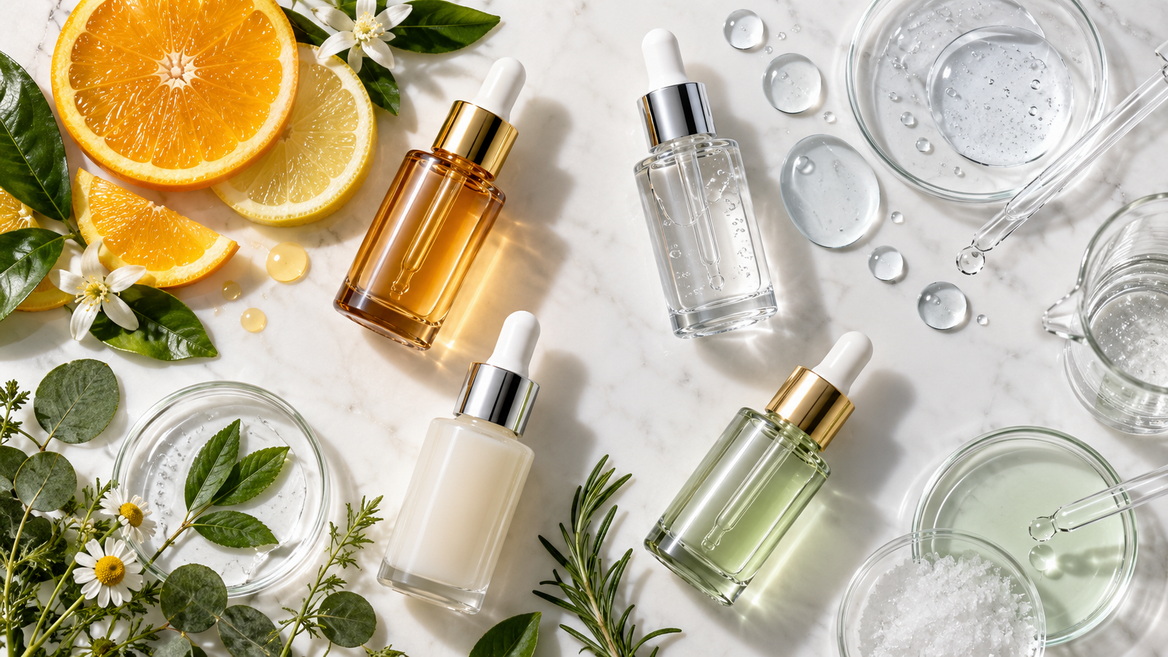
Dehydrated skin often feels tight, looks less radiant, and may show temporary fine lines more noticeably. This is not always the same as dry skin. Dry skin typically lacks oil, while dehydrated skin lacks water and can occur across oily, combination, normal, or dry skin types.
Look for a hydrating facial serum with humectants and barrier-supporting ingredients, including:
- Hyaluronic acid: Helps bind water to the skin's surface.
- Glycerin: A reliable and widely used hydration-supporting ingredient.
- Panthenol: Often used to support skin comfort and moisture retention.
- Beta-glucan: Can contribute to a soothing, moisture-rich skin feel.
- Ceramides: Help support the skin's natural barrier function.
- Squalane: A lightweight emollient that can improve softness without a heavy finish.
1. Cleanse with a gentle cleanser.
2. Apply the serum to slightly damp skin.
3. Press the formula into the face and neck rather than rubbing aggressively.
4. Follow with a moisturizer to help reduce water loss.
5. Use sunscreen during the day.
Common mistake: Using hyaluronic acid serum without a moisturizer, especially in a dry environment. Humectant-focused formulas work best when paired with a barrier-supporting cream or lotion.
Uneven-looking tone may be linked to sun exposure, post-breakout marks, visible discoloration, inflammation, and environmental stress. A brightening serum should be designed for gradual, consistent use rather than harsh overnight exfoliation.
Useful brightening ingredients include:
- Vitamin C: An antioxidant commonly used in products for dullness and uneven tone.
- Niacinamide: Supports the skin barrier and is widely used for visible redness and uneven-looking tone.
- Tranexamic acid: Frequently included in modern spot-correcting and tone-support formulas.
- Alpha arbutin: Often used in formulas targeting the appearance of dark spots.
- Licorice root extract: A botanical ingredient used in brightening and soothing product systems.
- Azelaic acid: Used in routines for blemish-prone skin, uneven tone, and visible post-breakout marks.
Vitamin C can be particularly challenging to formulate because some forms are sensitive to oxygen, light, heat, and water. For this reason, packaging matters. Airless pumps, opaque bottles, controlled filling environments, and stability testing can make a meaningful difference in how a vitamin C serum performs over its shelf life.
Morning: Gentle cleanser → Vitamin C or niacinamide serum → Moisturizer → Broad-spectrum sunscreen
Evening: Gentle cleanser → Barrier-supporting or pigment-focused serum → Moisturizer
If using exfoliating acids or retinoids, alternate them rather than applying several high-intensity products in the same routine.
The phrase "anti-aging serum" can describe many formula types. For meaningful product selection, it is more useful to focus on the visible concern: fine lines, loss of bounce, rough texture, dullness, or uneven-looking tone.
Ingredients frequently used in firming and smoothing serum concepts include:
- Retinol and other retinoids
- Peptides
- Vitamin C
- Niacinamide
- Hyaluronic acid
- Ceramides
- Antioxidant blends
- Bakuchiol, a botanical ingredient often used in gentle-aging-well formulas
Retinoids are among the most widely discussed skincare ingredients for fine lines, acne-prone skin, uneven-looking tone, and texture. They can also cause dryness, flaking, or irritation, especially during the introduction phase. A lower-strength formula, encapsulation technology, and a barrier-supportive base can help make a retinoid serum easier to use.
- Start with two evenings per week.
- Use a pea-sized amount for the entire face.
- Apply moisturizer before or after the serum if skin is easily irritated.
- Increase frequency gradually only if the skin remains comfortable.
- Avoid combining retinoids with strong exfoliating acids in the same evening when starting out.
- Use broad-spectrum sunscreen every morning.
Pregnant or breastfeeding consumers should seek individualized guidance from a qualified healthcare professional before using retinoid-containing products.
Oily and acne-prone skin often benefits from formulas that help manage excess sebum, improve the look of clogged pores, and support a balanced-feeling barrier. Over-drying the skin is rarely the best strategy. Harsh cleansing, frequent scrubbing, and stacking multiple acids can lead to irritation and may make a routine harder to maintain.
Consider these ingredients:
- Salicylic acid: A beta hydroxy acid commonly used for oily and congested skin.
- Niacinamide: Often used in formulas for oil balance, barrier support, and uneven-looking tone.
- Azelaic acid: Can suit many routines targeting blemishes and post-breakout discoloration.
- Zinc PCA: A common choice in oil-control serum concepts.
- Green tea extract: Often included in antioxidant and soothing systems.
- Centella asiatica: Frequently used in calming formulas for blemish-prone skin.
A 2025 expert survey found strong support for retinoids in concerns including acne, oily skin, large pores, fine lines, and dark spots, while salicylic acid and benzoyl peroxide were also commonly recommended for acne-prone or oily skin. Product choice should still be guided by tolerance and the severity of the concern.
For persistent, painful, scarring, or widespread acne, a consumer serum should not replace professional medical evaluation.
Sensitive skin does not mean someone can never use active ingredients. It means the formula and routine must be chosen more carefully. The most important goal is to protect comfort and preserve the skin barrier.
A calming serum may include:
- Ceramides
- Panthenol
- Ectoin
- Squalane
- Beta-glucan
- Centella asiatica
- Allantoin
- Colloidal oatmeal
- Low-level niacinamide
Avoid introducing a new exfoliating acid, retinoid, vitamin C serum, and fragranced moisturizer at the same time. If irritation occurs, it becomes difficult to identify the cause.
When trying a new serum, add one new active product at a time and use it consistently for one to two weeks before changing the rest of the routine. This practical rule helps consumers understand how their skin responds and makes skincare routines more sustainable.
For individuals with a history of allergy, eczema, rosacea, or recurrent irritation, a patch or open-application test may help identify a reaction before full-face use. DermNet advises applying the product to a small area of normal skin repeatedly over several days and watching for redness, dryness, itching, or dermatitis.
The general order is simple:
1. Cleanser
2. Toner or essence, if used
3. Facial serum
4. Moisturizer
5. Sunscreen in the morning
Apply thinner, water-like formulas before richer creams and oils. If using multiple serums, use only those that serve a real purpose. More layers can increase cost, time, pilling, and irritation without automatically improving results.
Morning is often a good time for:
- Hydrating serums
- Antioxidant serums
- Vitamin C serums
- Niacinamide serums
- Barrier-support serums
Finish with sunscreen. Brightening, antioxidant, and age-supportive routines are much harder to maintain if daily UV protection is skipped.
Evening is often a better time for:
- Retinol or retinoid serums
- AHA or BHA exfoliating serums
- Peptide serums
- Repair-oriented hydration serums
- Barrier-support formulas
Do not assume that more active ingredients equal better results. A simple routine with steady use is often more effective than an aggressive routine that causes redness, peeling, or frequent product switching.
For a skincare brand, the consumer's final experience begins long before the serum reaches the shelf. Formula performance depends not only on a fashionable active ingredient but also on formulation science, manufacturing control, testing, product compatibility, and packaging selection.
At GUANGZHOU LAIMEI CREATIVE RESEARCH INTELLIGENT BIOLOGICAL RESEARCH CO., LTD., we have focused on skincare and cosmetics research, development, and manufacturing for 13 years. We provide one-stop OEM/ODM customization support for global brands, covering formulation development, packaging concepts, manufacturing, and scalable delivery.
Our development and manufacturing capabilities include:
- A research team led by an authoritative Brazilian professor, supported by experienced dermatology professionals, senior technical engineers, and more than 1,000 laboratory and factory professionals.
- A 20,000 m² GMP-standard production base with annual production capacity exceeding 50 million units.
- Product development capability across cleansers, facial serums, moisturizers, masks, and related skincare categories.
- Flexible support from small-batch testing to stable large-scale production.
- A three-level quality-control system covering raw-material intake, production-line inspection, and finished-product release.
- U.S. FDA registration, ISO 22716 cosmetic quality management certification, GMPC certification, and MADS certification.
- Global brand service experience across more than 100 countries and regions.
For brands entering or expanding in the serum category, the best product strategy is usually not "add every popular active." Instead, it is to create a focused product brief:
| Product Development Question | Why It Matters |
|---|---|
| Who is the target consumer? | Skin needs, purchasing behavior, climate, and texture preferences vary |
| What is the single main claim direction? | Clear positioning makes product communication easier |
| Which active system supports that goal? | Ingredient compatibility and stability affect product quality |
| What texture is expected? | A serum must feel appropriate for the target market |
| What packaging protects the formula? | Air, light, and repeated exposure can affect sensitive ingredients |
| What testing is needed? | Safety, stability, compatibility, and performance evidence strengthen product confidence |
| What is the target order quantity? | Formula, packaging, lead time, and cost should be planned together |
In the United States, cosmetic companies are responsible for ensuring products are safe and properly labeled. Current federal requirements also emphasize safety substantiation, facility registration, product listing, and serious adverse event reporting responsibilities. Responsible product development requires documented quality systems and scientifically sound safety support.

The right facial serum should solve a clear problem without making the routine unnecessarily complicated. Start with one primary goal: hydration, brightening, clarifying, smoothing, or calming. Choose ingredients that match that goal, introduce active formulas gradually, and protect results with daily sunscreen.
For skincare brands, the opportunity is equally clear. A well-positioned serum can become a hero product when it combines a focused consumer need, a stable and sensorial formula, thoughtful packaging, reliable quality control, and credible product communication.
Ready to develop a differentiated facial serum for your brand? Partner with GUANGZHOU LAIMEI CREATIVE RESEARCH INTELLIGENT BIOLOGICAL RESEARCH CO., LTD. for customized OEM/ODM support—from formula concept and packaging development to scalable manufacturing and global-ready quality management.
A hydrating serum with hyaluronic acid, glycerin, panthenol, ceramides, beta-glucan, or squalane can be a suitable choice. Apply it on slightly damp skin and follow with a moisturizer to help seal in hydration.
In many routines, yes. Vitamin C and niacinamide are commonly combined or layered in modern skincare formulas. However, sensitive skin may prefer introducing one product at a time to assess tolerance.
It depends on the formula. Hydrating and barrier-support serums are often suitable for daily use. Strong exfoliating acids and retinoid serums may need to be introduced more slowly, such as two or three evenings per week.
Look for ingredients such as vitamin C, niacinamide, tranexamic acid, alpha arbutin, licorice root extract, or azelaic acid. Consistent sunscreen use is essential because UV exposure can worsen the appearance of uneven tone.
Yes. Oily skin can be dehydrated and may benefit from lightweight, non-greasy hydration. Water-based serums containing glycerin, hyaluronic acid, panthenol, or niacinamide are common options.
It is possible, but beginners should avoid using both in the same evening because the combination may increase dryness and irritation. Alternate nights, introduce one product first, and use moisturizer and sunscreen consistently.
Hydration-related improvements may be noticed quickly, while concerns such as uneven-looking tone, texture, or fine lines usually require several weeks of consistent use. Results vary by formula, skin condition, and routine habits.
Evaluate the manufacturer's formulation capability, ingredient sourcing process, quality-control system, certifications, production capacity, stability-testing approach, packaging compatibility expertise, communication process, and ability to support small-batch and scale-up production.
1. [IMAGE Skincare — A Guide to Choosing the Right Facial Serum for Your Skin Needs]
2. [U.S. Food and Drug Administration — Modernization of Cosmetics Regulation Act of 2022]
3. [U.S. Food and Drug Administration — Cosmetics and U.S. Law]
5. [PubMed — Skincare Ingredients Recommended by Cosmetic Dermatologists for Specific Skin Concerns]
6. [DermNet — Open Application Test]
7. [American Academy of Dermatology — Dermatologist Guide to Skincare]


