
Views: 244 Author: Vera Publish Time: 2026-10-07 Origin: Site


Content Menu
● What Causes GLP-1 Facial Changes?
>> Facial Fat Loss and Dehydration Are Different Problems
>> Do GLP-1 Medicines Directly Damage Collagen?
● Can Skincare Prevent Facial Volume Loss During Weight Loss?
>> What a Firming Face Cream May Improve
● What a 2026 VOL.U.LIFT Study Actually Found
>> Why the Results Are Not a Prevention Guarantee
● Choosing Ingredients for Skin After Weight Loss
>> Hyaluronic Acid and Moisturizing Ingredients
>> Retinol and Bakuchiol for Visible Aging Concerns
>> Peptides, Amino Acids, and "Volumizing" Claims
● A Practical Skincare Routine During GLP-1 Weight Loss
>> Morning: Cleanse, Moisturize, and Protect
>> Evening: Support Comfort Before Adding Actives
>> Track Changes Without Misleading Yourself
● When Professional Advice Matters More Than Another Cream
● Developing Private-Label Skincare for Weight-Loss-Related Concerns
>> Start With a Specific Product Brief
>> Match Testing to the Promise
● How LAIMEI Supports Customized Skincare Development
>> Build a Formula Around a Defensible Benefit
>> 1. Can a Cream Prevent "Ozempic Face"?
>> 2. Is Hyaluronic Acid Skincare the Same as Filler?
>> 3. How Long Should I Evaluate a Firming Moisturizer?
>> 4. Should I Stop GLP-1 Treatment Because My Face Looks Different?
>> 5. Can a Private-Label Cream Use Another Brand's Clinical Results?
>> 6. What Makes Consumer Reviews Useful?
GLP-1 facial changes can make a successful weight-loss journey feel unexpectedly complicated. You may feel healthier while noticing hollow cheeks, deeper folds, or skin that looks less firm. Understanding facial volume loss after weight loss helps you choose skincare with realistic expectations—and helps beauty brands develop products that address genuine needs.
The central distinction is hydration versus structural volume. A moisturizer can improve dryness and make fine lines look softer. That does not automatically mean it can replace lost facial fat.
This guide explains what changes, what topical products may achieve, and how thoughtful formulation can support skin during weight loss.
"Ozempic face" is an informal expression for facial changes associated with substantial weight loss. It is not a medical diagnosis, and similar changes can occur after bariatric surgery or weight loss through other methods.
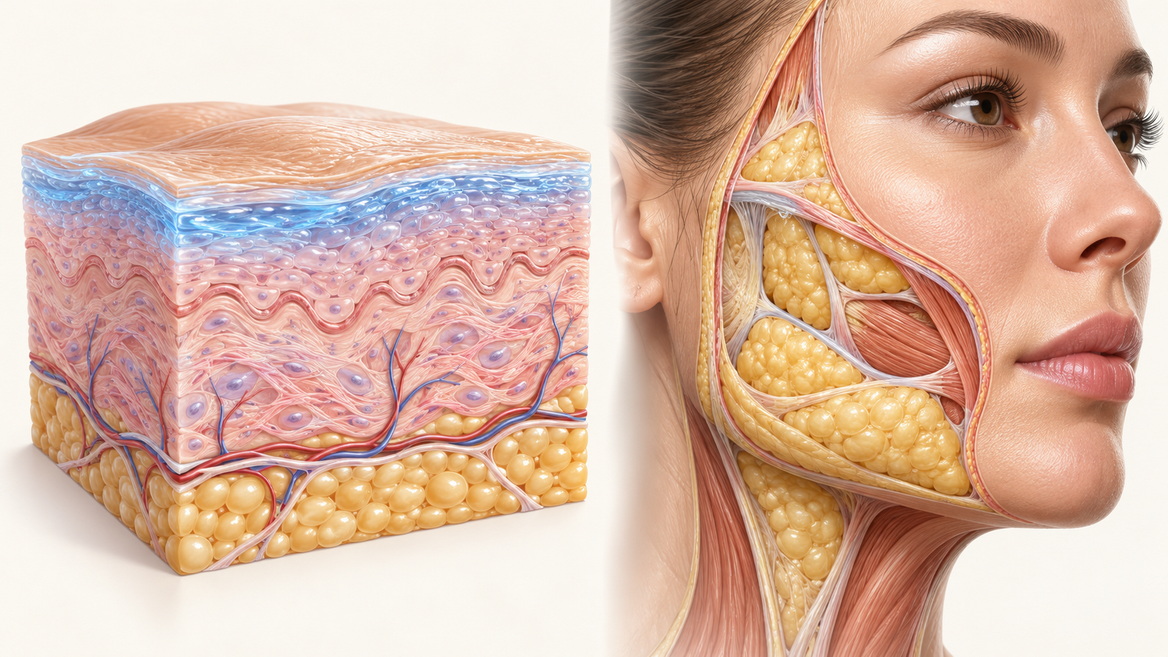
As facial fat decreases, the support beneath the skin changes. Cheeks may look flatter, temples more hollow, and folds around the mouth more noticeable.
Skin elasticity, age, previous sun exposure, and the amount of weight lost can influence the appearance of these changes.
A face can look less full for several reasons. Identifying the main concern helps prevent disappointing product choices.
| Visible concern | Possible explanation | Realistic skincare objective |
|---|---|---|
| Tightness and fine surface lines | Dryness or reduced surface hydration | Improve moisture and comfort |
| Rough, crepey-looking texture | Changes in hydration and skin quality | Support smoother-looking skin |
| Hollow cheeks or temples | Reduced underlying facial volume | Improve surface appearance, not promise fat replacement |
| Deeper folds and loose-looking skin | Changes in support and elasticity | Support skin quality; consider professional assessment |
These concerns can overlap. Someone with facial volume loss may also have dry skin, making a supportive moisturizer useful even when it cannot correct the underlying hollowing.
It would be premature to claim that every GLP-1 medicine directly suppresses collagen, elastin, and hyaluronic acid production in every patient.
Researchers are investigating possible biological mechanisms. However, visible facial changes also involve weight loss, altered fat compartments, and existing skin characteristics.
For consumers and manufacturers, the practical message is straightforward: address observable skin concerns without presenting an unsettled mechanism as a proven universal effect.
No topical skincare routine has established that it reliably prevents the loss of facial fat during GLP-1-associated weight loss.
That does not make skincare irrelevant. Moisturization, sun protection, and appropriately selected treatments can support skin comfort, texture, and the appearance of fine lines.
The better question is not "Which cream prevents all facial changes?" It is "Which concerns can this formula reasonably improve?"
Depending on its formulation and supporting evidence, a product may help with:
- Surface hydration and dryness.
- The appearance of fine wrinkles.
- Roughness and uneven texture.
- Skin barrier function.
- Some measures of firmness or elasticity.
Claims about rebuilding fat, replacing injections, or permanently restoring youthful facial contours require a substantially different level of evidence.
A product name or fashionable ingredient list is not proof of those outcomes.
A 2026 clinical study evaluated VOL.U.LIFT, an IMAGE Skincare cream, in adults who had experienced rapid weight loss through medication, surgery, or other interventions.
The study enrolled 33 participants, and 29 completed all procedures. Participants applied the cream twice daily for 12 weeks and also received sunscreen.
Reported week-12 changes included:
| Study measurement | Reported change from baseline |
|---|---|
| Dermatologist-graded wrinkle severity | 20.7% reduction |
| Skin hydration | 21.8% increase |
| Transepidermal water loss | 12.7% reduction |
| Instrument-measured firmness | 22.5% increase |
| Combined skin and subcutaneous thickness measured by ultrasound | 20.1% increase |
Transepidermal water loss describes water escaping through the skin. A reduction can indicate improved barrier performance.
These findings are encouraging, but they require careful interpretation.
This was a small, open-label study without a randomized comparison group. IMAGE Skincare funded it, and the regimen included sunscreen.
The ultrasound measurement combined skin and subcutaneous thickness. Its increase should not be rewritten as "20.1% more facial fat."
Importantly, the researchers studied people after substantial weight loss had already occurred. They explicitly identified prevention before weight loss as an unanswered question.
The results also belong to the tested finished product. They cannot be transferred to another cream simply because it contains similar ingredients.
From a formulation perspective, this distinction matters: evidence supports a particular formula, regimen, population, and outcome—not an entire marketing category.
A practical formula should begin with the skin concern, not the trend.
For dry or crepey-looking skin, hydration and tolerability may matter more than adding numerous intensive actives.
Topical hyaluronic acid is used to support hydration. Better-hydrated skin can look temporarily plumper, with less noticeable surface lines.
However, topical hyaluronic acid is not equivalent to an injectable hyaluronic acid filler.
For product developers, evaluate the complete moisturizing system, including how the formula feels, layers, and performs over time. An ingredient highlighted on the front label tells only part of the story.
Retinoids can improve fine lines and other signs of photoaging, but irritation can limit their usefulness.
Consumers with marked dryness, redness, or sensitive skin should seek individualized guidance rather than immediately choosing a stronger product. Retinoids should not be used during pregnancy.
Bakuchiol has been investigated for facial photoaging and may be considered in appropriate formulations. It should not be described as universally irritation-free or proven to replace lost facial fat.
Peptides and amino acids appear in many firming products. Their presence alone does not establish a finished formula's clinical performance.
For claims involving deeper volume, ask:
- Was the finished product tested on people?
- Was there a comparison group?
- What did the instruments actually measure?
- Were participants experiencing ongoing weight loss?
- Did the study assess durability after use stopped?
These questions separate plausible formulation concepts from unsupported promises.
A manageable routine is more useful than an elaborate collection that causes irritation or is difficult to maintain.
1. Cleanse gently, avoiding an uncomfortable tight feeling.
2. Apply a moisturizer suited to your skin's dryness and sensitivity.
3. Use broad-spectrum, water-resistant sunscreen with SPF 30 or higher.
4. Include exposed areas such as the neck and ears.
5. Reapply sunscreen approximately every two hours outdoors and after swimming or sweating, following the label.
Sunscreen helps prevent UV-related premature aging. It does not prevent weight-loss-related facial fat reduction.
Remove makeup and sunscreen with a gentle cleansing routine, then moisturize.
If a dermatologist recommends retinol or another treatment, introduce it gradually according to their guidance. Avoid starting several new active products simultaneously.
Persistent burning, redness, or peeling is a reason to reassess the routine—not evidence that a product is working better.
Take photographs under consistent conditions:
- Use the same lighting and camera distance.
- Keep your expression and head position similar.
- Avoid filters and beauty modes.
- Record products used and any irritation.
- Note whether your body weight is still changing.
Compare comfort, texture, and dryness separately from cheek hollowing. This prevents improvements in hydration from being mistaken for restoration of deep facial volume.
Consult your prescribing clinician if medication-related symptoms make it difficult to eat adequately or maintain hydration.
Do not change or stop prescribed treatment solely because of cosmetic concerns without discussing it with the clinician managing your care.
For pronounced hollowing, persistent skin laxity, or distress about facial changes, a qualified dermatologist can assess the underlying concern.
Injectable treatments and other procedures may be options for selected patients, but they involve risks, costs, and individualized decisions. Skincare and procedures serve different purposes; neither should be presented as universally necessary.
For beauty brands, this category creates an opportunity to offer useful support without stigmatizing people who use weight-management medicines.
The strongest positioning focuses on measurable cosmetic benefits: improved hydration, smoother-looking texture, reduced appearance of fine lines, or firmer-looking skin when substantiated.
An effective development brief should define:
- Target users and their main skin concerns.
- Texture preferences and climate of use.
- Intended ingredients and exclusions.
- Packaging format and application instructions.
- Target markets and permitted claims.
- Testing requirements and commercial budget.
A lightweight serum, nourishing cream, and occasional-use mask answer different needs. Choose the format before trying to include every fashionable ingredient.
A proposed development plan can include:
1. Stability and packaging compatibility assessment.
2. Microbiological quality and preservative efficacy testing where appropriate.
3. Safety and tolerability assessment.
4. Instrumental hydration or barrier measurements.
5. Standardized photography and clinical grading for visible claims.
6. Controlled evaluation when stronger comparative claims are planned.
Consumer feedback adds useful information about texture, comfort, and routine compatibility. It should complement—not replace—objective evidence.

GUANGZHOU LAIMEI CREATIVE RESEARCH INTELLIGENT BIOLOGICAL RESEARCH CO., LTD. describes 13 years of experience in skincare and cosmetics research and manufacturing.
According to its company profile, LAIMEI provides one-stop OEM/ODM services covering formulation development, customized packaging design, and production.
Its stated capabilities include:
- A 20,000-square-meter GMP-standard production base.
- Annual production capacity exceeding 50 million units.
- Cleansers, serums, moisturizers, masks, and other categories.
- Small-batch trial production through large-scale delivery.
- Products supplied to more than 100 countries and regions.
The company reports a research team led by a Brazilian professor, with dermatologists and senior technical engineers. It also describes a combined network exceeding 1,000 personnel across cooperating factory laboratories—not necessarily 1,000 direct employees.
Its stated quality controls cover incoming materials, production inspections, and finished-product release.
For procurement, request current ISO 22716 and GMPC documentation, applicable registration records, and the scope of each credential. FDA facility registration does not mean that a cosmetic product is FDA-approved or clinically proven.
Contact LAIMEI with your target market, preferred format, projected order quantity, and intended cosmetic claims.
Request a customized formulation proposal, sample-development plan, packaging options, and a testing roadmap before finalizing launch messaging.
A credible product begins with a useful promise—and evidence appropriate to that promise.
No cream has established reliable prevention of weight-loss-related facial fat loss. Skincare can support hydration and visible skin quality, but prevention claims should not be confused with improvement after changes occur.
No. Topical hyaluronic acid supports surface hydration. Injectable fillers are medical aesthetic treatments placed beneath the skin by qualified professionals. Their effects, risks, and intended uses differ.
Follow the product's directions and the timeframe supported by its testing. The VOL.U.LIFT study lasted 12 weeks. That duration is not a universal guarantee for other formulas, and irritation should not be ignored while waiting for results.
Do not stop or adjust prescribed medication without consulting your clinician. Discuss cosmetic concerns alongside your treatment goals, health benefits, symptoms, and nutritional needs.
No. Another brand's trial can inform development, but it does not substantiate your finished product. Differences in concentrations, delivery systems, manufacturing, and use instructions can affect performance.
Authentic reviews can explain texture, fragrance preferences, comfort, and ease of use. They should identify genuine experiences and avoid unsupported medical claims. No consumer testimonials were supplied for this article, so none have been invented.
1. IMAGE Skincare. Jennifer Kogon, "[Considering GLP-1? How to Prevent Facial Changes with VOL.U.LIFT]." Original commercial article used as the starting point for restructuring; product claims were distinguished from independently established outcomes. [imageskincare]
2. Nguyen, N., Aguilar, A., Afzal, N., et al. "[Topical Volumizing Cream Improves Facial Volume and Skin Health in Adults With Rapid Weight Loss From Pharmacologic (GLP-1/GIP Agonists), Surgical, or Behavioral Interventions]." Journal of Cosmetic Dermatology, 25(1), e70681, January 2026. DOI: 10.1111/jocd.70681. Source for clinical figures, study design, funding, and prevention limitations. [pmc.ncbi.nlm.nih]
3. "[Nonsurgical Aesthetic Treatment of the Face and Neck in GLP-1–Based Therapy]." Clinical guidance discussing structural facial changes, multimodal assessment, treatment timing, and individualized management. [pmc.ncbi.nlm.nih]
4. American Academy of Dermatology. "[Sunscreen FAQs]." Source for broad-spectrum protection, SPF 30 or higher, water resistance, and outdoor reapplication guidance. [aad]
5. American Academy of Dermatology. "[Retinoid or Retinol?]." Source for retinoid benefits, irritation considerations, gradual introduction, and pregnancy precautions. [aad]
6. U.S. Food and Drug Administration. "[Registration & Listing of Cosmetic Product Facilities and Products]." Source for the distinction between cosmetic facility registration and FDA approval. [fda]
7. U.S. Food and Drug Administration. "[Modernization of Cosmetics Regulation Act of 2022]." Source for cosmetic safety-substantiation obligations. [fda]


