
Views: 226 Author: Vera Publish Time: 2026-11-08 Origin: Site


Content Menu
● Gentle Face Cleanser vs Foaming Cleanser: The Essential Comparison
● What Makes a Gentle Face Cleanser Gentle?
>> The Complete Surfactant System Matters
>> Low-Foam Formats Offer a Different Experience
● What Makes a Foaming Cleanser Different?
>> Foam Creates a Sensory Signal
>> Gentle Foaming Cleansers Are a Valid Category
● Which Cleanser Format Fits Each Skin Profile?
● Formulation Differences That Deserve Closer Attention
>> pH: Important, but Not a Standalone Guarantee
>> Humectants and Conditioning Ingredients
>> Fragrance and Botanical Complexity
● A Practical Testing Framework for Premium Cleanser Development
>> 1. Does It Remove the Intended Soil?
>> 3. Does the Experience Match the Positioning?
● Packaging and Manufacturing: The Hidden Comparison
>> Match the Formula to the Dispenser
>> Evaluate the Finished Formula in Its Intended Pack
>> Scenario One: A Comfort-Led Facial Care Collection
>> Scenario Two: A Refreshing Daily-Care Collection
● Developing a Custom Cleanser With LAIMEI
>> Is a gentle face cleanser better than a foaming cleanser?
>> Can a foaming cleanser suit sensitive skin?
>> Does a low-foam cleanser remove sunscreen?
>> Does sulfate-free mean a cleanser is mild?
>> Should a premium brand launch both formats?
>> What should brands request before approving production?
Choosing between a gentle face cleanser vs foaming cleanser starts with understanding one essential distinction: "gentle" describes how a formula performs on skin, while "foaming" describes its lather. A well-formulated cleanser can be both. For premium facial care brands, the real decision is which combination of cleansing performance, skin compatibility, sensory experience, and manufacturing consistency best serves the customer.
Our formulation perspective is straightforward: gentleness should be a development objective, not simply a product name. A luxurious texture attracts attention, but comfortable, reliable cleansing gives customers a reason to return.
This guide compares low-foam gentle cleansers and foaming cleansers, then translates those differences into practical development decisions for private-label and custom skincare brands.

For this comparison, "gentle face cleanser" refers primarily to cream, milk, and low-foam gel formats. However, low foam does not automatically establish mildness, and visible lather does not automatically indicate harshness.
| Comparison factor | Low-foam gentle cleanser | Foaming cleanser |
|---|---|---|
| Typical format | Milk, cream, or low-lather gel | Lathering gel, cream-to-foam, or pump foam |
| Sensory impression | Cushioned, soft, sometimes conditioning | Airy, refreshing, often quick-rinsing |
| Common positioning | Dryness-conscious or sensitive-skin routines | Normal, combination, or oily-skin routines |
| Main development challenge | Balancing comfort with effective removal | Balancing lather with skin comfort |
| Packaging options | Tubes, pumps, compatible airless systems | Tubes, conventional pumps, foamer pumps |
| Evidence needed | Cleansing, tolerance, hydration-related claims | Cleansing, tolerance, foam and rinse performance |
| Main misconception | Little foam means weak cleansing | More foam means better cleansing |
The best premium facial cleanser is not necessarily the richest or the foamiest. It is the formula that meets its intended performance brief without creating avoidable discomfort.
Surfactants help loosen oil and dirt so they can rinse away with water. Their composition also influences lather, skin feel, and rinsing.
Evaluating mildness requires more than identifying one fashionable ingredient. Formulators must consider the surfactant blend, concentration, pH, supporting ingredients, and intended use.
A product marketed as an amino acid cleanser, for example, still needs finished-formula testing. An attractive ingredient story cannot establish how the complete product behaves on skin.
Cream and milk cleansers can provide a cushioned application and a conditioning after-feel. These characteristics may suit a premium range built around comfort, minimalist routines, or dryness-conscious skincare.
However, brands should distinguish a pleasant residue from incomplete rinsing. Some customers appreciate a soft finish; others interpret the same sensation as a film.
That difference belongs in the development brief and consumer evaluation, not merely in the final marketing description.
Foaming cleansers offer visible feedback during washing. Their lather can make application feel light, refreshing, and easy to distribute.
This does not mean foam volume measures cleansing effectiveness. A product's ability to remove a particular sunscreen, makeup product, or oily residue must be evaluated directly.
Likewise, a "squeaky-clean" finish should not be treated as proof of superior performance. Tightness, stinging, and persistent dryness are reasons to reassess the formula or washing routine.
The idea that oily skin requires aggressive cleansing is misleading. Dermatology guidance specifically includes gentle foaming face washes among suitable options for oily skin.
For premium brands, this creates an important positioning opportunity: a foaming cleanser can deliver a fresh rinse while still prioritizing comfort.
The development challenge is to support both promises rather than assuming that one necessarily compromises the other.
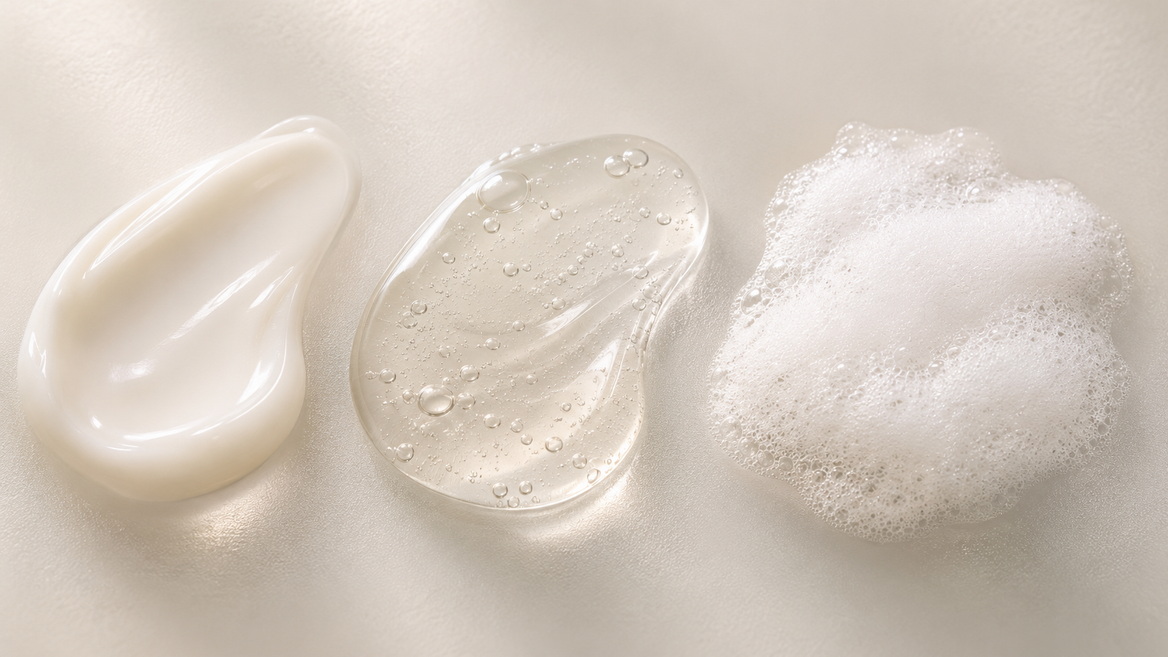
A fragrance-free, low-foam cleanser is a reasonable development starting point for a dryness-conscious range.
Priorities should include:
- Comfortable cleansing without scrubbing.
- Easy rinsing.
- Minimal post-wash tightness.
- Tolerance assessment in the intended user group.
Sensitive skin is not one uniform condition. A formula intended for generally reactive skin should not automatically be presented as suitable for every dermatological disorder.
A mild foaming cleanser can suit customers who prefer a fresh finish and effective removal of everyday oil and debris.
Avoid framing oil removal as an effort to strip skin completely. The goal is controlled cleansing, not maximum degreasing.
Combination-skin evaluations should also capture different facial zones. A cleanser may feel comfortable on the forehead but leave the cheeks unpleasantly dry.
Gentle cleansing remains important in acne-prone routines. More foam and stronger washing are not substitutes for appropriate acne treatment.
If a brand introduces acne-treatment claims or regulated active ingredients, it needs a separate assessment of formulation, evidence, labeling, and destination-market requirements.
A cosmetic cleanser should not imply that its texture alone treats acne.
Traditional soaps are alkaline, whereas synthetic detergent systems can be formulated closer to the skin's mildly acidic conditions.
That distinction matters, but pH alone cannot establish mildness. Two products with similar pH values may differ in surfactant composition, fragrance, rinsability, and user tolerance.
A useful manufacturer discussion therefore asks both:
1. What is the proposed finished-product pH specification?
2. What evidence supports the complete formula's intended use?
Humectants such as glycerin can contribute to a hydration-focused formulation strategy. Conditioning ingredients may also improve after-feel.
However, a rinse-off cleanser should not inherit the performance claims of a leave-on moisturizer simply because they share an ingredient.
Claims about hydration duration or barrier improvement require evidence from the finished product under relevant conditions.
Fragrance can support a distinctive brand experience, but it can also complicate a sensitive-skin proposition.
Botanical ingredients are not automatically non-irritating. Likewise, "natural," "sulfate-free," and "soap-free" describe particular characteristics, not universal safety guarantees.
For a comfort-led premium cleanser, every added ingredient should have a clear function that justifies its inclusion.
A useful comparison goes beyond two samples washed once on the back of a hand. We recommend organizing prototype evaluation around three questions.
Specify what the cleanser must remove: everyday sebum, a defined sunscreen, light makeup, or another representative residue.
Keep application amount, washing time, water conditions, and rinsing procedure consistent.
Do not assume that success against one product proves universal makeup or sunscreen removal.
Record immediate and repeated-use feedback, including:
- Tightness.
- Stinging or burning.
- Dryness.
- Rinsing difficulty.
- Overall comfort.
Where relevant to the proposed claims, qualified testing can assess skin hydration and transepidermal water loss, a measure of water passing through the skin.
These measurements need an appropriate study design. An isolated reading should not become a sweeping "barrier repair" claim.
Ask participants about foam quality, spreadability, fragrance, rinsing, and after-feel.
Then compare the results with the intended brand promise.
A technically acceptable product may still be commercially unsuitable if customers expect a fresh gel but receive a rich, lingering finish.

A pump-foaming cleanser and a gel that lathers during washing are different product systems.
For a foamer format, development should evaluate whether the formula dispenses consistently through the selected mechanism. Cream and milk cleansers need equally careful checks for pump performance, leakage, and residual product.
Packaging should be selected alongside formulation development, not after the texture is finalized.
A practical development plan should cover:
- Stability under defined storage conditions.
- Formula–packaging compatibility.
- Microbiological quality.
- Preservative efficacy where applicable.
- Dispensing performance over repeated use.
- Relevant transport and leakage checks.
These are proposed evaluation priorities, not a claim that one identical protocol applies to every product.
For procurement teams, the important question is what the manufacturer will test, under which conditions, and against which acceptance criteria.
The following examples are hypothetical development briefs, not reported customer results.
A brand serves customers who dislike tightness after washing and prefer a restrained, fragrance-free routine.
A low-foam cream or gel is a logical first prototype. Its brief should prioritize comfortable rinsing, acceptable cleansing, and repeated-use tolerance.
A gentle foaming alternative can still be evaluated. The brand should select the better-performing prototype rather than exclude foam on principle.
A brand targets combination-to-oily skin and wants a light texture with a clean rinse.
A mild foaming gel may better match that sensory expectation. Development should balance foam quality with cheek comfort, rinsability, and controlled dispensing.
In both scenarios, the winning format comes from evidence against a clear brief—not from a universal rule about lather.
GUANGZHOU LAIMEI CREATIVE RESEARCH INTELLIGENT BIOLOGICAL RESEARCH CO., LTD. provides OEM/ODM skincare development and manufacturing services.
According to the company information supplied for this article, LAIMEI has 13 years of experience, a 20,000-square-meter production base, annual capacity exceeding 50 million units, and products supplied to more than 100 countries and regions.
Its stated services include formulation development, packaging design, and manufacturing, with support ranging from small-batch trials to larger production runs. These company-reported capabilities should be reviewed alongside current documentation and project-specific commitments during supplier qualification.
For a custom gentle cleanser or private-label foaming cleanser, prepare a brief covering:
1. Target users and destination markets.
2. Desired texture, foam, fragrance, and after-feel.
3. Cleansing targets and proposed claims.
4. Packaging format and fill size.
5. Target cost, initial quantity, and launch schedule.
6. Testing and documentation requirements.
The most valuable manufacturer conversation connects the product promise with a reproducible formula and a defined verification plan.
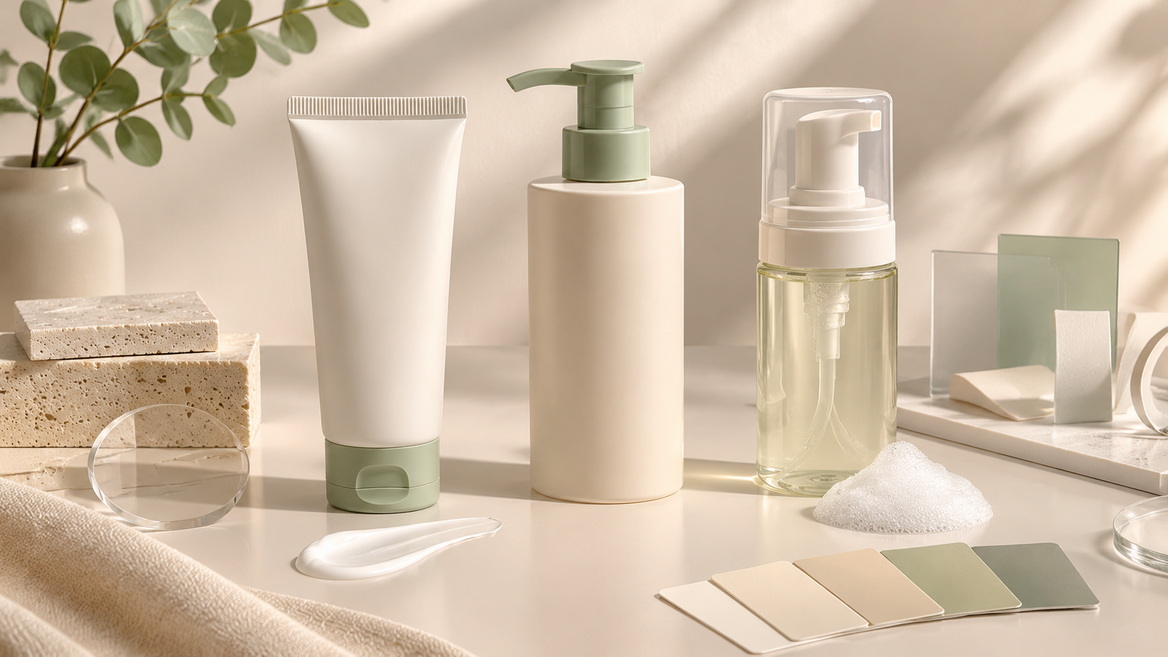
Neither is universally better. A foaming cleanser can also be gentle. Compare the finished formulas against the intended skin profile, cleansing task, and tolerance requirements.
Potentially, yes. Foam alone does not establish irritation risk. The complete formulation and evidence from appropriate testing matter more than the presence of bubbles.
It may, but performance depends on both products and the washing method. Test the cleanser against representative sunscreens before making broad removal claims.
No. Sulfate-free identifies an ingredient exclusion. It does not establish the tolerance or cleansing performance of the finished formula.
Only when they address distinct customer needs. A comfort-led low-foam cleanser and a refreshing gentle foaming cleanser can serve different preferences, but each needs a clear role.
Request the agreed formula specification, relevant stability and compatibility results, microbiological documentation, claim-support evidence, packaging specifications, and production acceptance criteria.
The clinical resources below support the discussion of cleansing practices, surfactants, skin compatibility, and ingredient-related reactions. The development frameworks and hypothetical scenarios are editorial recommendations, not published comparative trial results.
1. American Academy of Dermatology Association. "[Face Washing 101]." Guidance on gentle cleansing, water temperature, application, and washing frequency. [aad]
2. American Academy of Dermatology Association. "[How to Control Oily Skin]." Guidance supporting mild, gentle foaming face washes for oily skin. [aad]
3. American Academy of Dermatology Association. "[Acne: Tips for Managing]." Recommendations on non-abrasive cleansing and avoiding irritating skincare practices. [aad]
4. DermNet. "[Soaps and Cleansers]." Explanation of surfactants, soap, synthetic detergents, pH, and cleansing-related irritation. [dermnetnz]
5. DermNet. "[Contact Reactions to Cosmetics]." Background on cosmetic-related irritation and allergy. [dermnetnz]
6. DermNet. "[Emollients and Moisturisers]." Background on humectants, conditioning ingredients, and dry-skin cleansing alternatives. [dermnetnz]


