
Views: 248 Author: Vera Publish Time: 2026-10-27 Origin: Site


Content Menu
● What Do Antioxidants Do for Your Skin?
● 7 Antioxidants for Skin Care Worth Understanding
>> 1. Vitamin C: For Brightness and Uneven-Looking Tone
>> 2. Vitamin E: A Complementary Antioxidant for Moisturizing Formulas
>> 3. Ferulic Acid: A Supporting Ingredient in Antioxidant Blends
>> 4. Green Tea Polyphenols: For Supportive Daily Care
>> 5. Resveratrol: A Promising Ingredient With Evidence Limits
>> 6. Coenzyme Q10: For Age-Focused Skincare Formulas
>> 7. Lycopene: A Carotenoid Requiring Careful Interpretation
● How to Choose an Antioxidant Serum for Your Skin
● How to Add Antioxidants to Your Skincare Routine
>> Introduce Products Without Overcomplicating Your Routine
● Why Packaging and Stability Matter as Much as Ingredients
● From Ingredient Claims to Finished-Product Evidence
● Turning Customer Feedback Into Better Antioxidant Products
● Antioxidant Skincare OEM/ODM Development With LAIMEI
>> Start With a Clear Product Development Brief
>> What Is the Best Antioxidant for Skin Care?
>> Can I Use Vitamin C and Vitamin E Together?
>> Do Antioxidants Replace Sunscreen?
>> How Long Do Antioxidant Products Take to Work?
>> Are Natural Antioxidants Better Than Synthetic Ingredients?
>> What Should Brands Ask an Antioxidant Skincare Manufacturer?
Antioxidants for skin care can help address dullness, uneven tone, and visible signs of environmental stress. However, choosing an effective antioxidant serum involves more than finding a fashionable ingredient. The ingredient's form, formulation stability, packaging, and compatibility with your skin all influence its usefulness.
For consumers, the goal is a comfortable routine that supports healthier-looking skin. For beauty brands, the challenge is translating ingredient science into a stable product with realistic, substantiated claims.
This guide examines seven antioxidant ingredients, explains their limitations, and shows how to build a practical routine—or develop an antioxidant skincare collection.

Free radicals are reactive molecules with unpaired electrons. They arise during normal biological processes and can increase through exposure to ultraviolet radiation and other environmental stressors.
When reactive species overwhelm the skin's protective systems, oxidative stress can damage cellular components and contribute to visible aging.
Antioxidants help manage these reactions. Depending on the ingredient and formulation, topical products may support more even-looking tone, reduce the appearance of fine lines, or help defend against environmental stress.
However, antioxidants are not interchangeable. Evidence for a purified ingredient does not automatically establish the effectiveness of every product containing it. Hydration, soothing effects, and barrier support also depend on the complete formula, not simply its antioxidant label.
The following ingredients offer different formulation opportunities. This is not a strongest-to-weakest ranking: study quality, delivery systems, and individual tolerance vary considerably.
Vitamin C supports collagen synthesis and provides antioxidant activity. Topical research also supports its potential to improve signs of photoaging and uneven pigmentation.
L-ascorbic acid is the most extensively studied form, but it presents formulation challenges. Exposure to oxygen, light, and heat can reduce stability, while acidic formulas may irritate sensitive skin.
Vitamin C derivatives offer alternative formulation options. However, their stability, skin delivery, and conversion differ; they should not automatically inherit every claim associated with L-ascorbic acid.
For consumers, a comfortable product used consistently is more useful than a high percentage that causes persistent irritation.
For brands, ingredient selection should begin with the target user, packaging, and intended claims—not percentage alone.
Vitamin E is a fat-soluble antioxidant associated with protection against lipid oxidation. Ingredient lists may identify forms such as tocopherol or tocopheryl acetate.
It often appears in creams and oil-containing products because it fits well into these formulation systems. The finished product's moisturizing performance still depends on its overall composition.
Vitamin E also complements vitamin C. These ingredients can work together within antioxidant systems, although benefits demonstrated for one tested combination cannot be assumed for every blend.
Dry-skin products may pair vitamin E with suitable emollients. Blemish-prone users should assess the finished texture rather than judging the ingredient in isolation.
Ferulic acid is a plant-derived phenolic compound frequently associated with vitamin C and vitamin E formulas.
Its value extends beyond its own antioxidant activity. Research on particular combinations indicates that it can improve stability and strengthen protection against experimentally induced ultraviolet damage.
This does not make a ferulic acid serum a sunscreen.
From a development perspective, the useful question is whether the complete system remains stable and performs as intended. Adding three recognizable ingredients to a label is not equivalent to reproducing a studied formula.
Green tea contains polyphenols, including epigallocatechin gallate, commonly called EGCG. Research explores their antioxidant, soothing, and photoaging-related effects.
Human evidence is promising but varied. Studies use different extracts, concentrations, vehicles, and outcome measures, making broad comparisons difficult.
Green tea extract is also not a single standardized ingredient. Two products listing it may contain substantially different polyphenol profiles.
For brands, extract identity and standardization matter. For consumers, a lightweight green tea product may suit a simple routine, but botanical origin does not guarantee that it will be nonirritating.
Resveratrol is a polyphenol associated with grapes and several other plants. Laboratory research suggests antioxidant activity and potential relevance to visible skin aging.
However, some human studies examine resveratrol alongside other ingredients. Improvements from those formulas cannot be attributed exclusively to resveratrol.
Solubility and stability also complicate formulation.
A credible product story should therefore explain the finished formula's purpose and supporting evidence rather than presenting resveratrol as a universal anti-aging solution. It may be useful in a carefully designed serum or moisturizer, but ingredient recognition alone does not demonstrate clinical performance.
Coenzyme Q10, often listed as ubiquinone, participates in cellular energy processes and antioxidant defense.
Topical research suggests that appropriately formulated products can increase skin CoQ10 levels and improve certain visible aging measures, including wrinkle appearance.
Its delivery matters because CoQ10 is oil-soluble. Formulators must consider dispersion, compatibility, and the vehicle used to carry it.
For consumers, this means evaluating the product rather than searching only for the ingredient name. A comfortable CoQ10 moisturizer may be a practical option when adding another serum would make the routine unnecessarily complicated.
Lycopene is a red carotenoid associated with tomatoes and other foods. It has attracted interest for its antioxidant properties and potential role in skin photoprotection.
An important distinction concerns delivery. Much of the human research involves dietary tomato products or oral supplementation, not facial serums.
Those findings cannot automatically substantiate topical skincare claims. Research on topical lycopene exists, but the evidence base is less established than that for topical vitamin C.
For brands, lycopene offers formulation possibilities. For buyers, a tomato-derived ingredient should not be mistaken for proven sunscreen performance.
Start with your main concern and tolerance rather than trying to use all seven ingredients.
| Skin concern or preference | Potential starting point | What to evaluate |
|---|---|---|
| Dullness or uneven-looking tone | Vitamin C formula | Ingredient form, stability, comfort |
| Dryness with visible fine lines | Vitamin E or CoQ10 moisturizer | Texture and overall moisturizing system |
| Preference for botanical ingredients | Green tea formula | Extract standardization and tolerability |
| Interest in combination antioxidant care | Vitamin C, E, and ferulic acid formula | Evidence for the finished combination |
| Easily irritated skin | Simple, fragrance-free formula | Individual tolerance and minimal routine changes |
No ingredient is universally best for every skin type. Persistent redness, burning, or worsening discoloration deserves professional assessment rather than repeated experimentation.
1. Cleanse gently, or rinse according to your skin's needs.
2. Apply an antioxidant product following its directions.
3. Add moisturizer if needed.
4. Finish with broad-spectrum, water-resistant sunscreen rated SPF 30 or higher.
Follow sunscreen directions and reapply approximately every two hours outdoors, and after swimming or sweating.
Antioxidants complement sun protection; they do not replace sunscreen, protective clothing, or shade.
Try a new product on a small area before broader use, following the manufacturer's guidance. Introduce one new leave-on product at a time so that irritation is easier to trace.
If you already use exfoliating acids or retinoids, avoid adding several potentially irritating products simultaneously. Persistent stinging is not evidence that a formula is working.
Morning use is convenient, but many antioxidants can also fit an evening routine. Product instructions and tolerance matter more than rigid scheduling.
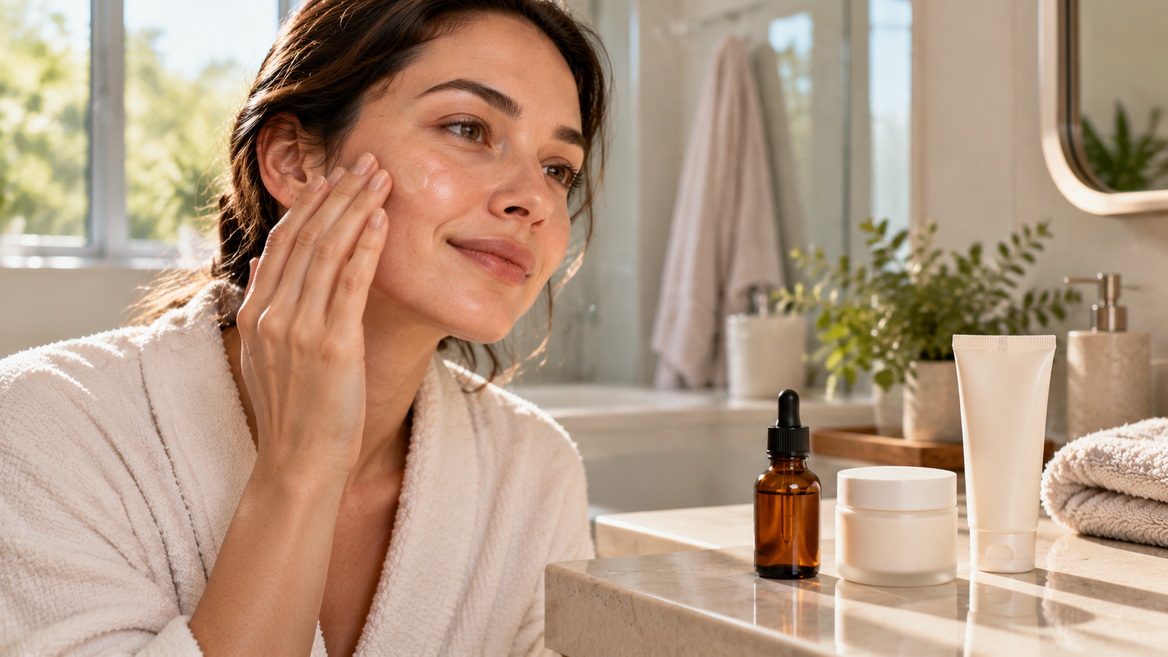
An impressive ingredient list is only the beginning. Antioxidants must remain sufficiently stable throughout storage and normal use.
For consumers, practical checks include:
- Follow storage instructions and avoid excessive heat.
- Close containers promptly after use.
- Note the opening date and recommended use period.
- Ask the supplier about unexpected changes in odor, texture, or color.
Some formulas naturally have color, so appearance alone cannot reliably establish potency or degradation.
For brands, packaging should be tested with the actual formula. Opaque containers, dispensing systems that limit air exposure, and suitable closure designs may help, but no packaging format guarantees stability.
Compatibility testing should assess leakage, dispensing, separation, discoloration, and other relevant changes under intended storage and transport conditions.
A useful development principle is to separate three questions:
1. Does the ingredient have a plausible mechanism?
2. Has a comparable topical formulation demonstrated benefits in people?
3. Does the product being sold have evidence supporting its specific claims?
These questions are related, but they are not equivalent.
Laboratory antioxidant measurements can inform development. They do not independently prove that a moisturizer reduces visible wrinkles.
Likewise, consumer questionnaires can describe perceived brightness, comfort, or ease of use. Stronger performance claims may require appropriate instrumental measurements, standardized photography, controlled comparisons, or other suitable study methods.
Customer feedback is particularly useful for understanding the experience surrounding a formula.
Before launch, collect structured responses about:
- Application comfort and any stinging.
- Tackiness, absorption, and finish.
- Layering under sunscreen or makeup.
- Packaging convenience and dispensing.
- Perceived changes over a defined period.
Separate subjective impressions from measured outcomes. "My skin feels smoother" is a personal report, not proof of increased collagen.
Published testimonials should come from genuine users, with appropriate permission. Reviews should not be invented or edited to imply medical outcomes that the product has not demonstrated.
GUANGZHOU LAIMEI CREATIVE RESEARCH INTELLIGENT BIOLOGICAL RESEARCH CO.,LTD. describes 13 years of skincare and cosmetics research and manufacturing experience, supporting global brands through one-stop OEM/ODM services.
According to company-provided information, its capabilities include:
- A 20,000-square-meter GMP-standard production base.
- Annual production capacity exceeding 50 million units.
- Cleansers, serums, moisturizers, masks, and other product formats.
- Support from pilot production through larger-scale supply.
- Formula development, customized packaging design, and manufacturing.
- Product distribution across more than 100 countries and regions.
The company also describes a research network led by a Brazilian professor, involving dermatologists, technical engineers, and more than 1,000 personnel across affiliated factory laboratories. This network figure should not be interpreted as the company's direct research headcount without further documentation.
For antioxidant projects, brands should request relevant stability records, safety documentation, packaging compatibility results, and support for proposed claims.
The company reports FDA registration and ISO 22716, GMPC, and MADS credentials. Buyers should verify current documents, issuing bodies, and applicable scope. FDA registration is not product approval or endorsement; the meaning and issuer of "MADS" should be clarified before publication.
Contact LAIMEI with your target market, preferred product format, customer profile, packaging direction, and expected order volume.
Request a tailored development proposal covering ingredient options, pilot samples, testing, documentation, and production planning. A clear brief helps connect the antioxidant concept with a commercially practical finished product.

There is no universal winner. Vitamin C has a comparatively established topical evidence base, but the best choice also depends on skin tolerance, formulation quality, and the concern being addressed.
Yes. They appear together in many formulas and can provide complementary antioxidant activity. Evidence applies most directly to the specific combinations and conditions studied.
No. Antioxidant skincare does not establish an SPF rating or replace broad-spectrum sunscreen. Use it alongside appropriate sun protection, not instead of it.
Visible changes generally require consistent use over weeks or months. Timing varies with the formula and outcome being assessed. Some topical vitamin C studies evaluate benefits after at least 12 weeks.
Not automatically. Ingredient identity, purity, stability, delivery, and safety matter more than whether the source is described as natural. Botanical ingredients can also irritate skin.
Ask about ingredient specifications, stability testing, packaging compatibility, safety assessment, claim support, minimum orders, and destination-market documentation. Confirm that evidence relates to the proposed finished product wherever relevant.
1. Eminence Organic Skin Care. "7 Effective Antioxidants To Add to Your Skin Care Routine." Beatrice Hazlehurst, June 8, 2021. Original article reviewed for topic coverage and restructuring; not used as evidence of LAIMEI product performance. [eminenceorganics]
2. Al-Niaimi, F., and Chiang, N. Y. Z. "Topical Vitamin C and the Skin: Mechanisms of Action and Clinical Applications." *The Journal of Clinical and Aesthetic Dermatology*, 2017. Review covering mechanisms, formulation challenges, and limitations of clinical evidence. [pmc.ncbi.nlm.nih]
3. Linus Pauling Institute, Oregon State University. "Vitamin C and Skin Health." Research overview addressing topical vitamin C, stability, study duration, and combinations with vitamin E and ferulic acid. [lpi.oregonstate]
4. "Green Tea as a Cosmetic Agent for Skin Aging: A Scoping Review." Full text available through PubMed Central. Reviews laboratory and human research and illustrates differences in study designs and preparations. [pmc.ncbi.nlm.nih]
5. "Reduction of Facial Redness With Resveratrol Added to Topical Product Containing Green Tea Polyphenols and Caffeine." *Journal of Drugs in Dermatology*. Combination-formula research; findings do not isolate resveratrol's individual contribution. [jddonline]
6. "The Role of Coenzyme Q10 in Skin Aging and Opportunities for Topical Intervention: A Review." *The Journal of Clinical and Aesthetic Dermatology*, 2024. Reviews topical delivery and evidence related to visible skin aging. [pmc.ncbi.nlm.nih]
7. "The Effect of Tomato and Lycopene on Clinical Characteristics and Molecular Markers of UV-Induced Skin Deterioration: A Systematic Review and Meta-Analysis of Intervention Trials." PubMed record, 2023. Relevant principally to dietary interventions, not proof of equivalent topical performance. [pubmed.ncbi.nlm.nih]
8. "Topical Lycopene Emulgel Significantly Improves Biophysical Parameters of Human Skin." *European Journal of Pharmaceutics and Biopharmaceutics*, 2022. Research concerning a specific topical formulation. [sciencedirect]
9. American Academy of Dermatology. "Sunscreen FAQs." Guidance covering broad-spectrum protection, SPF 30 or higher, water resistance, and reapplication. [aad]
10. U.S. Food and Drug Administration. "Cosmetics Q&A: Why Are Cosmetics Not FDA-Approved?" Explains the distinction between regulation and premarket approval. [fda]


